
A Beginner’s Guide to The Mind’s Great Awakening
Enlightenment. They say those who have reached enlightenment never speak of it, 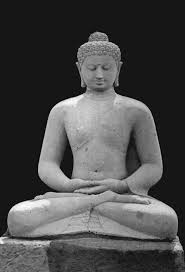 and those who speak of it have never reached it.
This makes me uniquely qualified to speak about it.
First, we might define this well-worn, well-used term. To me, enlightenment is the experience of a mind stabilized in a state of perpetual wakefulness. Wakefulness is the mind freed from its habitual misconceptions—those distortions shaped by attachment, bias, and ignorance. When the mind is free of ignorance, it naturally reveals its innate wakefulness. In other words, it connects with wisdom. So wisdom, it seems, is the mind’s natural state. So, reaching enlightenment should be easy. All we need to do is identify and remove any obstacles to the mind finding its way home.
Simple, yes. But not so easy. Awakening into our natural state requires dis-believing all the sticky things the world throws at us, as well as the equally sticky parts of a mind that has been conditioned by sticky views based on avarise, aversion and avoidance. Buddhist texts refer to these wrong views collectively as ignorance as they are based on not knowing – or believing our true selves. Ignorance, therefore, is the converse of wisdom.
Wisdom is not the same as knowledge or learning. It is not an accumulation, but an opening—an attunement to something already present, both within and beyond the individual. Some say it is a cosmic state, natural throughout the universe. The experience of that knowing openness is what we call wakefulness. Enlightenment is when this wisdom experience becomes stabilized.
If wisdom is an experience of an open mind rather than a product of accumulated learning, then learning, while important, can also become an obstacle. It develops the mind, yes—but it also risks inflating the ego, which encumbers the mind with things about itself, thus reducing the clarity of mind needed for direct perception. The enlightened mind sees beyond concepts and egoic frameworks to direct contact with reality as it is. Terms like “as it is,” “just so,” or “things as they are” are used traditionally to describe clear seeing. In this sense, enlightenment may not be the exalted or elevated state that some fancy it to be. In fact, enlightenment might be quite ordinary. simply seeing reality, within and without, clearly, as it is.
Just so.
Chögyam Trungpa once suggested that enlightenment is not a higher state, at al but the “lowest of the low of experiences.” This opening of the mind occurs when the conceptual mind exhausts itself.
The process of exhausting can sometimes be an excruciating. I’m not convinced the path must be torturous, but traditionally, it does involve a dislodging of pride, ego, and fixed identity. That dislodging—the letting go of our tight grip on self— happens to all of us, often through painful experiences. It happens when the world dissolves and our hearts crack open leaving us with no energy to struggle, and no. recourse but to accept and open.
There is a saying: Disappointment is the chariot of liberation. For example, when we break up with a partner to whom we were deeply attached, the pain is twofold. First, we grieve the separation. But more subtly, we also grieve the loss of the identity that was constructed around that relationship. And it is precisely that identity that can obscure sustained wakefulness. Some traditions suggest renouncing relationships for this reason. Others say that enlightenment can emerge even amidst attachment, addiction, and the turmoil we create by continually substantiating ourselves to ourselves.
This leads to the idea of the inseparability of Samsara and Nirvana. Samsara is the endless wheel of attachment, addiction, and suffering—the habitual conditioning of the mind. Nirvana is its absence: the opening to clarity, to wisdom beyond the self. While some traditions aim to withdraw from Samsara entirely, my tradition teaches that we can live within Samsara and still see its emptiness—its insubstantiality—and the illusory nature of what the world claims as true.
 Astronauts who have seen Earth from space often describe it as a profound, perspective-shifting experience—one filled with awe, tenderness, and love for this fragile blue orb that nurtures life. In this way, enlightenment can be likened to a vast perspective—one that sees beyond itself, and continues to see beyond itself, again and again. As Pema Chödrön says, it’s like peeling the layers of an onion. The unveiling of misconception and delusion is an ongoing process.
From this point of view, perhaps there is no fixed, stabilized state to attain. Stephen Hawking, in his later work, concluded that there is no single grand unified theory of physics—only different theories that illuminate reality from different angles. Understanding, then, is not about finding the final answer, but about seeing through various perspectives, again and again.
If enlightenment is, in fact, the stabilization of perpetual transition, then it means the mind has trained itself to remain open regardless of circumstance. Tara Brach refers to this as “radical enlightenment”—the mind’s ability to experience, open, experience, open, again and again, never resting in the security of fixed ideas.
Perhaps the enlightened experience is completely present and spontaneous—leading nowhere, clinging to nothing, understanding nothing beyond what is actually here, now. Maybe it is very simple and our journey is to stop complicating it. This open naivete is called “beginner’s mind”. Not over thinking, but learning. Enlightenment for dummies, you might say. Chics hatching into a new world. Babies opening their eyes. Life all around us, indomitable unstoppable often overlooked but always there. And we can join that quite simply.
A being in a state of perpetual learning.

 That idea struck me deeply. The forces of hatred and cruelty have become so embedded in our society that speaking out against them can provoke backlash, censorship, or isolation. Yet if we don’t speak out, that same darkness begins to seep inward. As Joe Strummer once warned, “We’re working for the clampdown.” And here we are—told to “get along, get along.”
 How, then, do we respond? By showing up. By being sane, balanced, and clear—even when the world around us isn’t. Each moment of calm presence, each small act of compassion, offers sanity back to a world that desperately needs it. Whether it’s just one person at the coffee shop or a room full of people at a talk—your kindness matters.
 The word compassion evokes many ideas—some relatable, others unrealistic or vague. This lack of definition makes it more of an idea than an experience. We often equate it with kindness and softness, but rarely with strength and resilience. Can it be all of the above?
 I love the audacity of John and Yoko’s campaign: War is Over (If You Want It). It wasn’t just a slogan—it was a vision, splashed across Times Square in 1970. Can you imagine? Yet, as some readers will point out, Lennon was often aggressive, even violent. In response to accusations he had abused his wife Cynthia and assaulted friends, he admitted that his own violence was what taught him the value of peace. He had to confront himself and make a vow to change. His public message was an attempt to use his privilege to help the world.

 strength, presence, and compassion, something opens. Many of the limitations we face are fear-based, rooted in early childhood trauma or even inherited intergenerationally. Language itself, shaped by culture and survival, may carry trauma. These influences can cause us to shut down in subtle or dramatic ways, shrinking our sense of freedom, openness, and understanding. Love has the power to will open us to the world and so we seek it out. But the fear of losing love keeps us locked into patterns of manipulation and coercion in order to establish a power we have never had. The power is love itself. As soon as it becomes “ours” it becomes limited. When we lock in the love, we also lock in the fear and close ourselves off to understanding.

 These obstacles show up in both our ability to receive love and our willingness to express it. Most often, these blocks are rooted in
 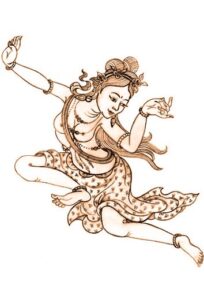 In Tibetan Vajrayana, the deity
 When Michelangelo was asked how he created his masterpiece, the statue of David, he replied that he did not create David — he simply chipped away everything that was not David. David, he said, was already there, hidden within the stone.
 Yet, because our neuroses were originally defensive strategies, they can be met with kindness. They were formed to protect us, and even now, they carry a trace of basic goodness. As we become aware of them, we can acknowledge them with warmth and gradually release them. This doesn’t happen all at once. It requires patience — and acceptance — because these patterns can be embarrassing or even infuriating when they arise. Antagonism only entrenches them. What’s needed is a smile, a light touch.
 The essential self — the one that was always there — begins to shine more clearly.