FINDING RESILIENCE IN OUR EVERYDAY LIFE

Bowie’s song Changes was something of a clarion call to meeting our next moment. Not the idea we have of a dismal or tremendous future, but simply whatever happens. Can we meet whatever eventuality we meet with humble strength and, maybe a smile. We’re meeting what is. And what is is rarely what we want it to be. Facing the strain – or facing the strange and meeting life as it is, requires us to stand tall and accept what comes next.
Acceptance is neither acquiescence not surrender. It is the ground we stand upon for meeting life. From that ground we can relax our inner struggle and face the strain with poise and humor. Life is relentless. It doesn’t ask our permission to change, to rupture, to ache. Every one of us—if we’re honest—carries wounds we didn’t anticipate. We grow up believing strength means powering through, but eventually, life teaches us that armor is heavy. It cuts off our circulation. It separates us from others.
Resilience is often misunderstood as toughness, as stoicism, as the ability to take a punch and keep standing. But in Dharma practice, we learn that true resilience is not a hardening—it is a softening. It’s the capacity to remain present with our life as it is, without shutting down. It’s the willingness to feel, to care, to remain available in the midst of adversity.
We all have nervous systems designed to keep us safe. The fight-flight-freeze response is wired into us for survival. But in modern life, especially in emotional and interpersonal terrain, this wiring can misfire. We interpret everyday stress as threat. Our amygdala hijacks the clarity of our awareness. And suddenly, we are reacting to the world as if we are under attack.
So the question arises: can we stay connected without getting swallowed? Can we care deeply without falling apart?
Well, to quote a great statesman, “yes we can,” But, this acute severing of triggers from reactions takes practice and patience. A classic mindfulness tool is to pause and name what is happening. “This is fear.” “This is grief.” “This is activation.” When we do this, we begin to disentangle from the reactivity and step into the space of awareness. The energy is still there, but we’re no longer riding the rollercoaster blindfolded.
Resilience without armor also requires community. Our neurosis breeds in isolation. But recovery happens with connection. Many of our most painful reactions come from a belief that we are alone. Meditation practice—and compassionate presence with others—reminds us that we’re not. We don’t need to have the answers. We don’t even need to be calm. But we do need to, as Pema Chodron teaches, learn to stay. Stay with ourselves. Stay with one another. Stay with the moment.
The urgency that the triggering elicits makes us feel we need to ACT NOW. But, in fact as a rule there is always more time than we realize. Its okay to pump the breaks. Its okay to pause. Its okay to feel what we are feeling.
Another tool: mindfulness of body. When we’re triggered, the body tightens. The jaw clenches. The breath goes shallow. By simply bringing awareness to the physical response, we open up the possibility of choice. Try it: notice your shoulders. Feel your feet. Take a longer exhale. This is not a trick to bypass reality; it’s a way to anchor within it. Freeing ourselves from the constraints of the armor of body tension means we are creating the somatic space for the mind to find the space for a creative response. A creative response is not an habitual reaction, but is based in mindfulness of our body and our feelings. A mindful pause gives us the space to actually feel what we are feeling.

Here’s the paradox—when we stop resisting what we feel, when we stop trying to be strong in the old way, a different kind of strength appears. A strength that doesn’t need to posture or defend. A strength that doesn’t retreat into numbness. It is open. It is rooted. And it can be quite tender.
When we practice resilience without armor, we begin to trust life again—not because it’s safe, but because we realize we can meet it. We don’t have to disappear when things get hard. We don’t have to put on the mask of invulnerability. Instead, we show up. With our hearts exposed, yes. With our breath shaking, sometimes. But we stay. We respond. We listen. We cry when it’s time to cry, and we laugh when we can.
Finally there is the tool of humble constancy, or as Dylan said, “keep on keeping on”. We don’t need to change everything. In fact, we may not need to change anything. We can lay aside the narcissistic belief that it is on us. We can breathe out and humbly take our place in our community. All we have to do is show up. And what a relief that is! We don’t have to do anything more than cheer up and keep face the strain with courage, humor and dignity. This is a kind of humble bravery doesn’t get much press. It’s not dramatic. It’s quiet, slow, and deeply human.
And from this ground of openness, we discover a new kind of power. The power to be moved by life—not manipulated. The power to care without collapsing. The power to be resilient not because we’re armored, but because we are utterly, and fully, here.

 We freeze, believe, identify. Then we’re off to the races as we script our story with ourselves as the protagonist, whether it be victim or hero. The more we are triggered, the more our universe feels real. But what’s real is that we are at the center of that universe. This very solid Me rolled from bed into a universe of defeat.
 But, we are part of our world, and so Compassion begins with us. Not exaggerating our self importance and our pain, but activating our empathy. If we settle our heart, mind, and body, we can see past the fog of panic. By simply taking our seat and sitting tall, we access natural wisdom. That’s wisdom, not wisdoom. Not believing the worst, but seeing what there is – everything there is. Like sediment settling in water, clarity dawns. We see what is—not an exaggeration of fear.

 complaint, and performance. But if we can take a moment, feel our feet on the earth, lift our gaze beyond the horizon of habitual thought, and simply be—without pretense, artifice, or struggle—we reconnect to ourselves, our moment, and to the greater energy all around us. Trungpa called this the “rising sun view”: a world suffused with goodness and possibility. He contrasted it with the “setting sun” view of cynicism, doubt, and complaint. The setting sun leads to darkness and stagnation. The rising sun view—based on recognition of our own and the world’s fundamental goodness—opens us to the Kingdom of Shambhala.
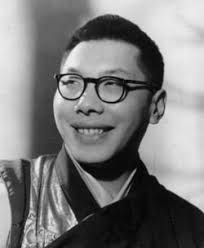 We don’t have to be without fear. We just have to be willing to come back again and again—to our seat, our breath, our inherent dignity. The Tibetans call the awakened warrior Pawo—not someone who fights, but someone who has transcended the paralysis of fear and discovered bravery in their very bones.
 Tibetan yogis compare the wisdom path to a snake moving through a tube—it cannot turn around. Zookeepers use restraining tubes to calm snakes, and unlike us, the snake doesn’t waste energy resisting. It may not be happy, but it surrenders to the reality of the moment.
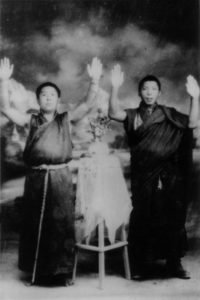 When we stop struggling and instead relax into our constraints, we begin to see them. We feel the fear holding us in place. This transforms obstacles from obstructions into transparent aspects of experience. What if our struggles lost their oppressive weight and became part of our wisdom? I lock myself in my room and refuse to move. But when I turn inward and map the experience, I loosen its hold. Negative actions create negative consequences, reinforcing themselves. The same is true of positive actions. We become obligated to these loops, whether good or bad.
 Padmasambhava, known as Pema Jungné—“Lotus Born”—was said to have been born fully awakened atop a lotus. The lotus grows from the muck, yet blooms into open awareness. The story illustrates that awakening is not something we become, but something we uncover. The path is long, requiring full acceptance of our imprisonment, yet awakening is instantaneous because it has always been there—like a lotus opening to the sun. We will never become enlightened someday; we can only become enlightened now.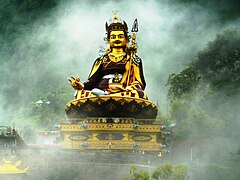

 Resistance is where the rubber meets the road or, as the Tibetans say, “when rock hits bone.” This initially may shock us into numbness. All we feel is that erie Lackawanna, like a 2 year old’s mantra of “NO NO NO!” But maybe I can just look at this. Maybe it’s not a grand existential crisis, not a dramatic psychological wound, maybe it’s—just I don’t want to. Instead of assuming I should be different, I could explore what it actually feels like to be here not wanting to be here. Resistance is not an obstacle to the path; resistance is the path. It’s the moment we are forced to sit down, to feel the discomfort fully, and to learn from it. The more uncomfortable it is, the more there is to see. Instead of searching for complex explanations, maybe the truth is simple: my body and mind are saying, Pause. Feel this. I sometimes look out my window at people working, doing jobs I have no interest in, and yet I feel guilty. They’re working hard, supporting their families, and I’m lying here chewing on my own thoughts. But maybe this is my work—to investigate my own experience, to make sense of it, to translate it. Maybe these periods of shutdown are moments of resynchronization.
 Depression, when experienced as deep rest, may be a forced resynchronization, a way to reset the system. The Japanese philosophy of Kaizen suggests that when we’re stuck, it’s not because we’re failing but because we haven’t yet learned how to succeed. It teaches that small, incremental steps can help us move forward. If my room is a mess, my desk is piled high, and my taxes loom over me, tackling it all at once feels impossible. But if I decide that today, I will write this, meditate for a few minutes, and make a good cup of tea, those are small, doable actions. I don’t need to force myself into massive leaps—I need to align with what is possible right now. It’s strange how we expect ourselves to emerge from depression with force, to suddenly regain clarity and momentum. But what if the way forward is softer, more patient? What if, instead of pushing myself to break through, I let myself dissolve into the experience fully? Depression doesn’t mean I am broken. It means something inside me is asking to be heard, asking to rest, asking to be real. And maybe the more I resist that, the more it holds on.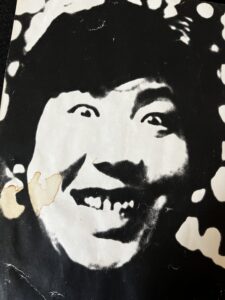
 In Trungpa Rinpoche’s Dharma Art course, the very first class begins with students sitting in a circle. There is a blank white sheet spread on the floor. This experience, which he called Square One, was designed to immerse students in the energy of clear, open space. The entire premise of Dharma Art—creating authentic expression within one’s environment—relied on the understanding that Square One was completely empty.
 Just as the universe created itself, humanity may have evolved to perceive, feel, and interact with that unfolding creation. When we gaze at the night sky, we see a seemingly static and reliable expanse. Yet, in reality, it is dynamic and ever-changing. The stars we see may no longer exist as they appear; their light has taken years, even millennia, to reach us. The sky is a snapshot of creation in motion. When we quiet the mind—acknowledging our thoughts but resting in the space between them—we create the silence needed for inspiration to arise.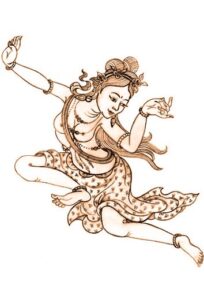

 There is an old Zen saying: “Disappointment is the chariot of liberation.” But what does that mean? Is it simply wishful thinking when things go wrong? Not quite. It points to a fundamental aspect of the path toward liberation. What are we liberating ourselves from?
 human behavior is that we will do the extra work of fabricating a fiction, rather than simply relax with what is. This is where mindfulness comes in: the ability to slow down, synchronize with the moment and rest our attention with what is happening. This allows the space for us to see a perspective grander than one constrained by habittual reaction. With mindfulness we are able to see if the next action is leading to freedom or reinforcing habitual patterns that limit us. And we can take the next step. If we are brave enough, we might step through the veil. When we are controlled by fear, we might cycle back to habit.
 Even when we believe we are succeeding within a particular frame, we may only be reinforcing the walls that separate us from deeper understanding. Every mistake, problem, or disappointment is an opportunity—not for blame, but for insight. What we call “failure” often arises from the expectations of the frame we are living within. We didn’t get the job, the person didn’t call back, we failed to reach our goal weight—these disappointments expose the treadmill of habitual thinking that keeps us confined. But when these expectations are disrupted, we have a chance to reset, to step beyond the frame and see our lives with fresh eyes.
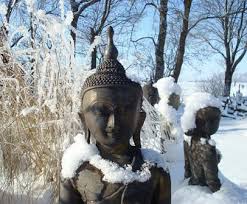 In Buddhist teaching, Patience is taught as one of the six paramitas. The Paramitas Generosity, Patience, Discipline, Exertion, Meditation and Wisdom are activities that transcend our conventional frame into a more expansive or “transcendent” expression of experience. This transcendence is sometimes referred to as “the other shore,” as we move from a self-centered, habitual interpretation to one imbued with greater depth and perspective. From this larger perspective, patience can be viewed as a positive application for the development of wisdom. We are not clamping down or tightening up; rather, we are allowing space between an impulse and our action. This space provides the opportunity for us to become cognizant, intentional, and mindful. Transcendent Patience is a momentary pause for us to find the most appropriate response to whatever situation confronts us. More importantly, that space allows us to connect with our natural serenity and peacefulness of mind. Through consistent, dedicated meditation practice, we can develop the ability to recognize these moments of pause—often just before we bite down or cling to our next reaction.
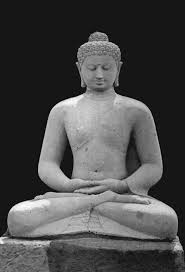 Patience, in its transcendent form, is not merely about waiting for external circumstances to shift. It is about cultivating space within the mind to introduce awareness into our processing. Patience allows us to see our thoughts as they form, granting us the opportunity to respond thoughtfully rather than react impulsively. In Tibetan, this reactive “hook” is referred to as shenpa; Pema Chödrön describes it as the feeling of being hijacked by familiar patterns of reactivity.
 Patience also applies on a behavioral level, especially when we are cultivating something new—a relationship, a creative project, or a business. In some spiritual traditions, practitioners “turn it over to God.” In Buddhism, we turn it over to space itself, trusting that space is imbued with the same intelligence and compassion others may attribute to a deity. Rushing a project or relationship may bring temporary gratification but rarely yields sustainable growth. Patience allows the natural rhythms of the process to unfold, supporting more authentic and enduring outcomes.