HOW TO GET EVERYTHING YOU WANT
 From the moment we first cried out for our bottle to the time we sidled up next to someone at the bar hoping to have them buy us a drink, we’ve learned to manipulate our world. More specifically, we’ve learned to manipulate our feelings in order to manipulate others into the impression that we can get what we want. The fact that we frequently don’t know what we want doesn’t seem to deter us.
The notion that desire is problematic to our mental balance and serenity has long been a topic in meditation theory. But many current teachers suggest that desire is not the problem. Desire is appreciation, after all. Problems arise when we clamp down on the object of our desire. This clamping leads to clinging and attachment that serves to change our relationship to the thing we desire. All of a sudden, we have gone from appreciation to acquisition. Our attachment becomes more about “Me” than whatever it was that initially moved us. The clinging becomes more important than the object of our desire. Clinging seems create a sense of security for ourselves. Because we are internally programmed to feel successful when we are getting what we want, getting what we want becomes more the point than the object itself. And then, of course once we have it, we have to hold on to it and defend it.
We have hormones that activate in the anticipation of getting what we want and endorphins that are released when we get it. We become slaves to these hormonal feelings. We feel excited when we want something and rewarded when we receive it. This game propels us through life. Unfortunately, that propulsion runs its course, and we are left deflated and in need of another fix. This cycle continues feeding itself again and again and is largely unconscious. While we buy in to the objectification game on its surface, we are blinded to the feelings within, as well as the consequences that lie ahead. Buddhists would refer to this as being ignorant of karmic cause and condition.
In this way, desire, anticipation, reward, and depletion keep us locked in this semi-conscious cycle as we focus on objects rather than ourselves. We are compelled to fill the space we feel inside by clinging to externals. While this may feel good momentarily, it is not what we really need. Therefore, it is ultimately unsatisfying. We fall flat and feel empty again until we perk up looking for our next neural adventure. Gripping to the things we think we want and ignoring what we actually need makes us poverty stricken and emotionally anorexic. The space we seek to fill becomes emptier still. Hence, we cling ever harder to the objects of desire and the manipulative games they engender.
But why do we want what we want?
Sometimes we try to get what we want because we feel it will raise our status among our clan. There is research that suggests that this has roots early in our social evolution when we were driven to need the approval of our milieu when clans were a primary source of survival and protection. Making ourselves valuable to our community assured us of those protections. In our modern society, this dynamic manifests as a highly competitive and transactional way of looking at the world. We don’t just want to fit in with our milieu, we want to impress them, we want them to want us, we want them to need us, we want them to love us. The more we feel loved by the community the more we actually feel protected by that community. How much of our social negotiations stem from wanting our mother’s love, or our fathers care? It is said that the initial attachment of a child to its caregivers sets a primary behavioral template.
I was asked recently by a student if we could discuss how our meditation practice could lead us to greater control over others and lead us to the idea that we could better manipulate the world. The answer to that is that meditation practice turns that whole question on its head and suggest instead that we create a sense of well-being within ourselves so that we reduce the need to cling and grasp, and in so doing reduce the suffering we endure in our lives. When we reduce the need to have these facile material connections to our societal caregivers, we reduce the need to manipulate or cajole or seduce or cry for our bottle. Our emotional baseline becomes a sense of contentment with who we are that might lead to contentment to what we have. That doesn’t mean we can’t flirt for a drink, or cry for attention. It doesn’t mean we can’t try to do our best and it doesn’t mean we can’t want to be loved by the world. It just means that none of that speaks to what we really want. What we want is to find completeness and contentment in our life, and to be helpful to others.
There is a Buddhist parable about a person who when walking the world could either pave the world in leather to protect their feet, or to wear leather on their feet to protect themselves. The moral seems to be that wearing leather is a more efficient way of walking through life. As meditation practitioners our work is to develop and refine ourselves so that we can be of service to ourselves and to the world. In this way our position in the clan is more secure as we are truly of benefit to the society. A sad aspect of life is that people are most attracted to those who can benefit them. Many of us play a common game of throwing ourselves to the ground in supplication to the world. We want someone to help us. We want anyone to carry the burden. We want the universe to save us. But the truth is, until we can do those things for ourselves, no one will be there in any lasting, meaningful way. Until we have the strength to help others, we have little meaning to ourselves and to our world.
So, the way to get everything you want in life is to, of course, want what you have. And once we have it, all we can do is share it. If we are looking to find security, it comes not from clinging, but from letting go.
 Learning to work with anxiety is an important practice for anyone trying to maintain mindful balance in their lives. How often are we thrown off-course in life due to reacting unmindfully when prompted by our fear. Something feels wrong, and before we can look into what that may be, we spring forward as if to escape the discomfort. I can’t count the times I have made missteps in my life by lurching blindly.
 The unreliable narrator is a technique used by writers to tell their story from a point of view that is changing, altered, or diminished in some respect. This creates a sense of un-ease in the reader. However, despite its temporal unreliability, this technique often reads as organic as it feels closer to how our minds actually work. One mistake uncreative the writer makes is to try and force the organic flow of reality into a two-dimensional, linear narrative. There is a sense of comfort in aligning the forces of our life inside the lines, but it is simply not the way our mind naturally flows. Nor, is it how the reality around us actually works.
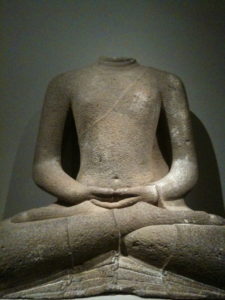
 The development of wisdom in daily life implies a practical involvement with meditation. The general recommendation would be to develop a daily practice of repeated placement of mental attention on the present moment. We do this in order to train the mind progressively toward deeper and more stable relaxation and awareness. Many disciplines employ an object of meditation (such as a mantra, the breath, a visual stimulus, or a phrase) to facilitate a return to the present. So, commonly, one would return to the mantra or the breath again and again to stabilize the mind, and allow its awareness to develop more and more deeply into the present.
 I believe ancient wisdom once removed of its religious trappings is often based on very human, and as such, immensely practical, concerns. The Meditation from the Wisdom Tradition of Shambhala uses ancient wisdom to inform very present experiences. At its core, is a belief in the fundamental goodness of humanity. It is a system based on developing the True Confidence which comes from training the mind. Simply said, if we develop belief in ourselves, and learn to trust ourselves, we can be a great benefit to ourselves and our world. It is a manual, daily and practical approach that is empowering without ego building. In other words, its not flattering, or aligned with any competition. It does not offer any credentials. It is simply a way of connecting ourselves in order to connect to our life altogether. From that synchronicity, we are more in control of our lives. And, taking a warrior’s seat in meditation puts us directly in the center of that circumstance.
 Yet, there are many ways in which we erode our confidence by denying ourselves in the garden. Many times we believed we needed something greater than ourselves to make it okay. This is addiction. Its is self-doubt. And in meditation circles it is based on theism. Theism is deeply ingrained in our society whether or not a god is involved. We can lose ourselves to our job, to our country, to our addictions, to anything that we determine is better than we are, or becomes more important than we are. Any time we decide something else is preferable to what our life is, or who we are, we are giving ourselves away. We will end up disappointed, and without hope. Once abandoned by our gods, when we find our idols have clay feet, we lash out and destroy them. And from their ashes will rise another idol for us to swoon over. This game continues on and on and gets no one anything but more servitude. And over time this erodes confidence. We can only shut ourselves out for so long before we will give up altogether.
 Each time we flinch and contract ourselves into the panic and tension (that all too often feels comfortable to us), we squeeze ourselves into a small reactive entity. We hide in our wetsuit. But, we can’t stay there. That tension will kill us. Make no mistake. Squeezing ourselves into defensive postures will constrict us, and shut off our life force. We can only shut down so many times, before something in there gets the message. But, there is an alternative. Letting go. The practice of meditation is entirely forgiving. We can always come back. We can let go. We can simply feel our feet on the ground, and there we are. Any system based in compassion and understanding would never deny the self. It might point beyond, but the only way beyond ego is to be confident enough to be able to let its gripping go. Ego structures gain power in our PHYSICAL GRIPPING. The antidote is simply to let go. Letting go does not mean getting rid of. It does not mean making an enemy of. Letting go means simply opening the grip and allowing the panic to subside and reveal the ground swell of fear beneath. Being frightened, and allowing yourself to be frightened without resorting to extraordinary external measures, is exactly what builds true confidence. We didn’t need a mommy, a boyfriend, a God or a president to pull us through. We were willing to sit there and feel our feelings without a bandaid. That is strength.