
Why is it so hard to pay attention?
Our lives are so precious. Our time here so limited. And in that brief moment there is so much we might learn. So much to feel. So much to see. So much to understand.
We have so far to grow. And, in my opinion, we should never stop.
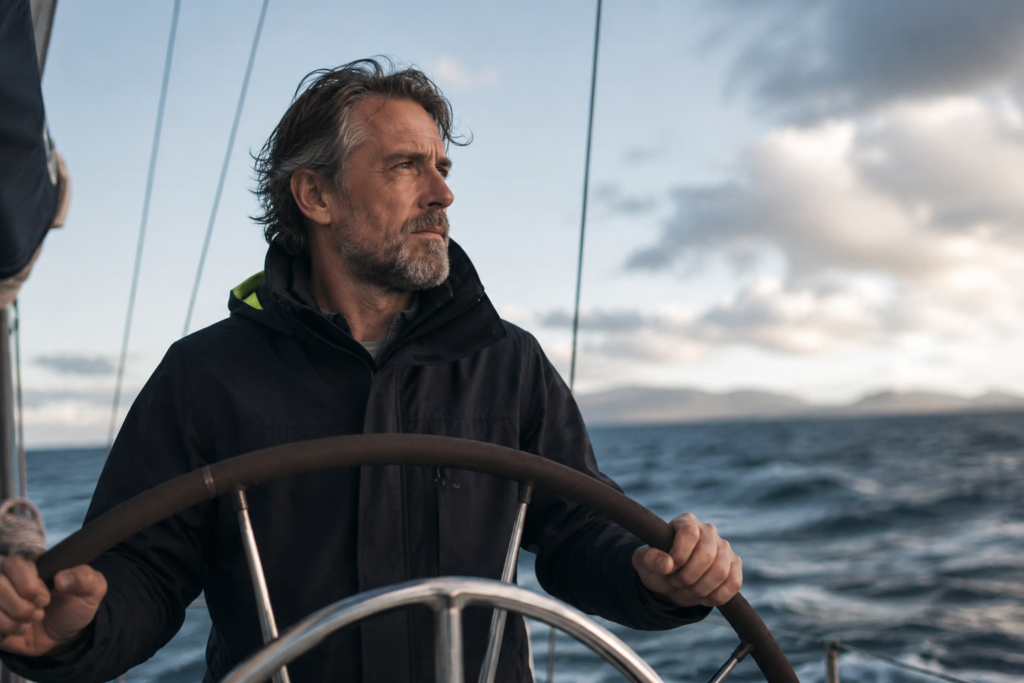
As we travel forward in time and space, deeper currents beneath the surface move us often unknowingly. And we are unconsciously fearful of deep feelings. Especially, as they tend to destabilize the “me” projection of ourselves we so cling to. So, we close our eyes and the currents to drive us as they may. As if we were piloting a ship, trying our best to keep on course while unseen movement inside is influencing our trajectory.
A ship’s captain has fairly tangible evidence of where the ship is heading and how to guide it toward its proper orientation. The currents move us to the left of our desired approach, so we tack against that and bring ourselves back on track. The sea is a fluid situation, you might say. The ship’s captain doesn’t need to understand the reasons for the currents in order to steer the boat to keep it on course. The captain needs to be present and guiding the vessel with manual care and attention.
A good captain feels as much as they know. They see life as a dynamic.
Of course, it would be good to follow previous experience and maps of these currents. But maps are themselves just ideas, and the reality of the ocean needs direct engagement. When we study meditation, the nervous system and our own psychology we’re creating maps to direct our journey. But maps are not the destination. Our study needs to take a back seat when we’re doing. The surface reveals the port, or the destination. Looking at our life, we try to hold ourselves to a destination while ignoring the feelings beneath. And hence we are tossed off course.
The object may be our breath, but we need to visit Tahiti, argue with our family, and long to be anywhere else before we get there. Along the way, we judge our experience as failing since we’re not always with the breath. The ship’s captain is not fixated on the port. They orient toward the port and keep returning to the simplest, but rarely the straightest, trajectory. The process is one of coming back. We veer left and steer back. We do this to accommodate the currents beneath. There is no judgement about not maintaining an unattainable perfect experience.
We don’t need to understand the reasons for this inner turbulence to understand the dynamic between trying to keep ourselves present and forces constantly throwing up other possibilities. In meditation, we’re dealing with what is happening now. Yet what’s happening now is a deeper and more dynamic experience then we realize. Due to our fixation on the surface and accomplishing our journey or our destination we ignore everything else around us until something moves or unsettles us. The reasons may not be apparent, but our mind will move from the simplicity of beathing, toward complex fantasy or fixation.
When we see this, like a good captain our executive mind simply steers us back.
Suffice to say, if the body is not settled the mind will not rest. And if our heart is triggered our body will find it hard to settle. Like a parent driving children fighting in the back of the car we won’t necessarily engage in the logic of their arguments. We just want quiet so we can pay attention to the road. But in the case of meditation, our mind just flits away from the discomfort. Our job is keep our balance through the turbulence enabling the executive captain to keep us coming back to the point.
And what is that point? Breath is life. And returning to our breath leads us to our life.
And being part of our life is the point.