A Living Buddha
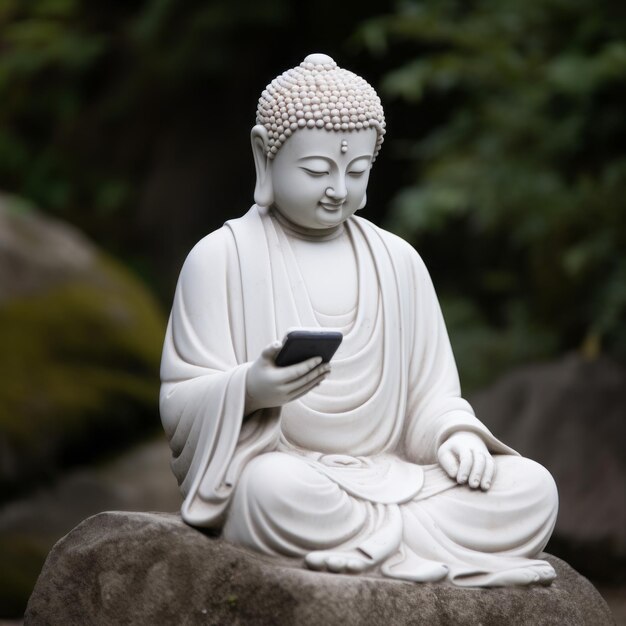
The notion of a living Buddha is that following the Buddhist path our relationship with the Buddha is alive, experiential and developmental. We are not relating to a thing, an icon or an idea. We are relating to a living part of ourselves.
This is a present tense experience happening whenever we remember. This connection is presently knowing, understanding and caring for ourselves and our world. The work in our daily meditation practice is to develop the capacity to remember this True Nature of ours and to learn to trust it. And, hence, learn to trust ourselves.
And, we don’t have to shine our shoes, watch our manners, cut our hair, or do anything other than be who we are as we are.
I often made the mistake of thinking that becoming one with the Buddha meant my body, spirit and mind had to become something else, something perfect. But I’ve come to realize that connecting to Buddha means accepting of all of me. The parts I’m proud of and the parts I’m embarrassed by; the things I do that are virtuous and many things that are selfish and petty. There’s little value to waking up in our brain and having lots of pristine ideas about realization, if our body and heart are unable to follow. So we need all of us talking to the rest of us and no one left behind.
Buddha Nature is the notion that our truest, most fundamental nature is perfect, free of obstruction, neurosis, duplicity and hatred. Those add-ons come from our social upbringing and seem to be devised to help us navigate the world around us. But, as we know, these patterns are not always helpful. In fact, they are primarily defensive and quite limiting. They keep our potential dampened and cause us to live lives much smaller than they might be.
But, how can we transcend these patterns, defenses and defects if we don’t see them? Buddha means “Awake” – the base of our Buddha Nature is wisdom, which is seeing, understanding and knowing. The method of our liberation from limiting patterns and ignorance is to see them and know them. These patterns grow in our ignorance of them. But if we’re able to expose them and are willing to see them, eventually we’ll grow tired of them and they will fall away. Our neurosis is part of our connection with the Buddha. In Tibetan Buddhism they see neurosis as an offering.
Buddhism has progressive stages of development. Each of these has a different relationship between the student and the Buddha. The first sees the Buddha as a leader and an example someone who has liberated themselves from ego suffering, thus affording others the opportunity to follow. The second stage relates to the teachings of compassion. From this point of view Buddha is seen as a transcendent being who radiates love and compassion for all beings. We are encouraged to nurture the seed of Buddha Nature within ourselves.
The third relationship to the Buddha is based on the teachings of luminosity and emptiness. These indicate that our full experience is a manifestation of the mind of the Buddha. There is no separation between us. And that all beings have Buddha nature. And we can learn to recognize Buddha Nature as our basic nature. From this point of view, there is nothing to change, nothing to develop and nowhere to go. We need only remember who we are.
The Bodhisattva Shantideva wrote, “may I not be a stain on the faultless noble family (of the Buddha).” But what would cause a stain? I think this is different in Buddhism than it might be in other religious contexts. In Buddhism the primary “sin” is ignorance. Ignorance leads to negative actions caused by not knowing. So, our process is to expose these actions by accepting that we do them and to cease pretending otherwise.
The “stains” on the noble family would be to turn away from our allegiance to waking up. This is when we willfully choose not to know. It is when we shut down, turn away, and cut ourselves off from the vibrant source of wisdom in the universe, our Buddha Nature. And if we do cut ourselves off from our Buddha Nature? The remedy is to recognize this, and to remember. Simply that.
When we lose our mind, we come back.
The word for meditation in many traditions also means recollection. Remembering our connection. Remembering who we are. Recognizing when we are deluded and remembering who we are. In time, coming back, coming back, coming back cuts through the veils of our ignorance. We begin to see the parts of our being that are defenses and the part of our being that is indestructible. In time, our allegiance will change and we will begin to identify with our true nature.
In some traditions a deity offers salvation and a seat at the table of endless perfection. This is seen as our future reward. But, Buddhism is about what’s happening now. The Living Buddha is something we feel in the moment, because it is something we are. There is nothing we need to change. And nothing we need to do but remember.
We can wake up sitting on the toilet with our head in our hands after a very full night of not -so-wakeful activity. We could wake up in a job we hate. We could wake up walking through crowds in our aggressive city. We could wake up making love to someone. We could wake up in the morning. We could wake up in the evening. We could wake up literally anytime we remember.
It’s possible that that moment of clarity might cause us to be embarrassed or self-conscious. But if, in that of authentic moment of awake, we just see ourselves “in process” with love and affection, then we are seeing through the eyes of the Buddha at all our goodness and imperfection.
__________