Understanding Merit and Virtue
An essential component of the Buddhist path is accumulating merit through virtuous acts. Virtuous actions, according to Buddhism, are outlined in the Vinaya, the Buddhist code of ethics. The Vinaya is part of the Tripitaka (or “Three Baskets”), which form the foundational teachings of the Buddha. The Tripitaka consists of:
- Vinaya – the code of monastic discipline.
- Sutras – the direct teachings of the Buddha.
- Abhidharma – the study of Buddhist ontology and psychology.
The Abhidharma is particularly fascinating due to its depth and precision in describing the mind. Buddhist scholars, through meditation and contemplation, developed an intricate understanding of human consciousness. Similar to how the Inuit are said to have many words for snow, early Buddhists created thousands of descriptors for the workings of the mind. Their insights into psychology, cosmology, and science parallel many modern understandings, demonstrating the depth of their introspection.
The Sutras and Shastras comprise the Buddha’s teachings and their commentaries from senior students. These form the textual and liturgical essence of Buddhism as a system and are the most widely known and quoted.
The Central Role of Ethics and Karma
Buddhism is an experiential path. Therefore, despite the richness of Buddhist psychology and the profundity of the teachings, academic knowledge alone is not enough. If our actions create suffering for ourselves and others, our intellectual understanding will be of little benefit. This is why Vinaya is central to the Buddhist path—it guides us in ethical conduct, helping us work with karma.
The Laws of Karma are one of the four foundational reminders in Buddhism (along with The truth of Impermanence, the Preciousness of Human Birth, and the futility of Samsara) is the principle that every action creates further propensities and consequences. This idea parallels Newton’s law that every action has an equal and opposite reaction, but extends into the fourth dimension of time. This is to say, our actions not only have present circumstances, but also create the propensity for future occurrence. Understanding karma can be overwhelming, as every action in our lives is interconnected with everything else. There is no specific definable origin to anything. According to Pratītyasamutpāda (dependent origination), all things arise due to previous causes and conditions, making reality a vast, interwoven web.
If karma is so complex, how do we work with it? The Buddha provided a simple yet profound answer: focus on daily virtuous actions. Buddhism, as ever, reminds us that when in doubt, come back to the present. What are we doing now? In the present we have a choice to more toward enlightenment, or away into the perceived safety of ignorance. By doing positive actions, we create a natural inclination toward virtue. This, in turn, fosters positive circumstances in our lives. As one of my teachers said, while samsara is suffering, moving toward lesser suffering within samsara places us in better circumstances to benefit ourselves and others.
The Practical Application of Dharma
The ultimate view is to avoid Karma, altogether. This happens when we are specifically mindful of our actions, without interpretation. However, this is a highly refined action that may be unrealistic for most of us in daily life. The Buddha’s superpower was in addressing individuals according to their needs. Therefore, the Buddha’s Dharma is said to be the perfect perfect teaching at at the perfect time, for the perfect circumstance. This process, called transmission, differs from ordinary teaching—it doesn’t just impart knowledge but refines our human experience.
Among the four reminders, the preciousness of human birth is particularly important. To be born as a human, capable of making choices and free from overwhelming suffering, is considered exceedingly rare. A classic Buddhist analogy compares it to a one-eyed turtle surfacing in the ocean and placing its head through a small hoop—an event of almost impossible odds. Recognizing this rarity encourages gratitude and motivates us to use this opportunity wisely. With our actions, we can move the world toward openness and peace, or we can join with so many in self centered delusion.
Accumulating Merit for the Benefit of All
The purpose of spiritual practice is not just personal growth but refining ourselves as an instrument for the benefit of others—our families, communities, and all sentient beings. While the vastness of karma may seem overwhelming, the Buddha made it practical: be mindful of the present moment and the impact of our actions. Virtuous actions lead to virtuous circumstances, reinforcing a cycle of goodness.
Merit functions like a reservoir of positive energy. The more merit we accumulate, the more resilience we develop against negative circumstances. Virtue is not simply about “being good” but engaging in actions that benefit both ourselves and others. When we act selflessly without self-depletion, we strengthen our bodhicitta—the awakened heart-mind dedicated to enlightenment for all beings. The key is to take one step at a time, forgive ourselves when we falter, and return to the path of virtue without recrimination of doubt.
There are traditionally listed 10 virtuous actions to cultivate, and 10 non-virtuous actions to avoid.
The Ten Virtuous and Non-Virtuous Actions
The Ten Non-Virtuous Actions:
- Killing – Taking the life of any sentient being.
- Stealing – Taking what is not freely given.
- Sexual misconduct – Engaging in harmful or exploitative sexual behavior.
- Lying – Intentionally deceiving others.
- Harsh speech – Using words to hurt, insult, or demean.
- Divisive speech – Creating conflict or discord between people.
- Idle chatter – Speaking without purpose, gossiping, or wasting time in speech.
- Covetousness – Desiring what belongs to others in a way that breeds discontent.
- Ill will – Harboring anger, resentment, or a wish to harm others.
- Wrong views – Holding beliefs that deny karma, ethics, or the potential for enlightenment.
The Ten Virtuous Actions:
- Protecting life – Practicing non-violence and compassion.
- Generosity – Giving freely without selfish intent.
- Sexual integrity – Engaging in respectful and ethical relationships.
- Truthfulness – Speaking honestly and with integrity.
- Kind speech – Using words to uplift and encourage.
- Harmonious speech – Promoting peace and understanding.
- Meaningful speech – Speaking with mindfulness and purpose.
- Contentment – Appreciating what one has and avoiding greed.
- Goodwill – Cultivating love and compassion for all beings.
- Right view – Understanding the nature of reality, karma, and the path to liberation.
By integrating these principles into our lives, we create the conditions for genuine happiness, wisdom, and progress on the spiritual path.
 There is an old Zen saying: “Disappointment is the chariot of liberation.” But what does that mean? Is it simply wishful thinking when things go wrong? Not quite. It points to a fundamental aspect of the path toward liberation. What are we liberating ourselves from?
 human behavior is that we will do the extra work of fabricating a fiction, rather than simply relax with what is. This is where mindfulness comes in: the ability to slow down, synchronize with the moment and rest our attention with what is happening. This allows the space for us to see a perspective grander than one constrained by habittual reaction. With mindfulness we are able to see if the next action is leading to freedom or reinforcing habitual patterns that limit us. And we can take the next step. If we are brave enough, we might step through the veil. When we are controlled by fear, we might cycle back to habit.
 Even when we believe we are succeeding within a particular frame, we may only be reinforcing the walls that separate us from deeper understanding. Every mistake, problem, or disappointment is an opportunity—not for blame, but for insight. What we call “failure” often arises from the expectations of the frame we are living within. We didn’t get the job, the person didn’t call back, we failed to reach our goal weight—these disappointments expose the treadmill of habitual thinking that keeps us confined. But when these expectations are disrupted, we have a chance to reset, to step beyond the frame and see our lives with fresh eyes.
 In Buddhist teaching, Patience is taught as one of the six paramitas. The Paramitas Generosity, Patience, Discipline, Exertion, Meditation and Wisdom are activities that transcend our conventional frame into a more expansive or “transcendent” expression of experience. This transcendence is sometimes referred to as “the other shore,” as we move from a self-centered, habitual interpretation to one imbued with greater depth and perspective. From this larger perspective, patience can be viewed as a positive application for the development of wisdom. We are not clamping down or tightening up; rather, we are allowing space between an impulse and our action. This space provides the opportunity for us to become cognizant, intentional, and mindful. Transcendent Patience is a momentary pause for us to find the most appropriate response to whatever situation confronts us. More importantly, that space allows us to connect with our natural serenity and peacefulness of mind. Through consistent, dedicated meditation practice, we can develop the ability to recognize these moments of pause—often just before we bite down or cling to our next reaction.
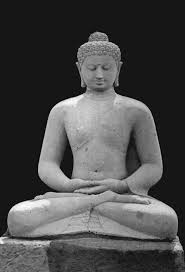 Patience, in its transcendent form, is not merely about waiting for external circumstances to shift. It is about cultivating space within the mind to introduce awareness into our processing. Patience allows us to see our thoughts as they form, granting us the opportunity to respond thoughtfully rather than react impulsively. In Tibetan, this reactive “hook” is referred to as shenpa; Pema Chödrön describes it as the feeling of being hijacked by familiar patterns of reactivity.
 Patience also applies on a behavioral level, especially when we are cultivating something new—a relationship, a creative project, or a business. In some spiritual traditions, practitioners “turn it over to God.” In Buddhism, we turn it over to space itself, trusting that space is imbued with the same intelligence and compassion others may attribute to a deity. Rushing a project or relationship may bring temporary gratification but rarely yields sustainable growth. Patience allows the natural rhythms of the process to unfold, supporting more authentic and enduring outcomes.
 importance of creating safety for not only himself but also the Dharma and for his students. The need for protection grew alongside his rapidly expanding community. In Tibet, monasteries were safeguarded by monks trained in awareness and nonviolent crowd control. Trungpa’s close attendant, John Perks, a British armed forces veteran, played a pivotal role in this initiative. Perks, who passed away on January 31st, was an outrageous and endlessly creative figure whose book The Mahasiddha and His Idiot Servant captures the spirit of the time.
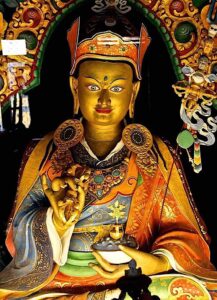 These principles trace back to the 9th century when the Indian Mahasiddha Padmasambhava introduced Buddhism to Tibet at the invitation of King Trisong Detsen. Padmasambhava encountered numerous obstacles, as Tibet’s rich mystical traditions were diverse and often aggressive. While some practices were positive, others were rooted in fear and superstition. The Tibetan king sought to unify his people through a central spiritual framework, seeing Buddhism’s ideals of nonviolence and compassion as tools for governance. Inspired by India’s spiritual renaissance, Padmasambhava aimed to refine Tibet’s spiritual landscape.
 The ideal meditative state—clarity and acceptance—rests on the openness and settledness of the body, heart, and mind. However, life rarely offers us perfect conditions. For me, morning practice often begins with a scattered or resistant mind. The first step, then, is acceptance—meeting the mind as it is and not as I wish it to be.
 Once again, meditation isn’t about fixing; it’s about seeing. The mind of meditation arises in awareness like a point in space. And as the space of awareness is relieved of the pressure to fix itself or chose a side, it remains loving and supportive. It is a state of grace. By stepping into the grace of awareness, we don’t need to force change—we simply allow what we notice to be with us, remembering none of it is as real, solid or urgent as our fear suggests. Trungpa Rinpoche famously wrote, “good, bad, happy, sad – all thoughts vanish like an imprint of a bird in the sky.” Once we release ourselves from the grip of control, we see everything as ephemeral, diaphanous and in dynamic transition. Sakyong Mipham calls this the displaysive activity of mind. All of our worries are the mind revealing itself. Many of our worries are kid fears. And like kids, they need to be loved and accepted, but not always believed.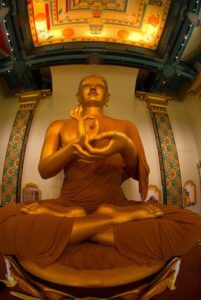
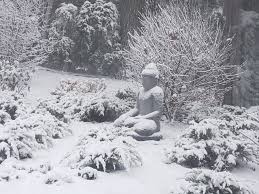 Ego which can be seen as the very limited defensive nature of the mind, serves to reduce our world to a controllable space. Its logical extension is the propagation of surety, dogma and doctrine. The opposite of ignorance(ma-Rigpa) is knowing (Rigpa), and therefore, egoless being is sees and knows what is happening. And it always has. This is Buddha Nature – our natural state. Because it is accepting reality as it is, it is not at war. Thus, Buddha Nature is said to be indestructible. It has never changed. It is the life of the universe and the very life around us. And though our lives will pass into other configurations, our essential nature is said to be part of all of nature. Ego clings to temporal things in order for us to believe that temporary things give us solace and sustenance. We can squint our eyes and believe what we are happy but, inside us, we know that happiness is immaterial. Material things are “like a banquet before the executioner leads us to our death.” Revenge, retribution, and displays of grandiosity masquerading as leadership are fleeting and meaningless. They are basically good, because they are there. But they are expressions of ego and ultimately fleeting.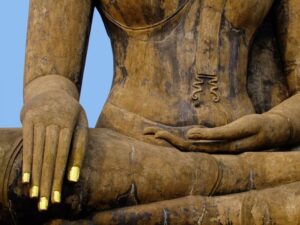
 Physical pain awakens us to the possibility of danger or a need to heal. While few of us like pain, it serves a vital function. Some p
 There is nothing wrong with fantasies until they take the place of actual engagement in life. Fantasies allow us to journey into edgy realms with no real investment. By imagining pleasures of the flesh, we have no actual skin in the game. (Yes, bad pun intended.) We can live out fantasies at will in apparent safety. However, as they serve an important creative function, it may be that fantasizing only supports the solitude that allows wounds to fester. Sometimes we analogously recreate the actual wounding we are otherwise unable to look at directly. People may act out abuse sexually by entering a “play space” that is an active dissociation of their primary personality. The “play-space” is a safe space people can act out being unsafe. And whether this is working through their deep wounds or reinforcing them is unclear.
 The present moment rests between the past and the future. Specifically, how we could protect ourselves from this situation or how we can enact laws to protect our community in the future. Or, going deeply into the causes and conditions of what happened to us might lie in the past. Either of these examples might be helpful, but they are more the province of therapy. Meditation looks at what is happening now. That is what we mean by the light. Many of us were wounded so deeply in the past that there is little possibility of contacting the source of that suffering. But we can feel their effect right now if we remain conscious. And as we become more and more conscious of that which lies within us, we become more and more whole.
 adjacent worries, recrimination and judgment. For instance, there is drilling happening not far from my apartment. It’s annoying and incessant. I’m here having to work on a post about creating peace with this going on in the background. It becomes especially painful when the background becomes the foreground, as is happening now as I’m referring to it. However in the course of writing, I’ll refocus on my work and forget the noise. This cessation of suffering comes and goes and yet the drilling is continuing unabated. Sometimes I’m aware and sometimes not. Each time I’m aware of the drill I forget all about the periods of relative peace. It seems this drilling has been going on my entire life and will continue forever. I cannot help but take this personally.
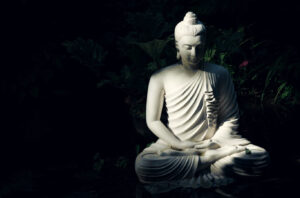 to create a gap between input and impulse, which serves as a mote or buffer of aware space. Whether we are triggered by someone else, or drilling outside the window, all instigating impulses happen in our mind. When the mind builds it cocoon it compounds itself into a hall of mirrors. Turning the attention from this brain constipation toward the aerobic movement of breathing interrupts the process and allows the claustrophobia to abate. When we turn our attention from the overwhelmed brain to the body breathing, we go return to something grounding. And while simple awareness of the breath may seem inadequate to address how impacted we feel, it actually creates a gap that allows the mind more clarity to see clearly.