The Power of a Self-Healing Community
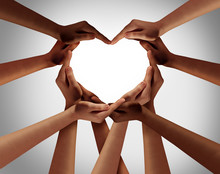
A basic premise of recovery and healing is that isolation incubates pain, expanding it into suffering. On the other hand, communication, community, and connection allow space for healing.
It is true that when we are triggered, wounded, or overwhelmed, crawling into our protective space is often needed in the initial stages of healing. There is a wisdom to retreat. Sometimes the first act of sanity is to step back, become quiet, and allow the nervous system to settle.
But more quickly than we might find comfortable, isolation begins to have diminishing returns. At some point, if healing is to continue, we need to open up and connect with others, or the wound begins to fester.
Part of the reason is that the isolated mind reflects only itself. In that closed loop, it begins to feel different, separate, unique. We suffer in a way that seems as though no one else could ever understand. When we try to communicate we may feel as though no one gets us. And while this is true to some extent—no one knows the exact particulars of our experience—we are, as Maya Angelou reminds us, “more alike than we are different, my friend.”
By sharing our private pain with a trusted community, we allow ourselves to see it from a different perspective. We also give others the opportunity to empathize, often because they have lived their own version of something remarkably similar. We may begin in isolation until we are strong enough to reach out. And this makes us stronger. The stronger we become the wider our community is likely to become. At some point, our community may include those with differing opinions and points of reference. But, as the Buddha instructed the soldier, take the arrow out first. This is akin to the “putting your gas mask on first” trope.
HEALING.
When we are wounded—frightened, defeated, antagonized, or simply exhausted—it feels personal, as though we are being attacked by the world itself. It is reasonable that our immediate reaction is to strike back, assign blame, or clench our fists against the forces that seem to be victimizing us. But our reactions are not really the point. Blame blocks healing. Healing comes from feeling. Or, as is said, “feeling is healing.” Blame is something that happens in the head while feeling happens in the heart.
And it is our heart that has been wounded. The heart doesn’t have the same logic or language as does the mighty brain. The heart paints in abstract colors. We can only listen in and hold space for ourselves with loving patience until the infection abates.
The point is that we have been hurt and we need to acknowledge this. It’s not about who did what. It’s about what is. And what is, is pain.
The first step in working with hurt is to acknowledge it. Not what caused it. Not what it says about our personality or our place in the world. Not the story. Simply the hurt itself.
Can we face it directly?
Once we face the hurt, acceptance becomes the next important step. In time, we can train the mind to experience pain without immediate elaboration—psychological, social, or philosophical. We begin to see what is there without rushing to explain it.
Then acceptance opens into inquisitiveness. We become interested. Where is this pain happening? How do I feel it in the body? Is this pain being amplified into suffering or finding the space to heal?
COMMUNITY.
At some point, we may be to turn outward and speak it aloud to others. This is a brave step in the healing process. To let go our healing and begin to feel with others. This creates more space for the wound to continue to heal. There are many ways to do this: therapy, spiritual friendship, meditation communities, recovery groups, or simply trusted friends.
Sometimes just allowing someone to speak their pain exactly as it is—without fixing, changing, or judging—gives them the opportunity to hear themselves more clearly. In that simple act of being heard, something often softens. And when others respond not by solving but by speaking their own truth in a way that resonates, the person may feel less lonely, less cut off, less singled out by life.
Of course, each modality has both strengths and shadows.
Therapy can be profound, though there is always the risk of dependency on the relationship itself. Community spaces that discourage crosstalk can offer a neutral and nonjudgmental container, though at times they may feel emotionally distant. Informal conversations with loving friends can provide warmth and support, though sometimes those closest to us may only echo what we already want to hear.
To me, an ideal healing community contains something of all of these elements. Warmth. Heart connection. Support. Space. Camaraderie. A sense of being understood and a willingness to understand. One of my mentors, Michelle Killoran, introduced this to me as “the self-healing community.” We are seeking a community, built on empathy and understanding, that allows the next stage of our healing journey.
We are more alike, my friends, than we are different.
How can we help one another without adding further confusion—either through subtle judgment or through over-support of each other’s neuroses? How can we help one another see our own minds and our own path toward healing? And just as importantly, how can each of us become clear enough within ourselves to communicate what we truly need from the group, ourselves, and each other?
Sometimes we need simply to be held, physically or metaphorically. Sometimes we need clear advice and instruction. Sometimes we need silence. Sometimes we need witness. My hope is that this community can become a place where all of that is possible.
We are more alike, my friend, than we are unalike.