FACING THE MAELSTROM

MONKMODER DOOMSCROLLING


Like monks facing the maelstrom, we have may have our best intentions and ethical training. And yet, we may feel paltry and inadequate standing in the face of hatred and conflict.

Our society is currently at war. Those who have chosen a side may have the luxury of being determined and clear. They are able to push through the chaos with a surety that those who feel deeply cannot. But what of those who wish to understand or listen? Their experience is less assured. In fact, their experience might be disconcerting and painful.

Those trained in the ways of compassion will feel the need to help assuage the violence they see. Yet, how can we do so without declaring a side? Once we have taken a side, the other side will likely no longer be listening. The irony of side taking is that the very people who may need to hear what we have to say, are likely to not listen. This is why commitment to nonviolence is so frustrating in the short term, but yields more effective change over time. So how do we deal with the impulse to react with our guts in knots and our mind aflame?

A Bodhisattva must first train to calm their own passions before they have the clarity to help others.  When facing chaos, we may feel the need to do something. And yet, the nature of chaos is unclarity.  A general rule is when the world is chaotic and uncertain turn our attention to ourselves. Change what we can change.  If we could breath, relax and bring ourselves back to balance, we might see the pattern in the confusion. And like all patterns this has happened before and will happen again. From this point of view, the idea that there is a “right side” is absurdly reductive.

If scrolling through your doomfeed makes you angry, frightened or depressed it’s because 1) you care and 2) you have no idea how to help.  So the Bodhisattva is trained to rest in the chaos until a natural confluence emerges. And how might a natural confluence differ from taking sides? From the Buddhist perspective, the view is fostering kindness and compassion. If the world is falling apart, we can choose to add no harm and sit in the turmoil until our time for compassionate action becomes clear.

Water flows into water — sometimes quite rapidly, with significant turbulence. But this is not the fault of the river. Nor is it the fault of society, the world, or even our political systems when they undergo upheaval. Change is not an anomaly; it’s a basic rhythm of human experience on this planet. The planet changes. The climate changes. Political systems around the world shift, often with great pain or even lockdown. From a data point of view, the problem is not change — it’s the challenge of navigating change when we cannot control the outcome.

The work is for us to relax into not being able to predetermine results. Facing this chaos all while maintaining an upright posture of goodness, dignity, and strength. We might experience fear and resentment, but these, as is said, are like drinking poison expecting our adversaries to become ill. Usually, the others just go on their merry way, defiling and defaming others, and we are left feeling ill. Thus we become weak and unable to help anyone. Our first step in warrior training is to hold our seat and gather our strength. The next step is to adopt a posture of bravery and simply represent goodness without proclamation, arrogance or aggression.

Until we’re able to manifest dignity and strength we may become victims. Or worse yet, we may blindly react and become part of the problem.

This is why we need mindfulness, intention, and clarity about what we are doing. We need to interrupt immediate, automatic reactions. Yet these reactions happen so quickly it’s like trying to corral a bull after it’s broken free of its pen. Wherever we catch ourselves bringing aggression into our body or mind, we can just stop. Avoid blame, as blame, which feels so justified, only serves to perpetuate aggression and blindness. Anytime we become aware of the hijacking of our body by fear — whether anticipating what might happen, experiencing it as it unfolds, or reflecting on it afterward — we become more attuned to this very immediate and incredibly powerful process. Simply said, our mind and body are being hijacked by our own nervous system. It’s no one’s fault. However, it is our chore to work with. The work is to free the body, open the heart and let the mind see before we jump into the fire.

It’s natural to want to protect ourselves. But it is not natural to scapegoat a segment of society, to cling to resentment, or to nurture hatred in our heart. The issue here is not “right-wing” versus “left-wing.” The issue is that when we blame others, we harm ourselves. The violence we inflict on ourselves is profound, especially when we mask it as blame toward others.

When we are awake and open to our immediate experience, our natural human dignity will allow us to do the right thing. When we are reactive, our basic animal instinct only pushes us into ignorance. By creating a gap before acting out retribution, we can hold our reactions lightly, release them, and see more clearly. Otherwise, we’re not only grabbing the bull after its left the pen, we’re letting it carry us as it may — all while blaming someone else for leaving the gate open.


BIRD ON A WIRE

I Have Tried in My Way …

I have a pet bird. Or perhaps the bird has a pet human, as it seems to have adopted me. We haven’t actually met face to beak, but it sits on a wire outside my window while I’m meditating. It may perch there at other times, and it might not even be the same bird each time. But I hate those possibilities. I want so very badly to believe the connection I have with my meditation based spirit bird. I don’t need logic. Because she seems to be out on the wire each time I meditate, my mind has connected the dots.

The game of connecting dots is a brilliant function of mind. Three pencil marks might suggest a face looking back at me; shift them slightly, and the face frowns or smiles. The dots themselves are neutral, but belief spins intention into them.

The bird I call Suzanne (after Leonard Cohen’s muse) may or may not feel any connection to me. I’ve had similar dissonance in relationships before. But as a lonely, insecure person, I hold on to beliefs that make me feel stronger. I love to believe I am being held by the universe. I love to believe I am important enough for a bird to gravitate toward me.

I think I create ideas, dramas, and scenarios just to keep me believing in the belief of me. Yet it occurs to me that I spend more energy scripting beliefs than I do simply being. Being and seeing. Maybe that’s all there is when I’m not up on a soap box going on about something.

As humans evolved, we lost fangs, claws, and scales in favor of a higher processing system. The mind now fires millions of signals each moment, most of them unseen or unknown to us. Hence the old adage that we use only 10% of our brain — something I believed as a child, though we now know it isn’t true. The truth is, most of the brain is active, but we’re only aware of a fraction of its work. Still, with limited awareness, we connect the dots — turning fragments into a world we believe in.

We do this to centralize our experience, to feel some sense of control in this vast universe of self. Some say we could be anything. Some say we are everything. Yet we spend much of our energy convincing ourselves that we are this limited self — compensating for its fragility by clinging to importance.

To navigate this inner vastness and the outer world, the mind developed an aspect that believes itself to be independent, permanent, and in control. This subset of mind is a fiction created by mind itself. Whether we believe we are glorious manifestations of the universe or abject failures in need of salvation, this aspect clings to beliefs in a fierce attempt to control. It seeks to manage life, the self, and reality itself, shrinking it all to manageable parcels.

We can see this dynamic echoed in the popularity of fascism. Its potential for evil is clear from the violent examples of the 1930s and 40s. But functionally, fascism is simply a way of protecting a populace by reducing complexity to the simplest components. A rainbow is inspirational but fleeting; a black-and-white world is easier to navigate, especially when survival feels threatened. Fascism thrives on people convinced they are fighting for survival. The truth of the danger matters less than the self-bolstering power of belief.

In the same way, this subculture of the mind becomes self-important and self-protective. We believe in our “rightness” and fall into the mistaken conviction that we must believe in something — and that the stronger the belief, the stronger we are. But this leaves little room for possibility. Even noble beliefs — in kindness, compassion, clarity, strength — can become limiting if clung to too tightly. Anything can be blinding if we believe in it hard enough.

The purpose of the Buddhist path is liberation. If we take this defensive subset of mind — a natural development of evolution — and redirect it toward freedom, we may discover that we ourselves are the source of suffering and also the key to its end. The Buddhist method employs conscious attention, best applied with kindness and clarity. With kindness, clarity, and awareness, we can deconstruct our defensive habits and welcome a richer, more complete way of being.

The bird is gone now. Does it think of me? Does it return because it feels the energy of my meditation? Or is this all just coincidence — a story I create in order to believe? Does it matter if it’s true, if the belief itself serves?

The subset of mind that tries to control reality is often called ego. Usually the word carries a negative connotation — egotistical, egocentric — as though ego were an inflammation of personality. And in some sense it is: a reaction to danger. But what happens when this protective system becomes parasitic, draining us of energy and potential? What happens when ego reduces our world to only what it believes?

Is it wrong to believe? I don’t think so. Belief can be a provisional tool — a way to orient ourselves, much like prayer doesn’t require certainty in a god. The problem arises when we believe the belief, when we defend ego and mistake its narratives for reality. Thus the Buddhist path invites us to investigate our beliefs, to see through them, and to use them when they serve, letting them go when they limit.

So yes, I believe Suzanne sits on the wire when I meditate because she feels the energy I’m cultivating. I believe she is drawn to it. I believe this is evidence that I’m on the right track. Do I believe any of this is objectively true? Probably not. But if it gets me onto the cushion, does it really matter? Only if I cling so tightly to the belief that I miss the deeper reality: my resistance to practice and my grasping for something, anything, to believe in.


Foundations of Mindfulness

Remembering to  Return


Be here and now, they say. Okay. But where the heck is that?

Some would claim we’re right here. Sure. But can we see that? Do we feel, touch, live and know that? Maybe mindfulness is remembering that we have no idea where we are. Until we do, that is. Until then we might stop believing and remember that we’re being here, now.

But what of believing? I’m going to go out on the end of the donkey and say that beliefs can sometimes be obstacles to mindfulness. Mindfulness is resting the mind on an object in the present moment. Living a mindful life depends on our ability and willingness to hold our mind to the raw, factual, actual reality before us. Beliefs can misguide us when we believe in things that we only think, but which we have no corroborating evidence. We can’t rest our mind on an idea.

This post is an exploration of a traditional Buddhist teaching called “The Four Foundations of Mindfulness”. These are the cornerstones of clear seeing on which the powers of mindfulness rest. Interestingly, the trad texts translate mindfulness as “remembering”, or “recollection.” The point seems to be remembering to remember that we are here. Right now. Problems come when we believe we’re in some internally created reality that doesn’t include very much actual reality. While this is a big problem when we don’t recognize it, in reality, it’s not a problem at all when we see happening. Mind’s wander. They make up stories. They start trouble when they’re bored. Just like kids, the unawakened mind believes make believe. The mind grips so tightly to here that it fails to see see what is happening now.

What’s the problem? Especially when most of us are able to stumble through life, even tho we have no idea where we are? Minds wander. Untrained minds believe the places they wander are real and so, get lost in their stories. They end up wandering out after dark. The fact that we make it home at all allows us to forget how much danger we may have been in. With mindfulness practice we can train ourselves to remember and bring ourselves back home to what is actually here, now.  No matter how far we’ve travelled, we need only remember and we’re home in an instant.

Your body is always here. Your life is always unfolding. Your emotions are always happening. But your mind—it can be anywhere. Mindful living begins when body and mind meet in the present.

Mindfulness of Body

The body never leaves the present. It absorbs our joy, pain, fear, and connection—whether or not the mind notices. Instead of judging it, imagine the body as a loyal friend: imperfect, maybe heavier or slower than you’d like, but always here, always supporting you.

We often see our body through distorted beliefs—like thinking we’re overweight when we’re not, or obsessively poking and prodding to “fix” ourselves. These are false ideas, not reality. True mindfulness of body is not about changing or perfecting. It’s about seeing, accepting, and caring for the one who’s been with you through every moment of your life.

Mindfulness of Mind

The mind spins stories, schemes, and worries. Mindfulness of mind means stepping back and asking: Is this true? Is this useful? Is this about right now? Most stress comes not from the present, but from catastrophic or compulsive thoughts. By noticing them, we can return to clarity in the moment—where life is always more workable.

Mindfulness of Life

Life is not only what happens around us but also how we relate to it. Is your life supporting your well-being, or draining it? Mindfulness of life means recognizing what helps, what harms, and when acceptance—not struggle—is the wisest response. Even in difficulty, people find love and strength when they learn to see what’s really here.

Mindfulness of Feelings

Feelings are not the enemy; they are our life force. Joy, sorrow, depletion—all deserve recognition. By noticing them, we can arrange our life to support inner balance rather than ignore or fight what’s inside us.


At the heart of mindfulness is returning—again and again—to an open body, a compassionate heart, a clear mind and synchronicity with the flow of life. This is our refuge. Even in real danger, presence makes us stronger and steadier. When something signals, pay attention, but forgo the stories. Feel what this part of you is telling you. If nothing else it’s an opportunity to come back. If the body, mind, feelings or life grab your f0cus screaming that THIS is real, remember to return to your whole self. The integrated self, the comprehensive being, the fullness of you in the present is presence.

And don’t forget to smile—with your face, your heart, or even in your imagination. A smile signals confidence, openness, and connection, even when unseen.

Strong body. Open heart. Clear mind. Aligned with life. Conscious and intentional.

And when we get lost, we can remember our body, feelings or life and return the mind from believing to being.  That is the practice.

And, as far as anyone knows, it never ends.

IT’S ONLY A MOVIE

“Keep telling yourself ‘it’s only a movie‘” was the famous tagline for Wes Craven’s Last House on the Left in 1972. It may be appropriate to look at the harrowing moments of our mind with the same encouraging detachment. No matter how serious life may feel in the moment, like a movie, it’s seeming realism is the result of a perceptive trick of the tale. (Pun intended). Neurological fake news is an ongoing misinterpretation of reality bent to the purpose of making ourselves more important to ourselves.

Sometimes we are suck into the movie, gripping our nails in harrowing belief; and other times we’re able to step outside the frame seeing ourselves telling ourselves a story. With meditation practice we can slow the process in order to peak beyond the folds of the curtain to the working basis within.

I love moments of hypnagogic consciousness upon awakening, surfing between sleeping, dreaming and waking as if skipping over gadget impressions as we rise into awareness.

But, just before we wake there is a most precious moment.  A moment of “ahhhhh” that precedes all thought. This moment of pure waking precedes every moment. This is the sacred space, or gap, where we have a limitless opportunity to hack our preset turning our mind from rote adherence to habit toward discovery and change. This may be the very space of creation. The moment before, before.

And within this gap we might get a glimpse into the projector. The apparatus that constructs the fantasy of life.

For many humans, with the outsized pressures of modern life, this subtle moment goes by unreguarded. We push past it, bursting awake to the screeching beep of the alarm, sing some innocuous tune in the shower, dress and rush straight to the coffee. In short order we’re following our travel mug down the street to the train. It’s like waking up after a drunken night next to someone you don’t know, trying to sneak out the door before they wake up.  That used to happen to me every morning. And I lived alone. I could be three stops on the train before I start to recognize myself.

When we slow down in order to meet life, we might see life happening in the gaps we blast past. If we train the mind to pause and pay attention to these precious moments, every following moment becomes an opportunity for discovery. When we turn our mind toward discovery our lives become alive. This is what we refer to as waking up. It’s not leaving a dream state for a somnambulist state, but actually awakening. Looking past the curtain and seeing the mechanics of our seeing.

The Buddha experienced pain and suffering – even after his enlightenment, up until his death – or he wouldn’t have had the skillful means necessary to convey a remedy to suffering. He was there with us. He was not a supernatural being who might free us if we were to play along and do as he said. The path of awakening requires our participation.  And yet, that participation can’t be under our control. Aye, there’s the rub. We can’t just close our eyes and wait to wake up and yet we can’t turn our journey into the next story we are scripting.

Buddha took the personal and translated it to the universal. He owned his personal experience, yet his personal experience wasn’t about him. It was human experience. In the same way, our life is personal, but it is not ours alone. Whether we know this or not, we are inextricably part of everything in nature.

But all too often, we fall away from waking, into fantasies projected by inner narratives. We carry the dream of sleep with us into our day. And in our dreams we are too important to regard the life around us unless we can twist it to fit the narrative.  The mind does this instantly with little concern for reality. It creates stories with ourselves at the center that give us the impression that we are in control. But all we control is our narrative. Like a movie “moving” at 24 frames a second our internal movie creates a momentum that renders a false reality that looks and smells like a duck.

Trungpa, Rinpoche said to a group of students in a shrine room that the before we notice the walls, or the columns, or the floor we have a micro instant gap, which he illustrated with a gasp. Gasp, floor. Gasp, ceiling. Before we label anything, or categorize any moment, we have a moment to pause, breaking the momentum that perpetuates the movie, we might see a past the curtain to a brighter, clearer moment.

We may absorbed in be a gripping movie. But the world is nonetheless waiting outside for us.

A PRESCRIPTION FOR LIVING

The Foundational Truths

Soon after his enlightenment, Buddha gave a teaching that would become the cornerstone of his path we now know as “The Four Noble Truths”. It happened in northern India, in the 5th–4th century BCE, in Deer Park at Sarnath.

Newly awakened after years of searching, Buddha was reluctant to proclaim his insight. According to the early texts, he spent about seven weeks in contemplation under and around the Bodhi tree in Bodh Gaya, processing what he had realized. He questioned whether it was possible to communicate such a profound truth to others.

Eventually, he decided to start where we are. Suffering.

For his first teaching, Buddha sought out five aesthetics who were companions of his that abandoned him when he gave up severe self-mortification. Reunited with his spiritual clan, the Buddha taught them on the middle way, and the four foundational truths.

Suffering is a universal experience, something we all experience. Secondly, Buddha felt this affliction was treatable. The teaching that followed, known as The Four Noble Truths, give a complete map: the problem, its cause, the possibility of resolution, and the method to reach that resolution. Offering a balanced, pragmatic approach to liberation from cycles of suffering.

The Four Noble Truths are:

  1. The truth of suffering (dukkha) – Life contains stress, dissatisfaction, and pain.

  2. The truth of the cause (samudaya) – The root is craving (tanhā), the urge to cling, avoid, or control experience.

  3. The truth of cessation (nirodha) – If craving ceases, suffering ceases. This is nirvana.

  4. The truth of the path (magga) – The way to cessation is the Eightfold Path.

This framework mirrors the way ancient Indian physicians worked, and it’s still recognizable as a medical model today. Diagnosis → Identify the problem (dukkha); Cause → Find its root (tanhā); Prognosis → State that it can be cured (nirodha); Prescription → Lay out the treatment (Eightfold Path).

The Buddha wasn’t positioning himself as a savior, but as a kind of spiritual doctor—offering a practical cure for the human condition.


The Treatment Plan: The Eightfold Path

The Eightfold Path is the “prescription” for ending suffering. It’s traditionally grouped into three trainings—wisdom, ethics, and mental cultivation—and each step works like part of a treatment plan.

Wisdom (Paññā) – Understanding the condition

  • 1. Right View – Seeing reality clearly: impermanence, interdependence, and the Four Noble Truths. Modern analogy: learning what your “illness” is and what causes it—no denial, no magical thinking.

  • 2. Right Intention – Committing to letting go of harmful attachments, cultivating goodwill, and practicing non-harming. Modern analogy: deciding you actually want to follow the treatment and recover.

Ethics (Sīla) – Stopping behaviors that worsen the illness

  • 3. Right Speech – Avoiding lies, divisive speech, harshness, and gossip. Modern analogy: cutting out inflammatory habits that aggravate your condition.
  • 4. Right Action – Acting in ways that protect life, respect property, and maintain integrity in relationships. Modern analogy: following your doctor’s “no junk food” or “no heavy lifting” orders.
  • 5. Right Livelihood – Earning a living in ways that don’t harm others. Modern analogy: not working in a toxic environment that continually re-exposes you to your triggers.

Mental Training (Samādhi) – Building the mind’s immune system

  • 6. Right Effort – Actively cultivating wholesome states of mind and preventing unwholesome ones from arising. Modern analogy: taking your medicine, doing your exercises, and sticking with the program.
  • 7. Right Mindfulness – Maintaining awareness of your body, feelings, mind states, and patterns. Modern analogy: tracking your symptoms, noticing early warning signs, and making timely adjustments.
  • 8. Right Concentration – Developing deep, stable meditative states (jhānas) that lead to insight. Modern analogy: focused therapy sessions that reach the root cause.

Followed fully, this treatment doesn’t just manage symptoms—it removes the underlying cause, leading to complete liberation.

In that first sermon, one of the five ascetics, Kondañña, experienced a breakthrough. Hearing the Buddha’s words, he gained direct insight into the truth that “whatever is subject to arising is subject to cessation.” This marked the first awakening in the Buddha’s sangha—the beginning of the community of practitioners.

From there, the Eightfold Path spread not as dogma, but as a method. Just as medicine must be taken to work, the path must be walked to bring results. Its structure makes it practical and testable: anyone can try it and see what happens.

Over 2,500 years later, the Four Noble Truths remain relevant because they address something universal: the human wish to be free from suffering. They don’t rely on cultural specifics, supernatural claims, or blind faith. Instead, they start with our direct experience, diagnose the root cause, and offer a clear, compassionate way forward.

The Buddha’s first teaching wasn’t an abstract philosophy or a set of commands—it was a blueprint for healing, given by someone who had tested the cure themselves. In that way, the wheel he set in motion at Deer Park is still turning today.

WHERE DO WE RUN?

Understanding Refuge in Modern Times

Ever wish you could just run and hide? Ever play hide and seek with your life because it all becomes too heavy? Do you ever reach for the panic-button in reaction to difficulty? Ever slump in discouragement because it’s all on you, but you just can’t figure it out?

Well, maybe it is on you. But maybe it’s not your fault.

Many of us have never learned to see our lives as they are. Many of us have never learned how to think. We just accept the mind’s confusion, blame our woes on others, and pray for a way out. But maybe there is no way out, except to be here—to learn to see what’s happening and work through it.

We can do this. With patience, kindness, and love, we can gain agency in our lives. We can become players instead of victims—if we are willing to learn. In Buddhism, we look to the example of an enlightened mind, which reflects the enlightenment inherent in all of us.

It takes training to learn to see beyond the compulsive thinking that grasps at the wrong straws. We create more confusion out of a confused world when we blindly reach for what we think will save us. This might be as grand as a lifelong commitment to a nation or spiritual community—or as quick and impulsive as a harsh word, or hitting “send.”

When we feel pressured and need relief—when we’re challenged, triggered, or brutalized by life—our immediate defense is often to lash out. We turn to anger and aggression, or to something or someone we hope will save us. Or we retreat to a private island in our mind, looking for refuge.

But when we seek refuge in something not grounded in what is, we only deepen our confusion. We stop learning.

Throughout history, there have been countless religious, cultural, and commercial icons of refuge. Yet—if you’ll grant me a cliché—wherever you go, there you are.

And if we’re not willing to be here, how can we ever move beyond?

We’ve taken the beautiful teachings of Jesus, Muhammad, and the Buddha and used them to condemn one another—or to save ourselves. Perhaps we spin on a bipolar wheel of condemnation and salvation, swearing off our vices each morning and forgetting by nightfall.

When I was lost in the self-abusive cycles of alcohol and drug addiction, I was blind to any direction my life could take. I spent all my time trying to extricate myself from the sins I’d committed the night before. I took refuge in blame and resentment.

The legal counsel of my rattled brain was perpetually building cases against some system or person. The biggest problem was that I thought I could do it alone. I kept my self-professed sins to myself, spinning outward appearances however they needed to look.

The phrase is “close to the vest”—but “vest” is close to the heart. And putting all that guilt, shame, and doubt into my own heart was as unhealthy as it was ineffective. Because no matter how intelligent we are, it’s our heart that communicates. Whether we understand that—or the recipient of our communication does—we still feel each other. No one needs facts to stop trusting us. If our heart is not in sync with itself, our confusion communicates. And the world responds by withholding trust. This only deepens our isolation, as we carry a broken heart in secret through a world of resentment.

At some point, in utter frustration at nothing working, I just surrendered. There was nowhere left to run. Which left me here. The way out is the way in.

We sit. And we sit. Until we begin to disengage the compulsive mind from the mind’s potential. We get lost in fantasy. We train the mind to recognize that—and return to ourselves, and this very moment. At any time, again and again, as we drift into delusion, we can return to now.

That is our refuge.

In meditation, we train the mind to recognize delusions of blame, shame, doubt, and confusion, and to turn back to trust—in our own heart, and in the present moment.

This is the example of the Buddha. No one saved him. He worked through is shit. He awakened.

With nowhere to run and no external salvation, Buddhism offers practical remedies. We turn to the Buddha—not for rescue, but as an example of a liberation we can achieve. How is this different from running to a god, a savior, a corporation, or a country to save us? Well, the Buddha will not save us. He is long gone. But the enlightened mind he accessed is available to all of us if we follow his example.

But taking refuge in his example means being willing to face ourselves, now in this moment. Not blaming ourselves for the past. We have no control over the past, so how can we be faulted for that which we have no control? Maybe there is no fault, but it is an opportunity to change the present. And no matter how difficult that present may be, it is always better to face it than to turn away.

So when we are triggered, panicked, or confused, we have the opportunity to turn to the enlightened mind within us. You may see this as your higher power, the awakened mind, which offers us the strength to face the moment, through each moment of our life.

Instead of grasping for external salvation, we can turn to the example of an awakened mind, which liberates the awakened mind within us.

The Buddha was not a god. He was a human being—who lived, died, failed, and succeeded. He had no supernatural powers. He was a teacher and student of the Dharma (the path to liberation) who worked diligently to free himself from his own suffering. Because he did the work, he understood how others suffer—and offered teachings to guide people to their own liberation.

Turning to this example is Taking Refuge in the Buddha.

“Buddha” means awake. We are taking refuge in our own wakefulness—both the part that already exists, and the part still developing.

To guide us on the path, we turn to the teachings—a map, not a doctrine. This is Taking Refuge in the Dharma.

The Buddha offered his teachings (the Dharma), and he offered the wisdom of the community around him—the teachers and students walking the path together. This is Taking Refuge in the Sangha.

The idea that we could wake up tomorrow free of guilt, resentment, and limiting patterns might seem like magic. But the Buddha offered no magic—only an ordinary path to learn how to see.

THE PASSING


Love may be an eternal flame. But you and I are just sparks. We illuminate the journey and pass into the dark night.

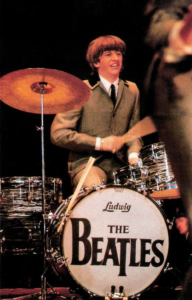
We will die. Our great love destined to last forever will pass. The best poems will pass. The Buddha passed and Buddhism will eventually pass. Even the Beatles who’s songs seem to reinvent themselves will eventually fade out. The “me” we’ve come to know, cherish and protect will pass. Very few will ever know when. Even condemned prisoners facing a given execution date have reprieves, stays and appeals that change the date so many times, that many most die of natural causes at an ungiven time. Even patients on their deathbeds, don’t know how and when the actual moment will come. Suicide is an act of fearful control, playing god with pills or knotted bed sheets. Even then, do we know when the moment will come and how it will feel? Nothing can move faster than the speed of light, and none of us while living can know our own death.

Looking objectively, this seems a pretty lousy deal. Who would make such a bargain? Were we drunk? An inebriated fetus in the Vegas womb gambling blindly on life?

We come into this world, clinging to our new existence grabbing onto shiny objects as they pass. This will continue through our life as though life is defined by everything we capture.  Maybe we might halt the flow of time by hanging onto reeds on the shore. This drive to exist is deeply programmed into us as a primal imperative. And in our desperate gripping to “be” few of us consider the fact that tour being will one day be stolen, often without ceremony or warning.

But yet, do we really not know? Somewhere inside we get it, don’t we? As deeply programmed as our drive for survival is, the knowledge that the ice below us is very thin is unseen and unspoken at every moment. Every fear, dark dream or shadowed room, speaks to the actual fear that lies within us. The very rebirth of spring heralds the coming thaw when the ice of our pretense will thaw and we will fall into darkness eternal. So, without ever thinking it, we strategize, plan and plot to avoid the inevitable. Too fearful to let go and live, we are always running, hiding, apologizing, explaining and rationalizing. Living in our head, we bargain against catastrophes we imagine, all the while knowing somewhere that one of these will come true.

Contemporary songwriter, Jason Isbell, wrote If We Were Vampires, and life was a joke, we’d go out on the sidewalk and smoke, and laugh at all the lovers and their plans. I wouldn’t have the need to hold your hand. This is stunning … maybe, he continues, time running out is a gift. I’ll work hard till the end of my shift. And give you every second I can find and hope it isn’t me who’s left behind.

So, death without warning is a raw deal, but would immortality be better?  If we won every hand while sitting at the cosmic card table, wouldn’t we soon lose interest? Wouldn’t the game become less meaningful, even from the start?

The question of our impermanence—and what it means to us—is central to the Buddhist path. Dying may be the fundamental statement of life. As one traditional Buddhist slogan reminds us: Death comes without warning. This body will be a corpse. In particular, the life of beings is like a bubble that can burst at any time. This slogan is one of the “Four Reminders, That Turn the Mind to the Dharma” and is recited every day, often in the morning, and even on birthdays. Buddhism not inherently morbid. In fact, this reminder comes after we contemplate the preciousness of our human birth, a slogan that ends “now I must do something meaningful.” Our life is short. But the life around us is plentiful, powerful and poignant. It was here before us and will continue after we’ve gone. Yet so much of that life is held at bay because of our fear. Maybe the issue is not death as much as the way we allow fear to dominate life. Buddha had his students look at suffering and fear as primary conditions of human existence. He did this so that by accepting life as it is, we can begin to learn about the life that is actually here. It is that life that becomes the roadmap to our liberation. If we don’t see the truth we can’t understand the condition.

By looking directly at our existential situation, we are not only confronted with the tragedy of life, but also its preciousness. Facing death awakens us to the value of life. Acknowledging that we don’t know how or when this life will end is naturally frightening—especially to the part of our mind that seeks control. But meditation is the process of uncovering and letting go of that fearful need to control. It is not death that keeps us sequestered from life, it is the need to control our life. However, letting go of control does not mean letting go of our agency. In fact, as we develop awareness and the ability to pay attention to the preciousness of this moment, our agency becomes more potent, not less. When we find ourselves gripping, coercing, manipulating—trying to hold on to impermanent aspects of life—we can pause and recognize that impulse as a common human frailty. Then, we can look within and remember control is futile. Control might preserve some aspects of the life we’ve already had, but it does nothing to allow us to live now. And living now is so very important to our health wellbeing and development. We cannot control the future, but we can wake up now and direct ourselves toward our purpose. This is how we gain agency by letting go.

This life is a passage that leads …

well, you’ll have to stay tuned.

CONNECTING TO ORDINARY MAGIC

The Ordinary Magic of Synaptic Receptivity and Connection.

As I walk down the street, or through a garden path, as I drive to the store or wander through the park, I become lost in my head, waging battles no one can see. This self obsession creates a moat between me and the life all around me. As I work out the details of my goals, the small and ordinary things of my life are passed by unseen. As though the birds and flowers and trees are less important than I am.

Children have a natural inquisitiveness. They are one in the joy of learning to learn, when everything is a discovery; the unbridled joy of discovering their own feet. When did we forget to be amazed by our own feet? When did we get so mentally complex that we forgot to be amazed at all?  When did we become so self-important that the very ordinary things of life became inconsequential? With meditation practice, we can reclaim this synaptic receptivity—the openness and willingness to connect deeply with the world around us. This is the ordinary magic of connection, allowing us to notice the moments that connect us to life, as it happens, in real time, all around us.

We usually cloud our connections with an overlay of bias, judgement, misapprehension. This misapprehension stems from the mind referring to itself in a limited loop, rather than connecting out to the life that is there. The mind wants what it wants, and so it limits information gathering to only that which supports its thesis. Instead of an open and childlike wisdom gathering, many adult minds are limited and dull. With regard to healthy brains, this dullness is a choice.


Isolation, Habit, and Self-Limiting Patterns keep us locked in cycles of ignorance.

Albert Einstein’s brain was ordinary in size and structure, but it had a profound synaptic receptivity—an openness to learn, notice, and connect. During his lifetime, Einstein’s ordinary mind had developed an extraordinary amount of neural connections. Is genius was making connections others missed. His mind had developed a willingness to learn.  We often lose this willingness. We replace connection with isolation and curiosity with self-limiting beliefs, compulsions, and habits. We look for answers we believe we already know, filtering reality through prejudice and bias. But the remedy is right in front of us. Literally. Here in the unspecial ordinary moments of life. By training the mind to notice even the inconsequential things, we are connecting to life itself, as it is. The mind loves connection. It learns and accumulates knowledge, but it is the ability to connect to new things, new ideas, new moments that physically develops its structure. This keeps it young, regardless of chronology.

A fundamental tenet of recovery from substance addiction is connection versus isolation. Isolation breeds addictive behavior, which further isolates us. This applies to all of us, regardless of substance use.  Attachment to habitual thinking and compulsive behaviors closes the mind’s receptivity. When we over-stimulate certain neural pathways through repetitive behavior, the options around those pathways begin to atrophy. Our world becomes narrow, centered on hunger, fear, and the constant search for comfort. The trajectory of this mind’s development is toward dullness and depression. Chogyam Trungpa referred to this trajectory as heading toward the “setting sun” as opposed to the rising sun of awakening.

This is neurosis: isolation that absorbs our attention and keeps us from noticing reality; birds building nests, clouds moving across the sky, or squirrels in frantic mating dances. We are drawn into fantasies, believing self-limiting stories: that enlightenment is beyond us and that the beauty of the world is unavailable until we sort the papers on our desk. A setting sun mind remains frightened, hungry, and disconnected.


Training Synaptic Receptivity Through Humble Openness 

Recovery from isolation is possible. It has been proven that an act of surrender, originating in desperation and defeat, can grow into ongoing acts of opening. This can be to actively thwart ego’s acquisitiveness and developing its inquisitiveness.  Instead of grabbing onto fantasies, we turn our mind to what’s here. Magic happens in the small ordinary places we are often too self-important to notice. As meditators, we employ the repetitive, simple behaviors to frustrate ego and retrain the mind to be here with what is; the breath, the body, the moment.  We are turning the mind to be inquisitive about life beyond the cushion. By directing our minds to see life as it is, we are positioned to see what we are becoming. We are facing the rising sun of possibility.  We train ourselves to be open, perceiving without bias, as if we were a pure lens, opening to the sacredness of ordinary moments.

In Meditation, each time we see ourselves caught in fantasy, we are strengthening our capacity to recognize what the mind is doing. Without judgment, we simply notice and return to the present. This choice to return builds neural pathways for connection and wakefulness. Recognition and returning render intentionality and agency. Realizations come and go, but our life is all around us, offering countless moments to build connectivity. Coming back to the present—even to the simple presence of the breath, our body, or our feet on the ground—builds the openness needed to experience the grand possibilities of mind.

To develop synaptic receptivity, we need connection. Connection to the breath, to the moment, to the ordinary magic of life around us. We learn to see the world, like Einstein did, as something to be part of, not to grab or conquer. When we have the humility to open to each moment, as it is, we discover that the beauty of the world in every step.

The ordinary becomes the gateway to discovery. This is Magic.


MINDFULNESS: A CONVERSATION WITH NOW

Mindfulness is a word that’s used a lot, perhaps overused, which means it has many permutations and applications. Today I want to talk specifically about  offering our attention to the present in order to soothe and heal ourselves. I’m not talking about the ruler-on-the-knuckles, look-at-your-homework attention. I’m talking about recognizing the connection we have with the earth all the time in everyday life.

When Lord Buddha became enlightened, he was asked how he knew he was enlightened and he touched the earth and said “the earth is my witness.” This act of humility was simple and profound. Enlightenment to the Buddha was not some grand state of all-knowing; it was a state of acquiescence, acceptance, and presence. It was not rising above our circumstance, but simply being here. We can reconnect to that state of presence, everytime we touch the earth by making contact with the present. Feeling our feet on the ground as we walk, feeling our hands touching the knife as we prepare our meal, taking any and every opportunity to interrupt the grand narratives we script with ourselves at the center and allow ourselves to be present with whatever we’re doing. And today I would like to introduce how we might do that in a tactile and definite way. This simple engagement will transform your life.

A practice common to many contemplative traditions is to turn our mind toward connecting to the earth as much as we can, as often as we can. I recommend a second step. Each time we make contact with the present moment we offer ourselves a moment to go beyond the mental assertion of that contact into the felt sense, the feeling, the emotional and experiential connection to what we’re doing. The practice does not need to be lugubrious or overly religious; we need pause only long enough to go past the mental assertion into the felt sense experience.

Paulina Oliveros, the sound shaman and musicologist, would have her students walk around the room slowly enough to fully engage their feet on the earth. Then she would instruct them to “listen” to the earth through their feet. Now, the literal-minded among us might furrow our foreheads on that one, but we’re talking about an experience of allowing. We’re allowing the information of  our contact to the earth to register.

We’re looking at two stages: the contact and then the communication. Feeling our feet on the earth is a very common contemplative practice, but I’m recommending a second stage where  allow ourselves to register whatever information there is in that experience. This is just a matter of holding our attention on the placement of our mind just a tad longer than we would in a normal mindfulness experience.

Some might ask, “how can I do that all day long? I’m busy, I have things to do, I’m important.” Well, so is your life, and actually learning to reprogram the mind to feel and experience your life is quite profound. But as a practical measure, we don’t have to do this constantly. Whenever it occurs to us to do so, or as a practice when we are alone. We come back to the present, feel our feet on the ground, and see if we can’t feel into the experience that we’re receiving.

This two-step process can be seen as a yin and yang application. Yang is the assertive, some say masculine, action, and yin is the receptive or, you could say, feminine action. So while yang places the attention, yin opens and receives the information. During our day, we can place our attention on something in the present and then receive and register that placement. This has a very soothing effect on the mind and body.  This soothing is quite transformative.

Doing this practice in retreat, I changed my mind configuration entirely. This very simple process might seem very ordinary, but is actually quite profound. It is certainly mood-altering and can allow us to stabilize the energy of our inner being.


Let’s test out a practical approach:

Come into a settled state. You don’t have to be in a deep meditative state, just generally be here. Place your hand gently but intentionally on your thigh.

  • There are two stages: we’re placing the hand, that’s Yang, and then give a moment to let Yin mind register whatever comes back to you. What comes back might be informational, such as the bottom of my hand is warm, while the top is cooler. It might be emotional, such as I feel connected to myself. Or it may have no words whatsoever and simply be an experience. Of the various ways that contact registers, this wordless state may be the most profound.
  • Now take your other hand and place it on your chest. Be mindful of how it feels. You may have a physical response, an emotional connection or you may have a wordless connection simply experiencing the contact. Or you may have all 3 levels; body (wordless), spirit (emotional), mind (informational). In any case, avoid scripting stories and having judgements about the experience. Just be with the contact.
  • You could gently drop your hands and just become aware of that. Then place your mindful attention gently but definitely on your feet. Then allow a moment for yin mind to receive the fullness of that contact. You might feel something, you might have an emotional reaction, or you may have nothing but an elongated sense of contact. In any case, you are changing your brain.
  • Now stop, shake out, and just drop back to your normal listening posture and smile. Give yourself a really big smile.

Applied mindfulness is allowing yourself to feel your moment, your hands, your feet, your seat and all the contact points to the earth. And know you are being held by the earth, loved by the earth, and that you are part of the earth.

Welcome back.


ANXIETY


FACING THE FACELESS DREAD 

Ugh, I’m anxious. I’m so busy and sometimes everything wants my focus. This feeling makes me want to fix change or medicate … uh, something. Something unsettling I can’t identify. Like I’m waiting for an existential jump scare. Washing dishes is good at times like this. Hahaha – but I can’t bring my kitchen sink whenever I get anxious.

So, what is really going on when I feel this unsettling faceless electric dread? Let’s look at it.

Anxiety is a future-oriented state of apprehension in response to perceived threat, uncertainty, or potential negative outcomes. It differs from fear, which responds to immediate danger we can see and touch. Anxiety is fear directed toward unseen speculation, leaving us without a clear framework for resolution.

In anxiety, our nervous and endocrine systems are on high alert without a definable cause. We become cut off, alone, in a state of amplified readiness, scanning for danger that isn’t clear.

At its base, anxiety is natural, it evolved as a survival mechanism that heightens vigilance and prepares us to fight, flight, or freeze. Aside from being a neuro-alert system, it can direct mental focus and enhance performance. When I teach to businesses in the city, I remind people that a touch of anxiety likely drew them to this fast-paced life. As a performer, I’ve learned that a bit of stage fright sharpens focus and presence.

However, chronic anxiety can harm us deeply. It enlarges the amygdala increasing reactivity, shrinks the hippocampus impairing memory and emotional regulation, disrupts the prefrontal cortex, making it harder to calm ourselves, and dysregulates the nervous system causing tension, digestive issues, and sleep disturbances. These affects create a feedback loop between the mind and our nervous system feeding itself with catastrophic thinking, rumination, and the urge to control the uncontrollable.

So how can we train the body/mind system to work with anxiety, so it can guide us without taking control.

Anxiety, Self-Harm, and Compulsions

When anxiety triggers us, we look for an escape like a wild animal. We often reach for habits that soothe in the short term, but ultimately leave us vulnerable and deflated. As a rule, unconscious behaviors ultimately entrench suffering. We might pick our skin, pull our hair, clench our jaw, overeat, drink to numb, or compulsively scroll. Each action offers a brief relief from the discomfort but often creates guilt, physical pain, or more anxiety, trapping us in a loop.

These habits are attempts to manage the unbearable energy of anxiety in the body. They are signals that we need to pause, return to the present, and tend to the body and mind directly, rather than seeking to escape.

Pause before you Act on Anxiety

One of the most helpful rules I’ve learned is to Never act on anxiety.

When we feel anxious, there is an urge to fix, flee, or figure out what went wrong. We want to act, to get rid of the discomfort. But action from anxiety often perpetuate further anxiety, leading to impulsive decisions or words we regret.

Instead, just pause. Allow the anxiety to be there, look at it without feeding it. Then check your body. Are you ready to jump out of your skin? Clenching your fists or jaw? Tapping your feet? On the edge of your seat ready to start doom scrolling at the meeting?

When we pause, we shift from reacting to observing, from doing to being.

The Practice: Stop, Drop, Open

🪐 STOP:

When you notice anxiety, pause. Cut the loop of feeding your brain and having it frighten you in return.  Acknowledge anxiety’s presence. Feel your feet on the ground. If you are walking down the street, rather than speeding up to outrun the discomfort, turn you mind to include the body, slow your pace, and rejoin yourself.

🌿 DROP:

Drop your attention from the spiraling thoughts into your body and breath. Notice the sensations: tightness in the chest, clenching in the belly, tension in the shoulders. Take three slow, deep breaths, lengthening the exhale on each breath to signal safety to your nervous system.

If you are at your desk feeling anxious, take a breath and notice the chair beneath you, the sensation of your hands resting, your feet on the floor. Let your awareness drop fully into your body.

🪶 OPEN:

Once you have paused and acknowledged the body, allow your breath to soften the areas of tension. Breathe into the tightness with warmth, like comforting a frightened child or a barking dog. Anxiety is the body trying to protect a frightened part of you; so treat it with kindness or you will only make things worse. Boycott judgement. Dont think about “relaxing”. Just open and become aware.

Opening means allowing the breath to flow fully and letting the body gradually release its grip. You can place a hand on your heart or belly, reminding yourself:

I’m here with you.”

When our mind and body are present, we are more complete, as though we’ve returned home. There may be fear, but we can handle it together.

This practice counters the cycle of anxiety feeding on itself. By not acting from anxiety, by stopping, dropping, and opening, you shift from reactive patterns to responsive presence. You do not have to get rid of anxiety to learn to live with it.  Just remember it’s stories are never real. Drop the narrative  and feel.

Welcome home.