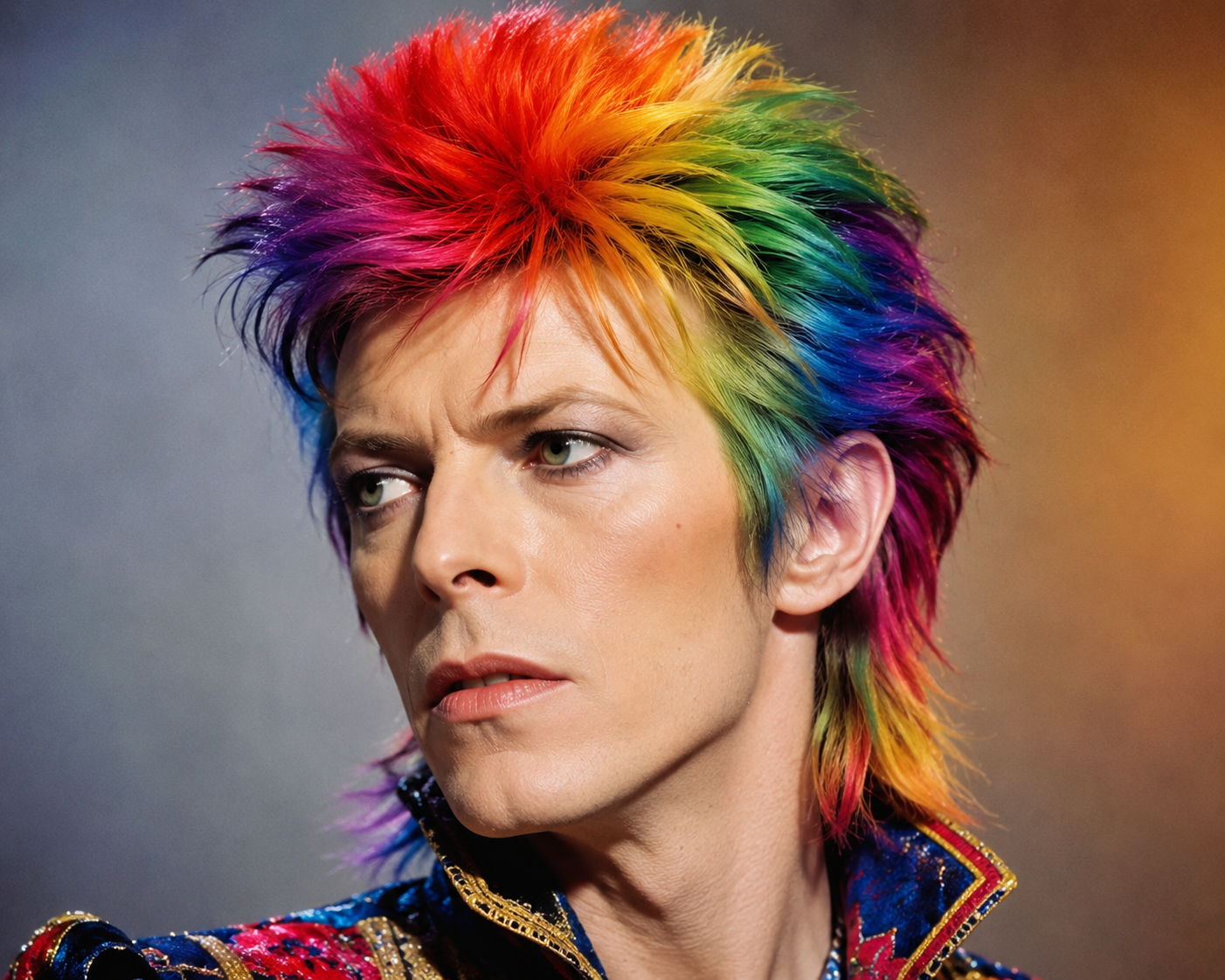
Ch-ch-ch-changes…
We’d go crazy if things never changed. Be honest: how long could we reasonably continue doing exactly what we’re doing without growing, shifting, expanding, or evolving? We need change. Yet we dread it nonetheless.
This dissonance creates friction in the mind. We react to change while simultaneously guarding against it. It’s like gritting our teeth while being dragged from a warm bed despite every effort to stay bundled beneath the covers.
The Buddhist community has a saying: Change or be dragged.
“Okay, okay, I’ll change,” we say, “but I’ll do it my way and in my time.”
So we step into a bright new world disgruntled, tense, and prepared for whatever danger we’ve projected onto the future. It’s an odd thing about us that we believe rehearsing danger somehow protects us from it. Another saying I’ve heard is that worrying is like praying for something bad to happen. In a sense that’s exactly what we’re doing—reciting a mantra of defeat before we’ve even arrived.
Starting fresh could be a breath of fresh air. Yet many of us simply drag the same luggage into the new situation. It’s exhausting.
As I write this, I have boxes, crates, folders, and containers filled with notebooks and writing that go back forty years. I’ve moved them to four different homes. Yet I haven’t opened a single notebook in any meaningful way for decades.
The cost isn’t just the weight of moving them. It’s the space they’ve occupied in my life. I once stored them in my mother’s basement. When she died, I emptied her house and inherited another collection of photographs, cards, papers, and memories. Her archives merged with mine.
I’ve always judged people whose homes were cluttered. Their spaces made me feel claustrophobic. But over time my judgment softened. I began to understand that most hoarding is rooted in fear. People aren’t simply collecting things. They’re holding on. They’re bracing themselves against change.
But isn’t change a good thing? At the very least, isn’t it completely inevitable?
Why do we cling so tightly to things that prevent us from changing?
If change is unavoidable and growth comes through change, perhaps what limits us isn’t change itself but our panic around it. What are we actually afraid of?
David Bowie sang, Turn and face the strange.
What’s new? What’s next?
The problem is that what’s next often arrives burdened by everything we’ve carried from what’s already been. Imagine arriving at a dinner party with six suitcases.
“Why all the luggage?”
“I wanted to come prepared.”
The central fear beneath change is the fear of the unknown. We can’t control what we don’t know. So the body grips around old memories, old wounds, and old identities as though they might protect us.
Is it fear of failure? Fear of success?
Maybe.
But perhaps we fear something even stranger. Perhaps we fear no longer being afraid.
What would we be without all the baggage? Without the trauma bonds? Without the nagging doubts and familiar stories?
What if we moved in without carrying everything with us?
In my workshops, I sometimes suggest that participants bow as they enter the room. The bow can symbolize leaving some of their baggage outside the door. I tell them they’re welcome to bring a small carry-on filled with neurotic attachments. That usually gets a laugh.
Yet what if we could actually choose when fear is useful and when it’s simply our attempt to control life?
One effective way to control the world is to make it small enough to manage. A world without uncertainty. A world without disappointment. A world without heartbreak.
A world without life, perhaps.
Life is movement. Life is change.
The question isn’t whether change will come. The question is how we will meet it.
The most effective way to move through circumstances we can’t control is to strengthen our capacity to pay attention. There is tremendous power in awareness. Awareness allows us to face the strangeness of life without immediately recoiling from it.
This takes practice because our habits were originally created to comfort us. Repeating familiar thoughts and behaviors makes life feel predictable. But over time these patterns become limiting. We begin to believe we can only be who we’ve always been.
Then change arrives anyway.
We panic. We feel broken open. We scramble to reconstruct the old self as quickly as possible, as though our survival depends on it.
But what are we protecting ourselves from?
Maybe we’re protecting ourselves from the very transformation we secretly long for.
When we imagine a new relationship, we often create a list of qualities our future partner should possess: kind, assertive, protective, independent, adventurous. Anything except meeting a real human being and discovering who they actually are.
We try to control change before it arrives.
Meditation offers another possibility.
Each time we notice we’ve been swept away by thought and gently return to the breath, we’re interrupting an old pattern. We may feel constrained by this practice. Part of us would rather indulge a wild, unbridled mind.
But look closely. That unbridled mind isn’t exploring new territory. It’s running the same circular track it’s always run.
Notice that.
Then return.
You’ll get swept away again. Notice that and return again.
And again.
And again.
Gradually, something shifts. We stop trying to control every experience. We stop demanding certainty from an uncertain world. We stop carrying so much of yesterday into tomorrow.
Eventually, we learn to let ourselves be.
And being just as we are, we may find the courage to turn and face the strange—not armored by fear, not burdened by baggage, but simple, present, and curious.
Then we can see what happens next.
David Bowie refused to lock himself into commercial patterning. He was a creative chameleon. It’s telling that the most uncomfortable change he endured, was when he did his two most conventional and commercial releases. “Let’s Dance” and “Tonight” launched him into a greater commercial stratosphere, but he hated looking like and sounding like everyone else.
And, of course, he didn’t and wasn’t. He was unique and creative even when he turned to face same because it was a great change for him.
His latest change was his death. It left a space that we could all feel the brilliance that once filled it. I think we still do.
Maybe we can find our own brilliance changes.