
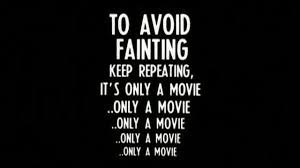
“Keep telling yourself ‘it’s only a movie‘” was the famous tagline for Wes Craven’s Last House on the Left in 1972. It may be appropriate to look at the harrowing moments of our mind with the same encouraging detachment. No matter how serious life may feel in the moment, like a movie, it’s seeming realism is the result of a perceptive trick of the tale. (Pun intended). Neurological fake news is an ongoing misinterpretation of reality bent to the purpose of making ourselves more important to ourselves.
Sometimes we are suck into the movie, gripping our nails in harrowing belief; and other times we’re able to step outside the frame seeing ourselves telling ourselves a story. With meditation practice we can slow the process in order to peak beyond the folds of the curtain to the working basis within.
I love moments of hypnagogic consciousness upon awakening, surfing between sleeping, dreaming and waking as if skipping over gadget impressions as we rise into awareness.
But, just before we wake there is a most precious moment. A moment of “ahhhhh” that precedes all thought. This moment of pure waking precedes every moment. This is the sacred space, or gap, where we have a limitless opportunity to hack our preset turning our mind from rote adherence to habit toward discovery and change. This may be the very space of creation. The moment before, before.
And within this gap we might get a glimpse into the projector. The apparatus that constructs the fantasy of life.
For many humans, with the outsized pressures of modern life, this subtle moment goes by unreguarded. We push past it, bursting awake to the screeching beep of the alarm, sing some innocuous tune in the shower, dress and rush straight to the coffee. In short order we’re following our travel mug down the street to the train. It’s like waking up after a drunken night next to someone you don’t know, trying to sneak out the door before they wake up. That used to happen to me every morning. And I lived alone. I could be three stops on the train before I start to recognize myself.
When we slow down in order to meet life, we might see life happening in the gaps we blast past. If we train the mind to pause and pay attention to these precious moments, every following moment becomes an opportunity for discovery. When we turn our mind toward discovery our lives become alive. This is what we refer to as waking up. It’s not leaving a dream state for a somnambulist state, but actually awakening. Looking past the curtain and seeing the mechanics of our seeing.
The Buddha experienced pain and suffering – even after his enlightenment, up until his death – or he wouldn’t have had the skillful means necessary to convey a remedy to suffering. He was there with us. He was not a supernatural being who might free us if we were to play along and do as he said. The path of awakening requires our participation. And yet, that participation can’t be under our control. Aye, there’s the rub. We can’t just close our eyes and wait to wake up and yet we can’t turn our journey into the next story we are scripting.
Buddha took the personal and translated it to the universal. He owned his personal experience, yet his personal experience wasn’t about him. It was human experience. In the same way, our life is personal, but it is not ours alone. Whether we know this or not, we are inextricably part of everything in nature.
But all too often, we fall away from waking, into fantasies projected by inner narratives. We carry the dream of sleep with us into our day. And in our dreams we are too important to regard the life around us unless we can twist it to fit the narrative. The mind does this instantly with little concern for reality. It creates stories with ourselves at the center that give us the impression that we are in control. But all we control is our narrative. Like a movie “moving” at 24 frames a second our internal movie creates a momentum that renders a false reality that looks and smells like a duck.
Trungpa, Rinpoche said to a group of students in a shrine room that the before we notice the walls, or the columns, or the floor we have a micro instant gap, which he illustrated with a gasp. Gasp, floor. Gasp, ceiling. Before we label anything, or categorize any moment, we have a moment to pause, breaking the momentum that perpetuates the movie, we might see a past the curtain to a brighter, clearer moment.
We may absorbed in be a gripping movie. But the world is nonetheless waiting outside for us.
 Ever wish you could just run and hide? Ever play hide and seek with your life because it all becomes too heavy? Do you ever reach for the panic-button in reaction to difficulty? Ever slump in discouragement because it’s all on you, but you just can’t figure it out?
 the wrong straws. We create more confusion out of a confused world when we blindly reach for what we think will save us. This might be as grand as a lifelong commitment to a nation or spiritual community—or as quick and impulsive as a harsh word, or hitting “send.”
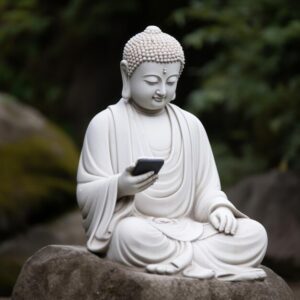
 The Buddha was not a god. He was a human being—who lived, died, failed, and succeeded. He had no supernatural powers. He was a teacher and student of the Dharma (the path to liberation) who worked diligently to free himself from his own suffering. Because he did the work, he understood how others suffer—and offered teachings to guide people to their own liberation.
 When Lord Buddha became enlightened, he was asked how he knew he was enlightened and he touched the earth and said “the earth is my witness.” This act of humility was simple and profound. Enlightenment to the Buddha was not some grand state of all-knowing; it was a state of acquiescence, acceptance, and presence. It was not rising above our circumstance, but simply being here. We can reconnect to that state of presence, everytime we touch the earth by making contact with the present. Feeling our feet on the ground as we walk, feeling our hands touching the knife as we prepare our meal, taking any and every opportunity to interrupt the grand narratives we script with ourselves at the center and allow ourselves to be present with whatever we’re doing. And today I would like to introduce how we might do that in a tactile and definite way. This simple engagement will transform your life.
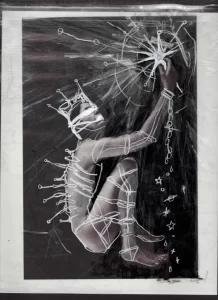 Anxiety is a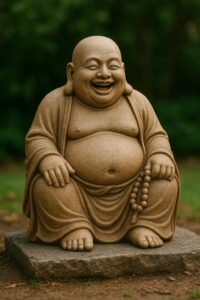
 Jokes are good when they make us laugh—but even bad jokes are good when we’re thinking that way. A good joke is an expression of technique. But it’s the timing and delivery that make it special. And when that timing and delivery aim at social injustice or psychological limitation, there’s real depth. Humor punches through the walls of limited thinking and lets a bit of air and space into the equation. Sometimes it hurls itself headlong into the wall. But if it’s spot on, it will enliven us, release us, and bring us into community.
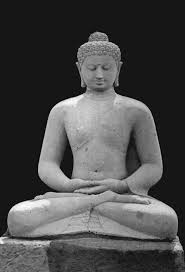 and those who speak of it have never reached it.
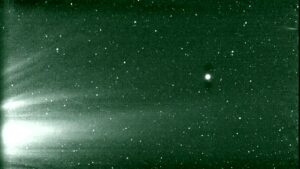 Astronauts who have seen Earth from space often describe it as a profound, perspective-shifting experience—one filled with awe, tenderness, and love for this fragile blue orb that nurtures life. In this way, enlightenment can be likened to a vast perspective—one that sees beyond itself, and continues to see beyond itself, again and again. As Pema Chödrön says, it’s like peeling the layers of an onion. The unveiling of misconception and delusion is an ongoing process.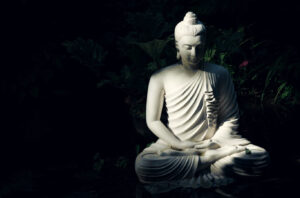
 That idea struck me deeply. The forces of hatred and cruelty have become so embedded in our society that speaking out against them can provoke backlash, censorship, or isolation. Yet if we don’t speak out, that same darkness begins to seep inward. As Joe Strummer once warned, “We’re working for the clampdown.” And here we are—told to “get along, get along.”
 How, then, do we respond? By showing up. By being sane, balanced, and clear—even when the world around us isn’t. Each moment of calm presence, each small act of compassion, offers sanity back to a world that desperately needs it. Whether it’s just one person at the coffee shop or a room full of people at a talk—your kindness matters.