
HEALING THE BROKEN PLACES
The child that is not embraced by the village will burn it down just to feel its warmth.
– African proverb
In a culture conditioned to a linear understanding of causes and conditions we assign blame to a problem, focusing our ire on the object of blame. In extreme cases, we might describe a perpetrator as inhuman, animalistic, or assign them superhuman attributes such as being “pure evil” or “monstrous.” In any case, we are protected from implicating ourselves in the problem.
 When emotions run high, the fear mind takes over and latches onto simple answers. And naturally, we believe we are right. This feeling of righteousness wants retribution and dismisses the inclusion of societal and familial issues as pandering snowflakery. The Buddha spoke of Karma as the law of cause and effect. He also spoke of the interdependence of every event to all else. Despite conditioned tendencies toward black and white binaries, the Buddha saw that the causes of any event are myriad and nuanced. This would seem frustrating to the raging defensive mind latching onto rightandwrong. But a reactive mind is generally devoid of nuance or compassion. Compassion doesn’t mean kindness to those who’ve caused harm. It means understanding those who cause harm.
When we assign blame, we are forcing reality into a binary. A binary which has ourselves and our value systems as the prime arbiter. This is good and evil from the way we see it. And the angrier we become the narrower our focus. This might be a factor in why people of color are incarcerated at higher rates than whites in our predominantly white culture. When we are seeing it our way, what of those who don’t conform? But is this willed ignorance only creating time bombs? What are we missing when we push some aside? And are those shadowed voices so needing to be heard that they will grow in ire until they erupt in violence? The Buddhist teachings on compassion are unequivocal in their directives that we see beyond our parochial beliefs and begin to understand others. Are we able to step back and see those we demonize? Only recently, a court found the parents of a son accused of gun violence as culpable. Was this a groundbreaking step in widening perspective or was it just shifting the binary? Looking at the home, looking at the school, looking at the community and looking at the gun communities and legislation tied to the influence of economic pressure are all ways that violence is interconnected. So, as the Buddha taught, Karma is complicated. Then how do we manage the overwhelming preponderance of information that is karmic cause and condition?
What can we do?
Blame is not doing. Nor are platitudes. Nor are promises. How do we begin right here right now? We all have a child, either in our family or in our heart, who needs care and support. But are we listening? Or are we shunting the child aside as we are consumed by our busy lives? Are we in fact ashamed of the child? Are we embarrassed by the snowflakery of caring for an inner child? All too often in our society and our heart we are pushing the children away. Ignoring the most potent and important part of the village. In many indigenous cultures, villages cared for their children. This not only created homecare for stressed parents, but also allowed a wider perspective for the child to grow. This wider perspective also helped to moderate any neurosis the caregiver might pass on the child. A village based on community is self-healing and co-supportive. In this way the child can grow with freedom to become healthy versions of themselves, not reactive copies of a copy of their parents. In some cultures, criminals and those with mental illness were taken into counsel with the elders of the community. This is a healing circle. The view is that connection is healing and isolation, whether by social ostracism or mental evasion, encourages infirmity. The places we hide in our mind may be protective. But they are also places we fail to grow. They are the burning children of our hearts waiting to be heard, held, and understood.
A view of compassion may be that we have the capacity to be our own village. And maybe we can extend our view outward and see others as ourselves. We are all hurting and unheard. Maybe by awareness we can begin to see and heal the places within ourselves that are keeping us in darkness. And maybe we can learn to give expression to the wounded children that so desperately need our love. One way to illuminate the darkness is to burn the village. Another way is to touch the heart and allow that child to be accepted as they are before that happens. Perhaps the flames of anger can be softened into the warmth of compassion.
Compassion can be seen as the transformation of hatred into empathy. We don’t have to fear the flames. We can hold them and allow their rage to soften into warmth.
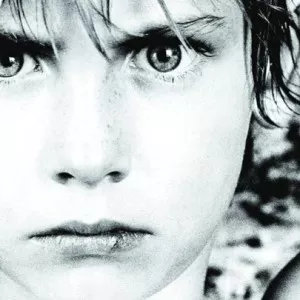
The picture is from photo sessions for the album WAR by U2.
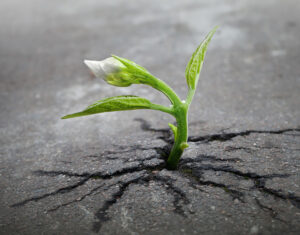
 One of the ways we rob ourselves, and reduce our life is by demanding ownership of our experience. And ownership implies controlling the process and the outcome of what we own. But our life is not property. Life is a self-existing dynamic with our past and our world, unfolding naturally as a flower grows and unfolds. Ideally. But, as it is our life, we want what we want to occur in ways we want them to occur. And we want this in our time-frame. Like standing over a flower and yelling at it to grow faster. Or, maybe we are shaming, intimidating or manipulating the flower. Or maybe, more generously, we try coaching the flower to be its best self.
 Acknowledging how we are actually feeling is an important step in our fresh start. “I’m still feeling guilty”, “I’m still angry”. Felt senses often remain, like a veil over our next moment. Wiping the sleep from our eyes, we sometimes wake in the morning with echoes of our night’s dreaming like a cloak around us. Sometimes we don’t remember the details of the dream, but the feeling remains. Maybe this points to something peculiar in our daily life. The story is often ephemeral, while the feelings are more tangible. This experience is the opposite of our conventional approach where we believe thoughts and ignore our feelings. We attach to our version of events while diminishing or ignoring how we feel. But our version of events relies on thoughts. And thoughts are notoriously unreliable.

 I’m writing on the day set aside to commemorate the life and service of Dr. Martin Luther King, which this year falls on his actual birthdate, Jan 15. To many, it marks a time to reflect on our lives and the contribution to peace, equality and understanding we may be making. It is also a day of remembrance of a fellow human who took on the superhuman task of changing the mind of the world in the face of great opposition.
 We have funny glasses and lipstick stains and a raging headache. Even I, who have been clean and sober for several years, are working off a sugar and carb rush from gorging on bad food. Why? To prove I’m happy. Sometimes my life feels like a series of emotional selfies trying to convince myself of something. And so we begin the new year already buried in the past. We have grand resolutions, so inspiring today that we’ll maybe forget them in a week. In my drinking days, I would crumble the life around me, just to see myself build it back. I had a friend who told me I was simultaneously anal expulsive and anal retentive. Clean it up and tear it down. Clean it up and tear it down. And part of this crazy cycle were the outsized resolutions I would make. Inspirations that became obligations, forgotten soon enough that would be resurrected next year. We all wish for world peace.
 these experiences are very ordinary. Maybe we have glimpses of the truth beyond truth all the time. But maybe we fail to recognize these opening into the profound as we scurry from place to place to place. Our earth evolved uniquely to host conscious life, so it is quite rare and precious. It is our home and the incubator that gave birth to a consciousness that can glimpse itself and the possibility beyond itself. Perhaps, it is through human eyes that the universe sees itself. Perhaps by seeing ourselves, we can see the universe.

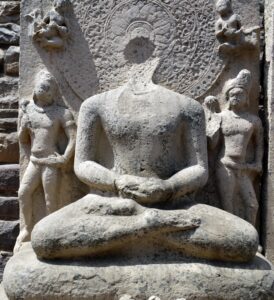 Of all the distractions in my life, my mind is the most seductive. I am perpetually engrossed in my thinking to the extent that if I was not a meditator, I likely would reside full-time in my head. While our minds are amazing tools, being lost there keeps us from accessing its power and potential. When I am lost anywhere, I am sucked into a part of my mind that cannot see beyond itself. This is to say I lose awareness. When I am unaware I am missing the beauty of my mind and my life. By cultivating UNawareness, I am putting my head in the sand, making myself vulnerable to danger. When I am not aware, a deep inner part of me becomes frightened. My reveries take on a paranoid hue as I succumb to anxiety about the future and regrets of the past.
 This was the worst attack upon the Jewish people since the 2nd world war. It will precipitate an intense retaliation which will rock the foundations of world security. All this is happening in the shadow of the invasion of Ukraine that had shaken the world. AIt is also a time when technology has created more awareness and nuance than ever before. The world is either waking up or falling fast asleep. Or perhaps both. We have the setting sun approach turning toward darkness counterposed with the rising sun view of opening to possibility. We can take either position. We can take the easy approach of blaming a group and wishing for their eradication or we step back and try to see more clearly with eyes of healing and compassion. And just like any of us waking up on a spiritual journey, we will see harsh realities along with positive development. It is important not to latch onto solid propositions. As we develop spiritually, one of the things we are waking up to is the horror we are capable of inflicting.
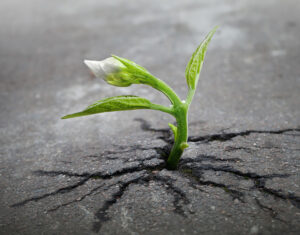 As we journey up the mountain our view changes. We begin to value possibility. Instead of defensive protectives, we start to see the commonality in all humanity. We see that we are part of a greater whole. We are part of an experiment by the cosmos to develop wisdom and begin to see itself. But in order to do this we have to understand a very simplistic binary: acknowledge the mind that keeps us locked in suffering, but follow the higher mind that leads to clarity and strength. While the shadows of our past are still an influence, we can develop the power to look ahead toward a bigger view. No one looks out from the top of the mountain and says, “this sucks”. Sure, we may see all the refineries and junkyards but the view from above is nonetheless beautiful. In time, we will see more of the war and hatred people still rage upon themselves. But we will also see trees growing and life blooming. All of life needs to defend itself, and all life yearns to grow. This higher mind cares naturally for the world. And even as it hurts deeply for its suffering it rejoices in its liberation. We are evolving.