
Daily Practice Changes Everything
There’s a feeling we all have that the more triggered we are, the greater the remedy we need. Therefore, we often overlook very basic and fundamental tools that help us regain and maintain emotional balance and mental clarity.
Being triggered affects our stability because the experience compels us to react. Often reactions happen too quickly for us to be mindful. We are, in essence, lashing out blindly, not unlike flailing about in a canoe. But just as we might regain balance in a canoe, we can reset ourselves in life.
Before we do anything or believe anything, we can come back to the present and reset our ground. Stability is key.
Stability
It is the basis for mindful (read: effective) actin. Once we have stability, the mind can settle, feeling more comfortable in the space our body inhabits. From settling comes clarity. And clarity, grounded by the stability of being fully in our body, affords the strength to navigate difficulty with balance and poise.
When we feel threatened or overwhelmed, the best first step is to recognize what is happening before we try and fix anything. What is happening right now? Is this fear? Doubt? Confusion? Anger? Frustration? Inadequacy? The answer is not nearly as important as asking the question. This is because when we’re triggered, it is a younger, sometimes ancient part of our system that becomes engaged. That part of our being may not have access to the language, training, and understanding that our higher mind enjoys. By simply recognizing that we’re triggered we begin to calm the nervous system. The effect may be temporary, but it opens the door to further engagement through self-compassion and awareness.
It is essential that once we recognize we are triggered—experiencing fear, doubt, confusion, perhaps all of these at once—we accept what is happening. Acceptance is not resignation. It is simply acknowledging the reality of this moment without immediately projecting into the future or revisiting the past. Future and past are always speculation that leads to unhelpful narratives. Instead, our meditation training, enables us to look directly at what we are experiencing now. This begins to loosen the bondage of suffering.
Looking at our experience allows us to feel into what is actually happening within us – what we are unwittingly doing to ourselves. We do not need to come to firm conclusions. We do not have to explain anything away. We simply notice, feel, and accept.
By allowing ourselves to feel and accept the present experience, we begin to find the inner space to settle. With daily meditation practice, specifically shamatha practice, we train the mind away from clinging to reactive states and return ourselves to the balance we can only have in the present.
Coming back to the present when we are triggered is an ongoing process. Just as in shamatha practice, we go away, notice, remember, and return. We may notice tension in the body—tightness in the belly, constriction in the jaw, heaviness in the shoulders and neck. This awareness develops through mindfulness of body cultivated in meditation practice.
Recognition followed by acceptance has a neurological calming effect. It may only last a moment, but we don’t need to chase outcomes. Instead, we work with – by returning to – the direct experience of suffering in the present moment. We feel the elevated heartbeat, the confusion, the tightening, without immediately extending it into narrative.
This can be very simple. But, one of the ways we miss the mark is by believing the stories in our mind, especially catastrophic projections. We become so frightened that we assume there must be a dramatic and immediate response. Yet often the most effective response is simply recognizing that we are being pulled away. The world is ending – just return to the moment. My life is heading for disaster – simply return to the moment. None of this is how I imagined it would be – return. Return. And by returning, we release ourselves from the panicked grip in our body and mind and regain our balance.
When we are triggered, frightened, or thrown off balance, we are no longer reliable witnesses. The mind begins feeding us fake news. So rather than following every conclusion and projection, we return to what is actually happening now. We address what is real and immediate: the tension in the body, the racing heart, the fear, the confusion. By boycotting the complications we construct, we gradually find stability. Then, like water held still long enough for sediment to sink, the mind becomes clear.
Clarity
At some point we become reliable witnesses once again. This is trusting our wisdom mind. But to do this we may have to gently acknowledge and let go of the panicked mind. The wisdom mind is quieter, subtler, and less reactive, which is why it can be difficult to access when we feel threatened.
Our first impulse is rarely to calm down and relax. Yet by turning away from mental complication and returning to breathing, recognition, and acceptance, we stabilize. Stability is the necessary prerequisite for right action. Before the mind can be clear, the nervous system must become relatively calm.
When you are overwhelmed, do not fight with the mind or attempt to think your way through panic. The mind that creates the complication cannot solve the complication. Letting go of the panicked mind and returning to the body allows the mind to settle and clarify on its own.
Strength
Once we are stable and the mind is clarified, we become reliable again—not only as witnesses, but as supports for others and as compassionate human beings. We develop the strength of someone who is not shaken and who knows when to respond and when not to respond.
This is great strength.
This strength allows us to navigate the world and respond in ways that are actually helpful. My teacher mapped out the logic of shamatha practice very simply: stability leads to clarity, and clarity leads to strength.
Shamatha is simple and subtle. In many ways it can seem inadequate compared to the intensity of our emotions. But that is precisely why it matters. We are boycotting the dictates of panic, ego, and self-will, and opening ourselves instead to our basic goodness and the inner strength that can actually carry us through.
We notice the impulse to escape, fix, or react. We recognize it, accept it, release it, and return once again to the breathing. The breathing relaxes the nervous system, and as the nervous system settles, the urgency to fill the space begins to dissolve.
The Importance of Daily Mind Training
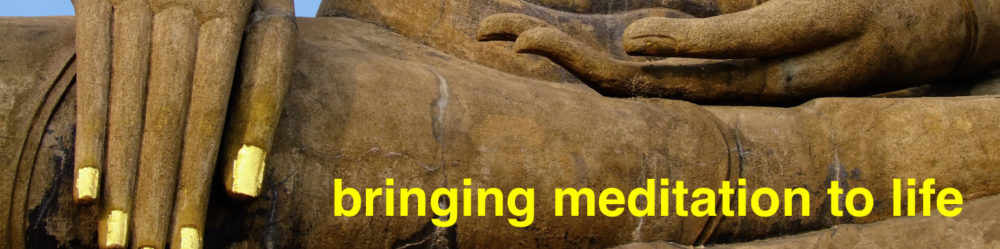
Looking at a depiction of the Buddha, you can sense their stability clarity and strength. This is, of course, due to the fact that we are seeing a picture or statue. But, we are people, flawed and insecure but able to train ourselves toward this process by noticing, accepting and returning with no hope of an outcome.
At some point, the mind of Buddha nature will dawn within us.
This is where we come back to. This is what we are training to recognize.