The Heartbreak Clash
Lord Gampopa, a seminal figure in Tibetan Buddhism, taught that we are the “working basis” of our liberation. In other words, who we are—our body, mind, spirit, work, life, and relationships—holds all the information we need for our freedom. We don’t have to look beyond ourselves. The key is to look beneath the surface turmoil and learn from what’s right in front of us. This requires taking things less personally and seeing the path as a practical, step-by-step process, not some distant cosmic reach. Maybe the cosmic is right here, right now.
 On the flip side, sometimes we place so much pressure on the present moment that we take it too personally, making things harder for ourselves and others. The present is just a blip in our flow—we meet the moment and move on. But when we hit a snag, it can occupy much more of our time and energy than is helpful. If we could retrain our minds to notice and let go, we might see difficulties as opportunities to learn who we are and how we behave, freeing ourselves from the habitual patterns that keep us stuck.
The cocoon we build around ourselves is meant to protect us, and we cling to it tightly. We begin to believe that this reductive state is who we are, and proclaim, “No one knows me,” as we search for someone who will “get” us. But do we even understand ourselves? Maybe the person we think is misunderstanding us could reveal something new about who we are.
Conflict often arises when we cling to our defenses. This is not to say defenses are inherently wrong or unhelpful, but when we identify with them, we mistake them for ourselves. Since defenses are only partial aspects of who we are, identifying with them limits our lives. Over time, we start feeling claustrophobic and dissatisfied, wanting to break free of those limiting beliefs. The easy way out is to blame others: “This is toxic, I have to leave!” But that often leads to the next entanglement, where we replay old traumas. The goal of the Buddhist path is to help us see beyond these patterns, gently recognizing them as limitations.
Each time we notice the mind clinging, grasping, or fixating, and acknowledge it, we can let go and return to clarity. This is what meditators call “coming back.” Each time we return, we crack open the cocoon, letting more sunlight in. With practice, we can rest in a state of unclouded clarity, which becomes our foundation. From there, we step into new possibilities, rather than merely repeating the past. When we react out of fear or anxiety, we can only do what we’ve done before. How many times in relationships have we said, “Let’s make a fresh start,” only to end up repeating the same cycle? Without returning to zero, to openness, our next move isn’t truly creative. Acting out of pain or anxiety only reinforces past injuries, carrying them with us into every new situation.
 I once dated an astrologer who, after reading our charts, told me we had a rare but perfect astrological conflict called the “heartbreak clash.” It seemed insurmountable, and everything we read suggested it was impossible to overcome. But along with the clash came an undeniable attraction. We felt drawn to the conflict, as if we had to overcome it. “I always go for damaged angels” or “every partner I choose is the wrong one”—maybe we’re all damaged angels, and there’s no such thing as a “wrong” partner. Maybe there are only partners who push the right buttons to unlock parts of us.
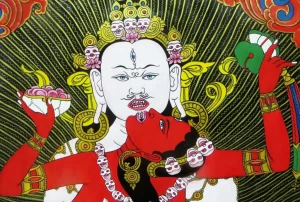
I went to another astrologer, a Vajrayana Buddhist practitioner, who, after looking at our chart, said, “Classical astrologers would tell you to get out. But my teacher, Chögyam Trungpa Rinpoche, would smile and say, ‘I don’t see a problem.'” He beamed at me and continued, “It’s our vow as Vajrayana practitioners to transmute the difficulties in our lives and find the wisdom at their core. This situation is perfect for that.”
Opening to these deep wounds can release enormous energy. We instinctively shy away from this because we don’t want to face what lies beneath. Trauma isn’t just painful; it’s the avoidance of that pain that prolongs it. We cover our wounds, hiding them from the light, and they fester. We flinch at the thought of touching those wounds, carrying them around without acknowledging them. The heartbreak clash offers an opportunity to unlock that puzzle. Imagine stepping through the iron cocoon of your defenses, even if only occasionally, and seeing things in a fresh light. That is love. And love isn’t separate from pain; it exists alongside it. Our focus is the choice we make.
However, love brings our past traumas into the present. At work, in public, or on the street, we can keep our wounds hidden, pretending to be okay. But what does “okay” really mean? Okay according to others’ standards? Or according to what we think others expect of us? And what does “starting over” mean if we haven’t learned the lessons of our past?
Once we cross into love, it opens a whole new dimension. It’s like a friendship evolving into something deeper. As soon as we do, we give the other person access to those dangerous, hidden places we’ve tried to protect. This makes relationships both challenging and invaluable.
 But the other person isn’t directly touching our wounds; they’re triggering the defenses we’ve placed around them. More importantly, we’re not seeing our wounds; we’re seeing them through the lens of our defenses. The easy way out is to blame—to fixate on the other person, diverting attention from ourselves. This blocks our ability to learn. Another shortcut is judgment: believing the other person is wrong by some standard. But what does that really mean? By whose standards? Humans notoriously adjust ethical scales to serve their own self-interest. We can quote the Bible, the Buddha, or any law book to justify our point, but all we’re really doing is hiding our fear of what lies beneath.
Erich Fromm, the philosopher and therapist, said that true love occurs when two people are ready for the same thing. Maybe every love teaches us something different about ourselves, until we finally find someone else. Perhaps we failed to see those opportunities because we were focused on the flaws of others. But ultimately, we are the only ones we can change. And we’re often the last ones we want to see. It takes time to be ready to see ourselves. Yet, looking inward is the only way to be truly honest—and honesty is what frees us from our defenses, step by step.
This is the essence of transformation in Vajrayana Buddhism: the power to break free from the chains of our fear, burning them away in the fire of our passion.
 suffered, and even lost their lives so that the rest of us may live relatively free and open lives. Veterans include not only those who served in the military, but also the families of those who died in service. However, there are many who have sacrificed for the cause of freedom and liberation within our own shores. The first black children integrated into schools, the first students who spoke out against an unjust Vietnam War, and those who currently challenge human participation in climate change, racial violence and societal hatred. With great respect for those who have served our military, I also want to recognize all who have suffered and been wounded in life, yet continue to face the world with courage.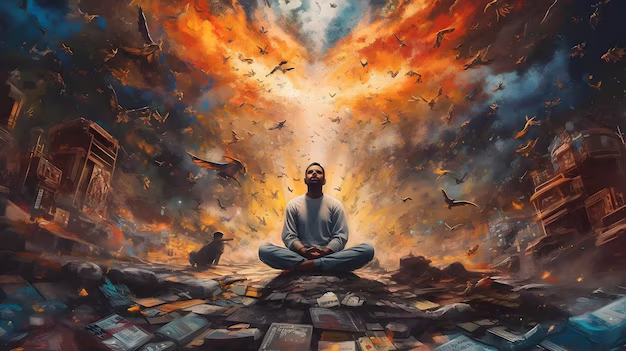
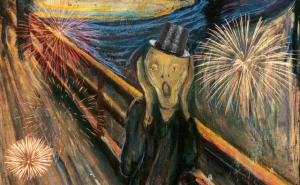
 Facing the possibility of change with an open heart, a strong back and a clear mind is nonviolent warriorship which is the seat of the bodhisattva. Connecting to our inner life force, we find a strength that can lead us forward. Sit down, rise up and meet the change. There is great strength in this. Finding false strength in what everybody else is doing or in reacting to what everyone else is doing, which is the same, are just expressions of being controlled by fear. On the other hand, bravery is sitting in the maelstrom, open and aware, feeling our fear and remaining open and clear. Doing this as a training practice every morning is how we remain spiritually fit and connected to our life.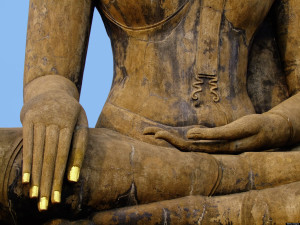


 Peace is natural to the mind. As a natural state, the cessation of suffering is readily accessible. However, peace is not a fixed state. There is always suffering in our lives, and accepting our suffering is key to finding the peace that is already present. You might say peace is both intermittent and permanent. It is always there, but sometimes it becomes obscured by the tightness and difficulty that suffering induces.
 Finally, the cessation of suffering is both the fruition of the path and a foundational state necessary for any creative endeavor. It is also an ongoing possibility. If we cling to the idea of cessation, we miss the point, turning something intermittent into something perceived as solid—another source of suffering. The possibility of peace is here now, even as we lose it by thinking about it. Peace is a felt sense. It is connecting to a part of our being that has always been there, and according to Buddhist thought, that peace is not diminished or changed by suffering.

 This enhancement of memory served our defensive systems well, allowing us to predict future events based on past experience. Early mammals developed the ability to remember dangerous or painful situations in order to avoid them in the future. Humans evolved to build on this by not only remembering danger but also transferring knowledge from one situation to another, improving our ability to evade risks.
 In those days, particularly in New York City, baseball inspired a sense of loyalty, camaraderie and courage. In a memory burnished into the hearts of sports lovers forever, Babe Ruth famously pointed to where he intended to hit a home run in a 1932 World Series —and then did just that. This kind of magic requires immense courage, but not aggressive courage. It’s a courage that comes from the heart. The root of the word “courage” is cor, which means “heart” in Latin and has similar meanings in French and Old English. So, to have courage is to have heart. It’s a joyful bravery that arises from deep within us, overcoming doubt and confusion. If Babe Ruth had been uncertain, he wouldn’t have been able to point to that spot with such confidence. Confidence, courage, heart—these are the topics of today’s post.
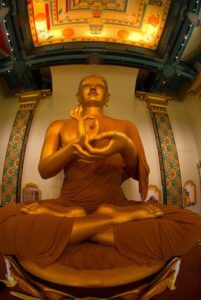 On a personal level, many of us close down our hearts under a false sense of bravery to focus on issues. We seek approval from others, rallying friends who will uncritically support our views, reinforcing our grievances against those we believe have wronged us. While this may create a temporary swell of approval, it is ultimately hollow and fleeting, leaving us feeling manipulated. This might not feel like aggression; it could feel like passion for a cause. Yet, in such moments, we often fall into the trap of preaching rather than sharing something personal.
 In the Dharma Junkies weekly group, we encourage people to speak from an “I” position, expressing how they feel. This approach makes their expressions inviolable, as no one can argue with one’s feelings. We take ownership of our emotions without expecting others to validate them. Equally, we create space for each person to share their own truth, free from argumentation, allowing their truths to resonate with others. This space is a show of respect.