Deeply rooted pain causes great suffering in our life. And the intensity by which we experience pain varies from person to person. However, it is not a competition. We don’t have to argue over the fact that we all experience pain. Pain is our human heritage. Although our pain feels worst to us as it colors everything in life. Yet, as much as pain is a pain, it can also be the impetus for self-discovery. So let’s get to know this irritating, but useful old friend.
 Physical pain awakens us to the possibility of danger or a need to heal. While few of us like pain, it serves a vital function. Some people have a rare genetic disorder, CIP, that prevents people from feeling pain. People with CIP may also have difficulty regulating their temperature and sweating. On a physical level pain is instrumental. However, it is our tendency to demonize pain and treat the discomfort rather than the cause. This is also true of psycho/emotional pain. We are averse to looking in to our pain because it is… well, painful. But this keeps us from understanding what the pain is telling us.
Deeply personal psychological pain often come from a wounding event. This wound amplifies into suffering when we try to deny, change, or get rid of it. If we don’t know it we never learn to work with it. While some pain is universal and all humans experience it, some feels as though we were wounded personally. There is often a sense of embarrassment to this kind of wounding as though it had made us strange, or less than others. And so we bury these feelings deep in the darkness of our heart. However, wounds that are not seen sometimes do not heal. In fact, unseen wounds can fester. The area around the hidden wound becomes painful as we infect places in our being and areas in our life where the wound is associated. The inflamed area around our wound becomes painful to the touch. In time, we begin to anticipate that pain and learn to avoid the people, places and things that we might bump into. Shadows in the past, beget blockages in the mind, that beget limitations in life. Our life becomes less than it might be because of these unseen influences. How often have we overreacted to circumstances without knowing why? How often did we operate on auto pilot as though following an unseen script? How often have we sidestepped an important event? How often have we missed a kiss or failed to raise our hand? How much of our life has been dedicated to onanistic meandering rather than meaningful relationships?
 There is nothing wrong with fantasies until they take the place of actual engagement in life. Fantasies allow us to journey into edgy realms with no real investment. By imagining pleasures of the flesh, we have no actual skin in the game. (Yes, bad pun intended.) We can live out fantasies at will in apparent safety. However, as they serve an important creative function, it may be that fantasizing only supports the solitude that allows wounds to fester. Sometimes we analogously recreate the actual wounding we are otherwise unable to look at directly. People may act out abuse sexually by entering a “play space” that is an active dissociation of their primary personality. The “play-space” is a safe space people can act out being unsafe. And whether this is working through their deep wounds or reinforcing them is unclear.
From a meditation point of view, a method for deep healing would be to gently encourage the wounded areas to come into the light of awareness before we act them out. It may be too painful to experience some wounds directly, but we can prepare a ground of acceptance for them to appear, as they will. And when they or their proxies (such as avoidance, addiction or other types of suffering) arrive, we can open to them and allow them to be in our unbiased, non-judgemental space. If nothing else, by simply allowing the manifestation of our pain to be as it is can be profoundly healing. Sometimes, as we approach the event horizon of our wound our impulse is to pull away. The method for working with that is to just gently learn to stay. Stay with the pain. Just be there. And if we pull away, so be it. If it pulls away, so be it. Recovery is a long slow road. Sometimes, rather than pulling away, we might lunge toward the pain throwing our heart on it’s altar. This act of egotism is not helpful. Other times, as soon as we feel the trigger of our pain, we try and fix it. This is a common mistake, for how can we fix something we haven’t seen? That said, we don’t have to dig to the origin of the wound. We don’t need to know why or who in order to actually heal. With meditation we look at what is there now. When we talk about bringing darkness into the light, we are not extinguishing anything, we are not vanquishing anything, we are not changing anything. We are simply inviting the wounded being to reveal itself as it is. In Meditation theory, awareness is light and ignorance is darkness. But thjis does not correspond to :”good” and “evil”. Both darkness and light are symbiotic parts to the universe as well as our own nature. While darkness serves it purpose, sometimes things are brewing there that are affecting 0our lives on the surface. Sometimes things have run their course in the darkness and are ready for birth into our awareness. Darkness is were things incubate, or fester. And light is where they are able to manifest or heal. However, light is a graded process. Sometimes it is less direct than other times. We allow what we allow, as we allow it. Each session in our meditation we may know ourselves a little more deeply.
 The present moment rests between the past and the future. Specifically, how we could protect ourselves from this situation or how we can enact laws to protect our community in the future. Or, going deeply into the causes and conditions of what happened to us might lie in the past. Either of these examples might be helpful, but they are more the province of therapy. Meditation looks at what is happening now. That is what we mean by the light. Many of us were wounded so deeply in the past that there is little possibility of contacting the source of that suffering. But we can feel their effect right now if we remain conscious. And as we become more and more conscious of that which lies within us, we become more and more whole.
I have a prayer that I wrote for myself:
May the wounds of my past never be seen as weakness
For they are proof of my strength
And the tools of my compassion
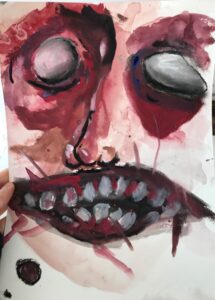
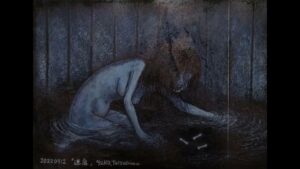
The pictures accompanying this post are by Yayoi Kusama, a Japanese artist who lived through great personal trauma and incorporated her journey in art.
 adjacent worries, recrimination and judgment. For instance, there is drilling happening not far from my apartment. It’s annoying and incessant. I’m here having to work on a post about creating peace with this going on in the background. It becomes especially painful when the background becomes the foreground, as is happening now as I’m referring to it. However in the course of writing, I’ll refocus on my work and forget the noise. This cessation of suffering comes and goes and yet the drilling is continuing unabated. Sometimes I’m aware and sometimes not. Each time I’m aware of the drill I forget all about the periods of relative peace. It seems this drilling has been going on my entire life and will continue forever. I cannot help but take this personally.
 to create a gap between input and impulse, which serves as a mote or buffer of aware space. Whether we are triggered by someone else, or drilling outside the window, all instigating impulses happen in our mind. When the mind builds it cocoon it compounds itself into a hall of mirrors. Turning the attention from this brain constipation toward the aerobic movement of breathing interrupts the process and allows the claustrophobia to abate. When we turn our attention from the overwhelmed brain to the body breathing, we go return to something grounding. And while simple awareness of the breath may seem inadequate to address how impacted we feel, it actually creates a gap that allows the mind more clarity to see clearly.
 In a world filled with endless information and impulses, the idea of simplifying life to a single breath may seem overly reductive, especially in contrast to the overwhelming chaos of our triggered states. And while chaos is part of life these days, perhaps there is a way to navigate this chaos. Instead of trying to control the flood of thoughts and data, we can shift our focus from the mind into action. And we can take that action one step at a time. The question becomes: What is the next right step?
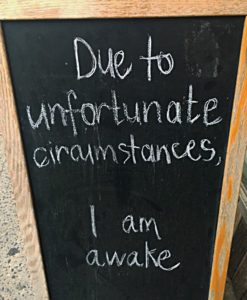 While it is important to be in the moment, each moment is leading to the next. To make this next authentic action practical, it helps to determine where we are going. If we have a commitment to work for the benefit of all beings then it becomes clear. By “all,” beings we are including ourselves. Helping others at the cost of our own wellness is not truly helpful. So, what is the next step that leads toward helpful engagement with our world? Once we know this, the next step we take is a natural action. By natural we mean not rooted in confusion or external expectation, but what needs to be done for the benefit of everyone, including ourselves. Taking that step will clarify the next step and in so doing reveal the journey ahead. We move toward helpfulness and harmony, and away from reactive patterns that keep us entangled in life’s struggles.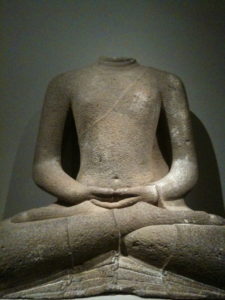
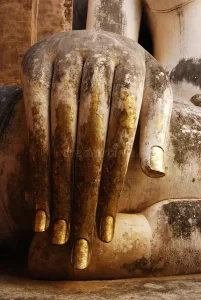 holidays are often described as loving and warm, but it can also feel cold and threatening.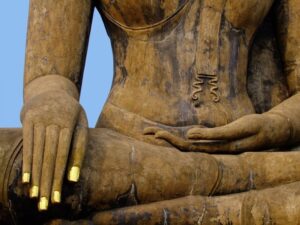
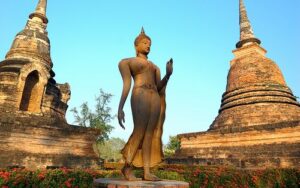 False binaries dominate our consciousness, good versus evil, left versus right, wonderful versus horrible. We live squeezed between these exaggerations. The Buddha taught that the truth lies not in extremes but in the “middle way.” This teaching urges us to be present in our lives and act rightly in the moment. Similarly, the 12-step traditions speak of “doing the next right thing.” According to the Buddha, the next right step depends on the specific circumstances of the moment. Instead of fabricating extremes, the middle way turns our attention to what’s really happening.
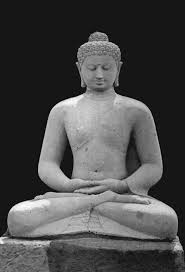 Therefore, distinguishing pain from suffering is key. It is said that pain is inevitable, while suffering is optional. Pain may accompany growth or even be necessary for it. Working through pain brings physical strength and emotional maturity. However, our interpretation of pain often complicates our view and tension amplifies it into suffering. We take pain personally, becoming entangled in hypotheticals, judgment, and resentment. Instead of meeting pain, as it is, in order to work with it, we struggle against it, giving it power over us. This creates great Suffering. Yet, since suffering is optional, it can be addressed and reduced.
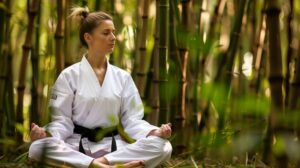 But this talk is not about back pain. This talk is also about our mental and emotional health and how with meditation we are retraining the mind away from reflexive reactions so we have a way of working with pain that allows us to gain mastery over suffering. The title of this talk is “Sit Down and Rise Up.” Or, maybe “Rise Up and Sit Down” depending on its whim. By sitting down and connecting to the earth, we ground ourselves in the present. With practice, we grow comfortable with our own presence and begin to connect to our innate dignity, confidence, and well-being. Rising up in a gently uplifted posture lengthens the spine, creating space for tension to release and openness to dawn. With practice we become confident with openness. Openness, in turn, engenders more confidence in not just our spirit, but our body. With practice we become familiar with the warrior’s seat, and are able to return to it.
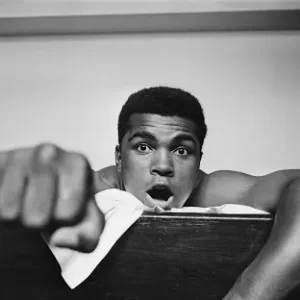 For example, Muhammad Ali trained himself to relax and release tension when struck by an opponent, by famously using the “rope-a-dope” strategy. By leaning back on the ropes, dancing and smiling, not only replenished his energy, but seriously disheartened his opponents. When balanced, he faced the moment rather than retreating, demonstrating mastery over both his body and mind.
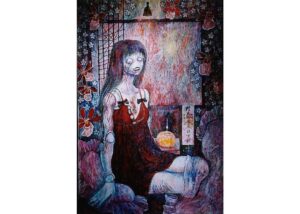 On the flip side, sometimes we place so much pressure on the present moment that we take it too personally, making things harder for ourselves and others. The present is just a blip in our flow—we meet the moment and move on. But when we hit a snag, it can occupy much more of our time and energy than is helpful. If we could retrain our minds to notice and let go, we might see difficulties as opportunities to learn who we are and how we behave, freeing ourselves from the habitual patterns that keep us stuck.
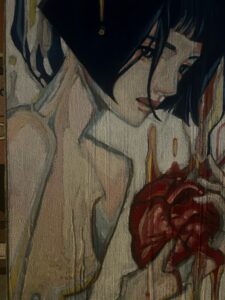 I once dated an astrologer who, after reading our charts, told me we had a rare but perfect astrological conflict called the “heartbreak clash.” It seemed insurmountable, and everything we read suggested it was impossible to overcome. But along with the clash came an undeniable attraction. We felt drawn to the conflict, as if we had to overcome it. “I always go for damaged angels” or “every partner I choose is the wrong one”—maybe we’re all damaged angels, and there’s no such thing as a “wrong” partner. Maybe there are only partners who push the right buttons to unlock parts of us.
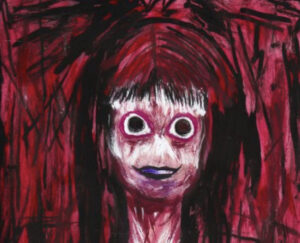 But the other person isn’t directly touching our wounds; they’re triggering the defenses we’ve placed around them. More importantly, we’re not seeing our wounds; we’re seeing them through the lens of our defenses. The easy way out is to blame—to fixate on the other person, diverting attention from ourselves. This blocks our ability to learn. Another shortcut is judgment: believing the other person is wrong by some standard. But what does that really mean? By whose standards? Humans notoriously adjust ethical scales to serve their own self-interest. We can quote the Bible, the Buddha, or any law book to justify our point, but all we’re really doing is hiding our fear of what lies beneath.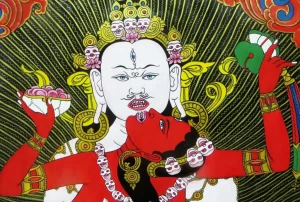
 suffered, and even lost their lives so that the rest of us may live relatively free and open lives. Veterans include not only those who served in the military, but also the families of those who died in service. However, there are many who have sacrificed for the cause of freedom and liberation within our own shores. The first black children integrated into schools, the first students who spoke out against an unjust Vietnam War, and those who currently challenge human participation in climate change, racial violence and societal hatred. With great respect for those who have served our military, I also want to recognize all who have suffered and been wounded in life, yet continue to face the world with courage.