MONKMODER DOOMSCROLLING
Like monks facing the maelstrom, we have may have our best intentions and  ethical training. And yet, we may feel paltry and inadequate standing in the face of hatred and conflict.
Our society is currently at war. Those who have chosen a side may have the luxury of being determined and clear. They are able to push through the chaos with a surety that those who feel deeply cannot. But what of those who wish to understand or listen? Their experience is less assured. In fact, their experience might be disconcerting and painful.
Those trained in the ways of compassion will feel the need to help assuage the violence they see. Yet, how can we do so without declaring a side? Once we have taken a side, the other side will likely no longer be listening. The irony of side taking is that the very people who may need to hear what we have to say, are likely to not listen. This is why commitment to nonviolence is so frustrating in the short term, but yields more effective change over time. So how do we deal with the impulse to react with our guts in knots and our mind aflame?
A Bodhisattva must first train to calm their own passions before they have the clarity to help others. When facing chaos, we may feel the need to do something. And yet, the nature of chaos is unclarity. A general rule is when the world is chaotic and uncertain turn our attention to ourselves. Change what we can change. If we could breath, relax and bring ourselves back to balance, we might see the pattern in the confusion. And like all patterns this has happened before and will happen again. From this point of view, the idea that there is a “right side” is absurdly reductive.
If scrolling through your doomfeed makes you angry, frightened or depressed it’s because 1) you care and 2) you have no idea how to help. So the Bodhisattva is trained to rest in the chaos until a natural confluence emerges. And how might a natural confluence differ from taking sides? From the Buddhist perspective, the view is fostering kindness and compassion. If the world is falling apart, we can choose to add no harm and sit in the turmoil until our time for compassionate action becomes clear.
Water flows into water — sometimes quite rapidly, with significant turbulence. But this is not the fault of the river. Nor is it the fault of society, the world, or even our political systems when they undergo upheaval. Change is not an anomaly; it’s a basic rhythm of human experience on this planet. The planet changes. The climate changes. Political systems around the world shift, often with great pain or even lockdown. From a data point of view, the problem is not change — it’s the challenge of navigating change when we cannot control the outcome.
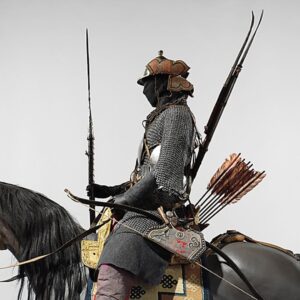
The work is for us to relax into not being able to predetermine results. Facing this chaos all while maintaining an upright posture of goodness, dignity, and strength. We might experience fear and resentment, but these, as is said, are like drinking poison expecting our adversaries to become ill. Usually, the others just go on their merry way, defiling and defaming others, and we are left feeling ill. Thus we become weak and unable to help anyone. Our first step in warrior training is to hold our seat and gather our strength. The next step is to adopt a posture of bravery and simply represent goodness without proclamation, arrogance or aggression.
Until we’re able to manifest dignity and strength we may become victims. Or worse yet, we may blindly react and become part of the problem.
This is why we need mindfulness, intention, and clarity about what we are doing. We need to interrupt immediate, automatic reactions. Yet these reactions happen so quickly it’s like trying to corral a bull after it’s broken free of its pen. Wherever we catch ourselves bringing aggression into our body or mind, we can just stop. Avoid blame, as blame, which feels so justified, only serves to perpetuate aggression and blindness. Anytime we become aware of the hijacking of our body by fear — whether anticipating what might happen, experiencing it as it unfolds, or reflecting on it afterward — we become more attuned to this very immediate and incredibly powerful process. Simply said, our mind and body are being hijacked by our own nervous system. It’s no one’s fault. However, it is our chore to work with. The work is to free the body, open the heart and let the mind see before we jump into the fire.
It’s natural to want to protect ourselves. But it is not natural to scapegoat a segment of society, to cling to resentment, or to nurture hatred in our heart. The issue here is not “right-wing” versus “left-wing.” The issue is that when we blame others, we harm ourselves. The violence we inflict on ourselves is profound, especially when we mask it as blame toward others.
When we are awake and open to our immediate experience, our natural human dignity will allow us to do the right thing. When we are reactive, our basic animal instinct only pushes us into ignorance. By creating a gap before acting out retribution, we can hold our reactions lightly, release them, and see more clearly. Otherwise, we’re not only grabbing the bull after its left the pen, we’re letting it carry us as it may — all while blaming someone else for leaving the gate open.
 This post is an exploration of a traditional Buddhist teaching called “The Four Foundations of Mindfulness”. These are the cornerstones of clear seeing on which the powers of mindfulness rest. Interestingly, the trad texts translate mindfulness as “remembering”, or “recollection.” The point seems to be remembering to remember that we are here. Right now. Problems come when we believe we’re in some internally created reality that doesn’t include very much actual reality. While this is a big problem when we don’t recognize it, in reality, it’s not a problem at all when we see happening. Mind’s wander. They make up stories. They start trouble when they’re bored. Just like kids, the unawakened mind believes make believe. The mind grips so tightly to here that it fails to see see what is happening now.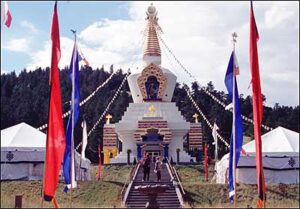
 Ever wish you could just run and hide? Ever play hide and seek with your life because it all becomes too heavy? Do you ever reach for the panic-button in reaction to difficulty? Ever slump in discouragement because it’s all on you, but you just can’t figure it out?
 the wrong straws. We create more confusion out of a confused world when we blindly reach for what we think will save us. This might be as grand as a lifelong commitment to a nation or spiritual community—or as quick and impulsive as a harsh word, or hitting “send.”
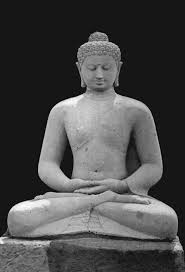 The Buddha was not a god. He was a human being—who lived, died, failed, and succeeded. He had no supernatural powers. He was a teacher and student of the Dharma (the path to liberation) who worked diligently to free himself from his own suffering. Because he did the work, he understood how others suffer—and offered teachings to guide people to their own liberation.
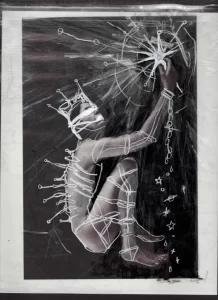 Anxiety is a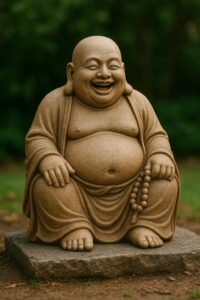
 Jokes are good when they make us laugh—but even bad jokes are good when we’re thinking that way. A good joke is an expression of technique. But it’s the timing and delivery that make it special. And when that timing and delivery aim at social injustice or psychological limitation, there’s real depth. Humor punches through the walls of limited thinking and lets a bit of air and space into the equation. Sometimes it hurls itself headlong into the wall. But if it’s spot on, it will enliven us, release us, and bring us into community.
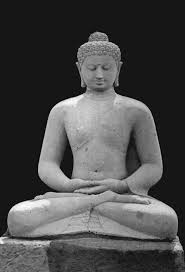 and those who speak of it have never reached it.
 Astronauts who have seen Earth from space often describe it as a profound, perspective-shifting experience—one filled with awe, tenderness, and love for this fragile blue orb that nurtures life. In this way, enlightenment can be likened to a vast perspective—one that sees beyond itself, and continues to see beyond itself, again and again. As Pema Chödrön says, it’s like peeling the layers of an onion. The unveiling of misconception and delusion is an ongoing process.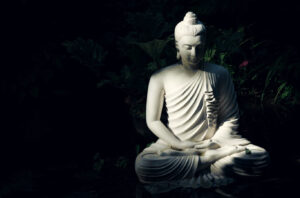
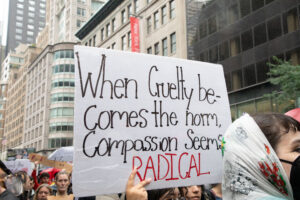 That idea struck me deeply. The forces of hatred and cruelty have become so embedded in our society that speaking out against them can provoke backlash, censorship, or isolation. Yet if we don’t speak out, that same darkness begins to seep inward. As Joe Strummer once warned, “We’re working for the clampdown.” And here we are—told to “get along, get along.”
 How, then, do we respond? By showing up. By being sane, balanced, and clear—even when the world around us isn’t. Each moment of calm presence, each small act of compassion, offers sanity back to a world that desperately needs it. Whether it’s just one person at the coffee shop or a room full of people at a talk—your kindness matters.
 These obstacles show up in both our ability to receive love and our willingness to express it. Most often, these blocks are rooted in
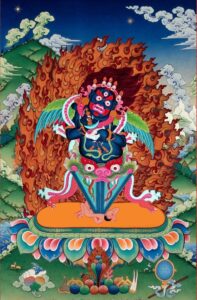
 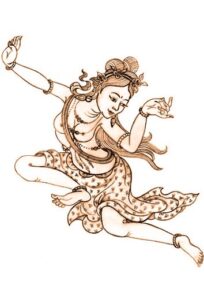 In Tibetan Vajrayana, the deity
 We freeze, believe, identify. Then we’re off to the races as we script our story with ourselves as the protagonist, whether it be victim or hero. The more we are triggered, the more our universe feels real. But what’s real is that we are at the center of that universe. This very solid Me rolled from bed into a universe of defeat.
 But, we are part of our world, and so Compassion begins with us. Not exaggerating our self importance and our pain, but activating our empathy. If we settle our heart, mind, and body, we can see past the fog of panic. By simply taking our seat and sitting tall, we access natural wisdom. That’s wisdom, not wisdoom. Not believing the worst, but seeing what there is – everything there is. Like sediment settling in water, clarity dawns. We see what is—not an exaggeration of fear.