
HEY, SOMETIMES WE JUST DON’T WANNA
Anyone engaged in the progressive paths of life, such as meditation, recovery, learning new disciplines, or developing a skill, knows the dread experience of the don’t wannas! I don’t wanna avoid pizza. I don’t wanna work out, I don’t wanna meditate. Sometimes, I don’t even wanna get out of bed. Despite a part of our higher mind believing we really should wanna – or maybe actually because of that – seeds of doubt grew into trees we couldn’t look past.
 In conventional life, we assume we should push harder. And when that doesn’t work, we assign blame, usually to ourselves. I’m lazy. I’m useless. What’s wrong with me? We might take on the role of a frustrated parent yelling outside the door, “GET UP!” or a sports coach urging,. “Get past this and move it, you baby.” But if we actually were a baby, no one would speak to us that way. In fact, we might find it cute when a toddler in their terrible twos holds their breath. And while some foxhole instances require tough love or aggression to provide the motivation we lack in most cases this is an overplayed lazy option. It is not a recommended approach to guiding a child toward self-sufficiency, nor developing a meditation practice that includes our full being. You see, we so-called adults have grown beyond the children we once were, but the children have nonetheless remained. We can take the approach of ignoring our child, as many of our parents did. And as we grew, some of us learned to ignore the pleading of what the Indigo Girls referred to as our “Kid Fears”. Unfortunately, this approach met with enough success that “grin and bear it” became the order of the day and some pushed through until the seed of doubt grew into a boulder we could not lift.
While resistance is annoying to the part of us with grand plans for ourselves, it is a voice with wisdom. When a frightened child comes crying into their parents room at night, they don’t need a motivational speech. Fear and resistance need to be held by loving strength, not pushed by it. And whether we find this flattering or not, the shadow of our kid fears remain in the irrational – sometimes self defeating – behaviour we carry through our adult lives. But, looking at the world they will inherit, is there not some wisdom in the child’s resistance? The great “NO” of the toddler is a way of their learning assertion and self respect. And accepting fear is instrumental to developing fearlessness. Fearless does not mean without fear. It means having acknowledged and made friends with our fears, we can hold them and when ready move past them as our higher mind decides. We don’t have to push the child out of the room, but we can lead the child back to its bed. We can accept our fears and learn their wisdom, but the fearful child should not lead us. Despite its protestations, the child likely wants to be led. But connecting and synchronizing are essential before we can lead. And kindness is the best tool to use in deconstructing the illogic of fear and finding the truth of wisdom.
 Developing a strong meditation practice is one of the cases for which kindness is an essential method. Some of us learn this in meditation and the approach begins to bleed into other aspects of our life. In my opinion, this is the most important result of a consistent and authentic meditation practice. But, as wonderful as this sounds, some days we just can’t make that long journey from bed to the cushion. Yet, pushing ourselves in the way we do everything else, sets us off on the wrong tact. We are at the mercy of ego or self-will. It is the wrong view, because we are somehow believing there is something we can get from the meditation that requires struggle. The adage “nothing good comes without struggle” is not apt in developing an authentic practice free of aggression. So, when experience resistance to our practice it makes a certain sense. We are deconstructing the fortress of ego. We feel exposed and fearful. Sometimes we may need to halt the process and allow the fear to catch up with us. And kindness and patience are the remedies. When we have the patience to meet resistance with kindness in meditation practice, we have an opportunity to see its effectiveness. As we develop faith in love as a remedy we become kinder and more patient with ourselves. As we become kinder and more patient with ourselves, we naturally become more caring of others.
And as we develop the path of meditation, we will encounter the “I-DON-WANNAS”. The path will lead us to places that are not always easy to enter. But when we are angry or embarrassed about the fear, we create an agitation within our being. Our mind splits into different facets each shouting at the other. While something inside might urge us to push harder that increases the struggle. The only thing struggle builds are the tools of ego. Reacting out of anger is not effective. But we can accept our anger, hear its complaint, and wait till it settles and clarity returns. Only a mind of serenity can lead to responses that release the struggle. The mind is more creative and effective when it operates from a calm center.
We need not feel afraid of fear. The best way of developing fearlessness is to look into the eyes of fear and hold them until things calm. Hold the fear until the struggling stops. You see in this approach, breaking out of our struggle is counter productive. We can honor and hold the mind that is fearful until it stops struggling 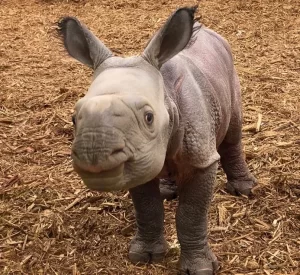 and is ready to step forward. In this way, we our full mind can develop natural assertion and confidence just like a child learning to walk back to their room. Just like flowers blooming in spring. The seed has no idea of the flower it will become as it is too busy pushing up through the darkness. This is not easy, but the plant does this without struggle. It rises because it is its nature. No one needs to stand above it yelling for it to grow. Along the way, if the ground freezes, the growing stops until the stalk gathers the energy to move again. We can see progress in nature that, while not without challenge, is in synchronicity with nature. The ancient book of wisdom, referred to as the IChing, states that obstacles can be overcome by emulating water. Warrior has the patience to pause until their strength rebuilds and allows them to flow over or around the obstacle. The river never feels insecure or berates itself for this.
And just to continue with run-on metaphors, the stubbornness with which a part of us slows down the whole is, aside from being a voice crying to be heard, also may the very strength we use to travel forward our own way. In early Buddhism they used an image of the rhinoceros to depict the kind of solitary practitioner who had to travel the path in their own way, at their own pace. Aside from being solitary beings, Rhinos are highly intelligent and have excellent survival skills. They are excellent others that fiercely protect their young. No matter how cute these ungainly beings may appear you don’t want to invade their space. Space assures safety and dignity for all parties concerned. So, along with patience and kindness, the willingness to allow our “don’t wanna be’s” to just be, would be a wonderful step. I don’t think we should always give in to our doubt, but we might have a conversation with it first. “What are you afraid of?” “What do you need?” And we might remind the little rhino that we’re here and we love them.
In this way, our resistance is our path. And if all we took from our meditation journey was to be kind enough to ourselves to treat ourselves with care and respect, that would be life changing.

 In meditation theory, the sun is used as a depiction of awareness. The sun shines on everything equally regardless of whether it is blocked by the moon, the clouds or the turning earth. Awareness is alive and awake in the universe whether or not we are conscious of it. It is the work of the meditator to uncover the veils of self-imposed obscuration that block access to awareness. We notice thoughts that are actually quite small in the scheme, and bring our attention back to the space afforded by the breath. As we do this, we are stepping back from the thought and revealing a larger context. Our blockage might appear less significant, even humorous. Over time, these obscurations become less solid and less imbued with “meaning”. They become right-sized. Sometimes they disappear altogether. Although the significant obscurations require less force, but more patience. Some will likely return. When that happens we are faced with the same task. Notice them as thinking, and return to the breath. This reconnects us to space, which is perspective. It sucks that we often have to be fooled again and again but that is the work of creating access to awareness. That sunlight will, in time, permeate our experience, but there is a lot of slogging to get there.

 After years of study, training and ascetic discipline, the Buddha began a 49-day yogic meditation fast. During this time, he gained mastery over his body and attained relative mental clarity. But, as he was at the point of death, he did not have the strength to fully cross over into awakenment. Perhaps knowing that his work was not about his own accomplishment, but that his quest would be to reach a state that would allow him to help others, he broke his vow and accepted a bowl of rice from a young woman. It wasn’t until he accepted this sustenance that he had the strength to attain full realization.
 Therefore, as the Buddha’s teachings developed, the methods changed. Zen Buddhism is different from Vajrayana Buddhism, which is different from Theravada. Buddhism in the west is its own expression. The commonality to all of these expressions is that they are rooted in the belief that we are born as we should be and our lives can be led by a path positioned toward greater awareness of ourselves and our world. Each expression of Buddhism has its own methods. It is considered a rookie mistake to be an unwavering adherent to any method. Renunciation is not abstinence. Renunciation stepping back from an attachment in order to see more clearly. Sometimes this happens all at once, and sometimes incrementally. Renunciation may require abstinence in some cases. or for some period for those who cannot work safely with the person, place, or thing. There is no shame in that. But abstinence is not the point. The point is liberation. And liberation is not another jail we place ourselves in. Liberation is the vast space beyond our imprisonment that we can grow into.



 The key is developing surety in our commitment to remain present whenever we can and to return as quickly as we can when we are not. The gentle insistence is how we combat the aggression of our world. Does that sound impractically pollyannaish? Confucius would remind us that the gentle persistence of the river will cut through a mountain over time.
 I tend to live life from one project to the next, believing that -despite all prior experience- this time I will get it right. This diet, this financial plan, this meditation, this love. Especially this love. True Love. That’s the one that gets me. Each love I fall into becomes my center of being. I have always failed to see that my relationship to loving has all the hallmarks of classic addiction. In his masterwork, The Art of Loving, psychologist Erich Fromm defined “true love” as two people who were both ready for the same thing at the same time. He specifically nudged the reader away from the idea that we were part of something special. But, despite the slight-of-hand of hormonal urges, true love is not destiny. True love, like life itself, is a random occurrence that happened to succeed. Life is opportunistic. Einstein famously said, “God doesn’t play dice with the universe”. It seems, even a thinker as profoundly creative as Albert still searched for the occasional guarantee. If the universe doesn’t play dice it may be because dice only has 36 outcomes. The perplexing game of Go that has kept humans intrigued for 4,000 years, has less than 11,000 possible outcomes. If the universe is playing with us, It is using a much more vast and complex system than any game our brains can presently conjure. And, yet, within that ocean of possibility, we find that apple trees always breed apple trees. This interesting paradox is central to our existential being. Life is random and there are repetitive patterns throughout.
 When emotions run high, the fear mind takes over and latches onto simple answers. And naturally, we believe we are right. This feeling of righteousness wants retribution and dismisses the inclusion of societal and familial issues as pandering snowflakery. The Buddha spoke of Karma as the law of cause and effect. He also spoke of the interdependence of every event to all else. Despite conditioned tendencies toward black and white binaries, the Buddha saw that the causes of any event are myriad and nuanced. This would seem frustrating to the raging defensive mind latching onto rightandwrong. But a reactive mind is generally devoid of nuance or compassion. Compassion doesn’t mean kindness to those who’ve caused harm. It means understanding those who cause harm.
 One of the ways we rob ourselves, and reduce our life is by demanding ownership of our experience. And ownership implies controlling the process and the outcome of what we own. But our life is not property. Life is a self-existing dynamic with our past and our world, unfolding naturally as a flower grows and unfolds. Ideally. But, as it is our life, we want what we want to occur in ways we want them to occur. And we want this in our time-frame. Like standing over a flower and yelling at it to grow faster. Or, maybe we are shaming, intimidating or manipulating the flower. Or maybe, more generously, we try coaching the flower to be its best self.