
ACCEPTANCE, THE GATEWAY TO THE PATH
 The Buddhist path is said to be vast and profound. Profound refers to the notion that the teachings reach below surface standard cognition penetrating to the depths of our being into our human experience. Vast refers to the many manifestations that the Buddhist journey takes and the many methods it employs to illuminate profound understanding.
So, we travel many roads deep within our experience and see what it is that makes us human. From the Buddhist point of view all life is sacred and our life, in particular, can be seen as the working basis for a journey of ever-deepening discovery. At this vast journey lies a very personal connection to ourselves and the present moment.
Often used terms such as “path”, “vehicle”, or “way” refer to a journey. This implies that our practice is developmental in nature. Each day as a Buddhist, we reassert our connection to the path and vow to learn more today than the day before. This is not meant to create pressure, but to rather acknowledge the rare and precious opportunity we have to continue to develop understanding of ourselves and tolerance of others. It actually releases pressure because journeying on the path requires acceptance of where we are and avoidance of expectations.
In order to understand this development, we employ three methods, understanding the past, having full mind awareness of the present and orienting ourselves toward a view of the future. At the center of this journey is the requisite of finding the willingness to be “here, now.” Being here is not sedentary, as all time is in movement. Now is a moment in a continuum. So our practice is to return to that moment, again and again, as we need. This return or “recollection” it is called lies at the core of Meditation practice. We return, again and again, and do so gently so the process is sustainable and our resistance is minimized. In this way we find an even flow to our path and our life.
It is impractical to force ourselves into a tight cage interpretation of the present. It is more advisable to see the present as a moment on our path and to train the mind to return to that moment allowing ourselves the leeway to drift and flow as we allow ourselves to navigate the moment. In this way, we will develop an ability to navigate life’s flow in an organic way. The root of this method is non-aggression, which means we are avoiding the societally ingrained tendencies to be demanding, critical or expectant of ourselves. This is called “Maitri” or “LovingKindness”, which is a profound acceptance of ourselves and our world. Maitri is the foundation of a process of seeing ourselves, our path, and our life as workable. We develop this acceptance through the process of remembering to return to acceptance of the moment again and again without demand or judgement. If we employ this process of recollection and return gently, we will train our mind to stay present and develop an easy way of being.
It is important to note that acceptance is not resignation. Resignation is a shutting down of our passion, as if to give up on ourselves. It is a great shrug or a wet blanket we employ out of fear of doing something wrong. However, the term “path” describes a developmental process that we can orient toward the possible. Acceptance means that we are not fighting with ourselves or the world but learning to understand that world and who we are. While resignation is a shutting down, acceptance is an opening. Acceptance is the gateway to the journey of our life.
Sometimes we make a distinction between stating a goal and having a view. The word “goal” feels materialistic. Goals can be aggressive attempts at developing expectations. Expectations tend to rob spontaneity. Goals can be a weight or a lid, rather than an encouragement. A view, on the other hand, is an inspiration that calls us forward in a particular direction. While goals are things we attach to, a view is something we open toward. Our view is a gateway. If our gateway opens from a place of acceptance and loving kindness, we are open to the possibility of our life.
By accepting the present, we allow ourselves to be loving to who we are, however we are. If we are unhappy with our circumstance, then everything changes. In fact, circumstances will change more readily if we are in acceptance. Struggling with the things we want to change only engrains them more deeply. We lock in so many behaviors because we don’t want them. But, if we feel something in life should change, then by accepting it, we can allow it to change when it is ready. Along the way, we are learning for the situation rather than waging war that will spread to the world around us.
How we treat ourselves is reflected in our dealings with the world. If we are kind and patient with ourselves, we will have a chance to be tolerant and caring of others. Conversely, if we are at war with ourselves then no matter how we pretend to be compassionate, eventually the war inside will spread to those around us. If our view is to understand ourselves, then we will develop an understanding of others. This will make our life cooperative, rather than contentious. In this way, we can rest and return to our being and in time learn to live without the struggle that has so long defined us.
 From the moment we first cried out for our bottle to the time we sidled up next to someone at the bar hoping to have them buy us a drink, we’ve learned to manipulate our world. More specifically, we’ve learned to manipulate our feelings in order to manipulate others into the impression that we can get what we want. The fact that we frequently don’t know what we want doesn’t seem to deter us.
 Learning to work with anxiety is an important practice for anyone trying to maintain mindful balance in their lives. How often are we thrown off-course in life due to reacting unmindfully when prompted by our fear. Something feels wrong, and before we can look into what that may be, we spring forward as if to escape the discomfort. I can’t count the times I have made missteps in my life by lurching blindly.
 The unreliable narrator is a technique used by writers to tell their story from a point of view that is changing, altered, or diminished in some respect. This creates a sense of un-ease in the reader. However, despite its temporal unreliability, this technique often reads as organic as it feels closer to how our minds actually work. One mistake uncreative the writer makes is to try and force the organic flow of reality into a two-dimensional, linear narrative. There is a sense of comfort in aligning the forces of our life inside the lines, but it is simply not the way our mind naturally flows. Nor, is it how the reality around us actually works.
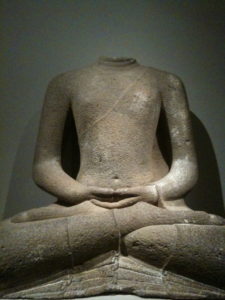
 The development of wisdom in daily life implies a practical involvement with meditation. The general recommendation would be to develop a daily practice of repeated placement of mental attention on the present moment. We do this in order to train the mind progressively toward deeper and more stable relaxation and awareness. Many disciplines employ an object of meditation (such as a mantra, the breath, a visual stimulus, or a phrase) to facilitate a return to the present. So, commonly, one would return to the mantra or the breath again and again to stabilize the mind, and allow its awareness to develop more and more deeply into the present.
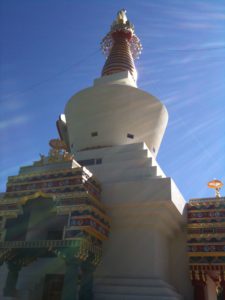 I believe ancient wisdom once removed of its religious trappings is often based on very human, and as such, immensely practical, concerns. The Meditation from the Wisdom Tradition of Shambhala uses ancient wisdom to inform very present experiences. At its core, is a belief in the fundamental goodness of humanity. It is a system based on developing the True Confidence which comes from training the mind. Simply said, if we develop belief in ourselves, and learn to trust ourselves, we can be a great benefit to ourselves and our world. It is a manual, daily and practical approach that is empowering without ego building. In other words, its not flattering, or aligned with any competition. It does not offer any credentials. It is simply a way of connecting ourselves in order to connect to our life altogether. From that synchronicity, we are more in control of our lives. And, taking a warrior’s seat in meditation puts us directly in the center of that circumstance.

 Yet, there are many ways in which we erode our confidence by denying ourselves in the garden. Many times we believed we needed something greater than ourselves to make it okay. This is addiction. Its is self-doubt. And in meditation circles it is based on theism. Theism is deeply ingrained in our society whether or not a god is involved. We can lose ourselves to our job, to our country, to our addictions, to anything that we determine is better than we are, or becomes more important than we are. Any time we decide something else is preferable to what our life is, or who we are, we are giving ourselves away. We will end up disappointed, and without hope. Once abandoned by our gods, when we find our idols have clay feet, we lash out and destroy them. And from their ashes will rise another idol for us to swoon over. This game continues on and on and gets no one anything but more servitude. And over time this erodes confidence. We can only shut ourselves out for so long before we will give up altogether.
 Each time we flinch and contract ourselves into the panic and tension (that all too often feels comfortable to us), we squeeze ourselves into a small reactive entity. We hide in our wetsuit. But, we can’t stay there. That tension will kill us. Make no mistake. Squeezing ourselves into defensive postures will constrict us, and shut off our life force. We can only shut down so many times, before something in there gets the message. But, there is an alternative. Letting go. The practice of meditation is entirely forgiving. We can always come back. We can let go. We can simply feel our feet on the ground, and there we are. Any system based in compassion and understanding would never deny the self. It might point beyond, but the only way beyond ego is to be confident enough to be able to let its gripping go. Ego structures gain power in our PHYSICAL GRIPPING. The antidote is simply to let go. Letting go does not mean getting rid of. It does not mean making an enemy of. Letting go means simply opening the grip and allowing the panic to subside and reveal the ground swell of fear beneath. Being frightened, and allowing yourself to be frightened without resorting to extraordinary external measures, is exactly what builds true confidence. We didn’t need a mommy, a boyfriend, a God or a president to pull us through. We were willing to sit there and feel our feelings without a bandaid. That is strength.