Paying Attention to the Tool We Use to Pay Attention
Before I take my brain out in public, it seems only prudent to check the machinery. Before I unleash my normally passionate—and sometimes reactive—engagement with the world, I like to get in sync with my mind, and have some idea how I’m actually feeling. How I am feeling will influence how I’m doing.
This is called “mindfulness of mind.”
You’ve heard me say this before, but of all the things we’ve applied our minds to, all the things we’ve learned, assimilated, perceived, felt, tasted, touched, and thought about, the one thing we rarely investigate is the very tool doing the investigating. It’s as though awareness of our own mind lies behind a firewall that keeps us from seeing it’s machinery.
Pay no attention to the man behind the curtain.
Similarly, when we sit in meditation, we often fail to notice the mind that is actually meditating. Instead, we seek relaxation, comfort, or elevated states of consciousness. YouTube is filled with guided meditations promising euphoria, deeper vibrations, heightened awareness, or awakened desire. Yet one of the greatest possibilities is often overlooked: learning to work with the mind itself.
To do that, we first have to look at it. And what better place than the relative stillness of meditation?
Rather than trying to achieve anything, we can engage in what I think of as pure investigation. Captain Kirk referred to the Prime Directive issued from Starfleet Command – observe without interference. If we’re trying to force the mind into solving problems or elevate it to some higher state, we’re using the mind to do something instead of discovering what it already is. As necessary as it is to occasionally do things, the doing mind is not poised to see itself. Before we can know what the mind is capable of, we have to learn to simply look without creating any complication.
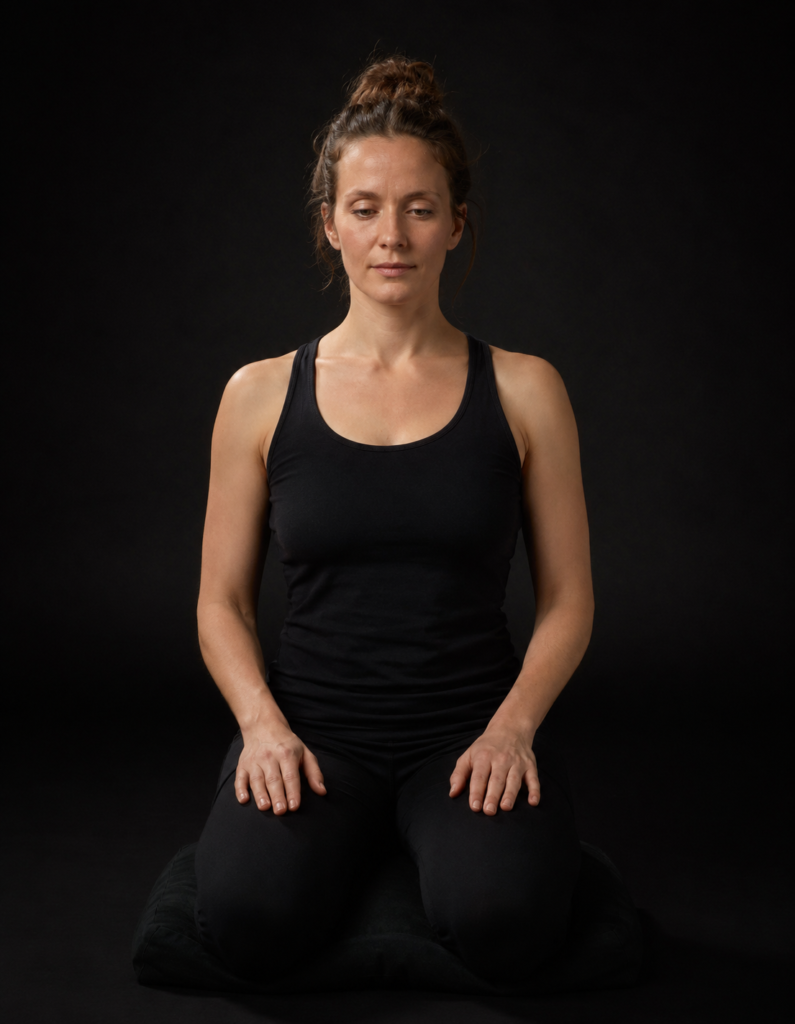
When we next sit in meditation, we can begin with a blank slate. “Blank” is in quotes because the mind is still full of thoughts, habits, and the momentum of our actions. But we can step back from the display rather than becoming caught in it. Each time we notice we’ve wandered, we gently return to the object of meditation—the breath, a mantra, an image, or a candle flame. That return creates space and perspective.
The technique is wonderfully simple. Follow it with patience and persistence. When we’re lost in thought, notice it, accept it, release it, and return. When we notice ourselves judging, planning, or reacting, do the same. Every return loosens the grip of the thinking mind and allows its natural openness to emerge.
In Vajrayana Buddhism it’s said that the space the mind encompasses is the same space the universe encompasses, and that this space is imbued with intelligence. That word can be misleading. This isn’t intelligence in the sense of being clever; it’s raw wisdom. In Tibetan Buddhism it’s called rigpa—the awake quality underlying experience itself. It’s easily overlooked because it is so simple and so open. And it is that openness that allows us the space to see clearly.
That bit of philosophy is really just background. The practice itself remains uncomplicated. Keep returning to the object of meditation and allow the mind to reveal the space to reveal the mind. The mind knowing itself is a process best kept prosaic rather than mystical. Scientists don’t get overly dramatic during the investigation.
What we often discover isn’t mystical at all. We might simply notice, My mind is very reactive today. Or, I’m exhausted. Or, I’m feeling needy. When those observations arise, treat them like any other thought: notice them, acknowledge them, release your grip, and return to the practice. One profoundly beautiful aspect of meditation is that this simple process creates space for flashes of insight. The temptation, of course, is to grab hold of them. Look how smart I am.
Trungpa, Rinpoche, described the proper relationship as “touch and go.” Appreciate the insight, then let it pass. We’re not dismissing it. We’re simply refusing to interrupt the mind’s natural capacity to continue discovering. Grasping, by definition, narrows the mind. Releasing our grip allows the space for the mind to have glimpses of itself. Over time these brief glimpses accumulate. We develop a more cooperative relationship with our own minds. Instead of being led around like an animal with a ring through its nose, we begin to stand beside this remarkable gift we’ve inherited through evolution. We gain the freedom to respond rather than merely react.
One final disclaimer: these glimpses are only the beginning. Here we’re talking about the relative mind—the mind we take out the door each morning to meet the world. Yes, there are deeper dimensions of awareness explored in contemplative traditions. And no, You Tube likely won’t get us there. But before reaching for extraordinary experiences, it’s wise to become familiar with the ordinary mind we already have.
In Vajrayana Buddhism they believe it’s the ordinary mind that reveals the mind’s magic.
It may be that one of the most profound things we can do is simply learn to work with that relative mind, presenting ourselves to the world in a functional, creative, and compassionate way—responding with intention instead of habit. In this way, everything is fresh.
Life recreates itself in every breath.