NO MISTAKE

And No Problem

Learn from your mistakes, it is said. But I don’t believe we learn from our mistakes. I believe we learn from our wisdom. And the only mistake we truly make is to not pay attention. Then we fail to listen to our wisdom.

Especially when we make a mistake.

Indeed, we need literal instruction to learn a process. And in the process of learning, mistakes are not only a given but may often be a positive. Mistakes can create a shift in our attention toward a new paradigm, a new idea. There’s a line I love from songwriter Caroline Miner Smith that says, “Maybe losing is a life hack / So I get my life back / So I can start all over.

Once we reboot, any mistake or occurrence that happened outside of our own tight little plan can be seen as an opportunity for a fresh reboot of awareness. But by identifying with the mistake, we likely obscure the wisdom. We become mistake laden and feel, beaten down by our own judgement.

I once heard a mindfulness teacher tell her students, “If you were paying attention, then time is never wasted.” I love this. From that point of view, mistakes are not wasted opportunities, nor are seemingly wasted or undervalued stretches of time, as long as they become reminders for us to be present. When we are present, there is nothing else we need. And we can work with whatever happens.

So, there is no mistake. And actually, no problem at all.

It may be that we wish situations were different than they are. But who is doing that wishing? And how does that wishing help us pay attention to what is actually happening?

This is where we make the mistake.

Something gnaws at us inside and we become triggered. We click out of our connection to the present and begin internally arguing with life because there is something else we want or perceive we need. We want to adjust time; for it to speed up or slow down. This creates cognitive dissonance. We become agitated. We start tapping our foot, drumming our fingers, darting our eyes from thing to thing. We fall victim to every distraction in our meditation. Due to anxiety, we feel we should be somewhere else doing anything else.

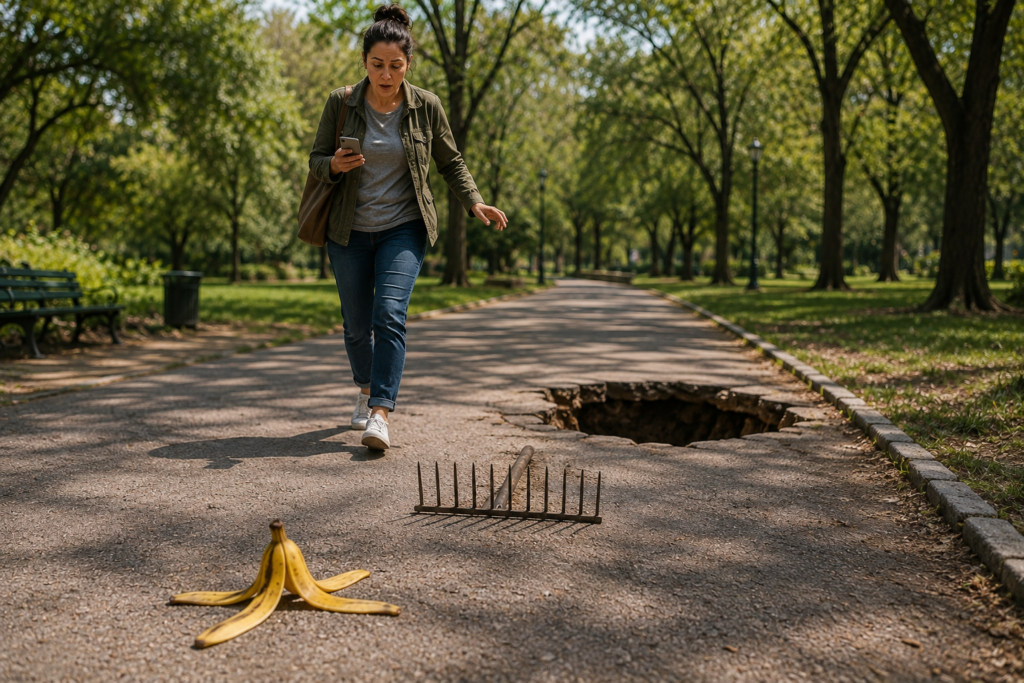
It’s as though every eye is upon us. We’re no longer aligned with what we’re actually doing, and so we trip over our own feet. Our sneakers are outrunning our mindfulness.

But this is only a problem when we fail to recognize it; when we mistake distractions for our life.

The only mistake we make is to not be present.

What does this mean?

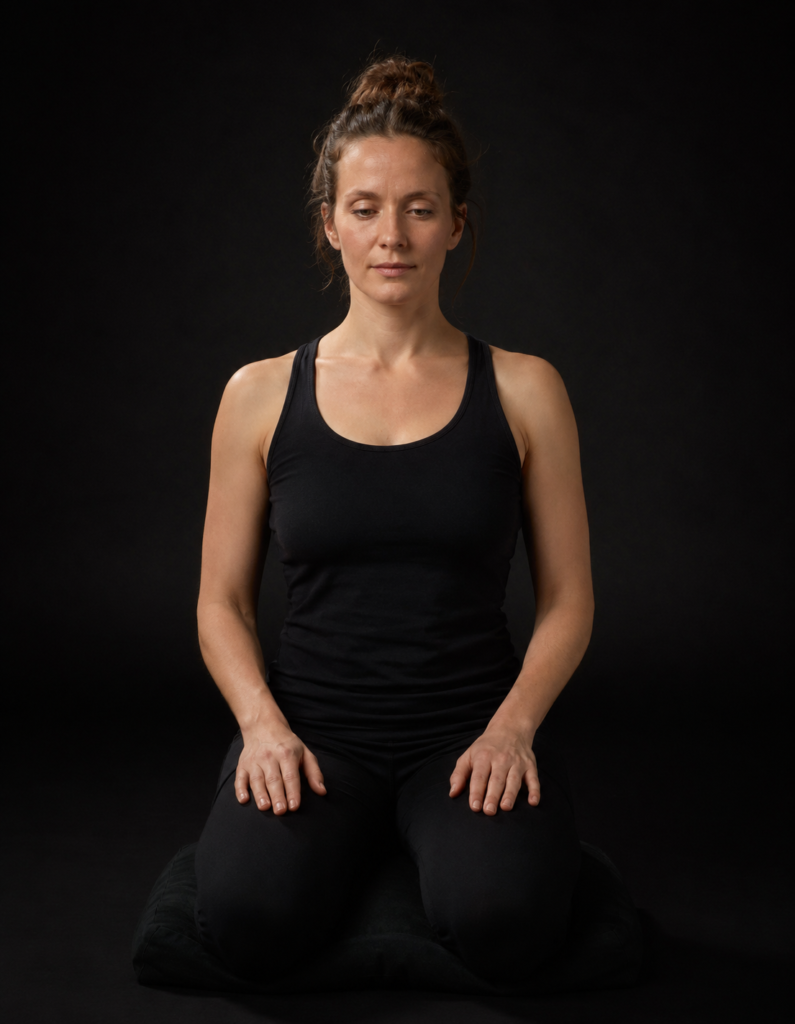
When we are fully in the present, we are embodied in the present. Our physical form, our mental acuity, and our emotional being are aligned. Sometimes we say: strong body, clear mind, open heart. Grounded, clear, and accepting.

This is all we need.

The process is simply to return often enough in our meditation that we begin to recognize strong body, clear mind, open heart—not only in our meditation, but in our daily life. In time, we begin to identify with that wisdom manifestation rather than the obscurations to it. This begins to engender true confidence. Not the confidence born of bling, setting or status. But confidence in the fact that when we are present in body, spirit and mind we have all we need to meet the moment.

We spend so much time—perhaps wasted time—reaching for the bling outside of our grasp. But the way to scale tall mountains or cover long distances is to attend to each step. Knowing our ultimate destination does not require us to fixate on it. We should know it. See it in our mind and then trust that we can let it go and be present for them process.

For example, we decide we’re going to meditate for twenty minutes. We can trust time in that way. We don’t have to keep watching the clock to make sure we’re getting there. Indeed, watching the clock is not being present.

Time is not the enemy. In fact, time is the meditator’s ally. Rather than being impatient, we can acquiesce and be grateful that we have the time. For where are we running? Where are we going? To the end? As though meditation was a task to cross off a list. But meditation is an experience of being. It is rewiring our plastic neuro-brain so that we may be present with the process of life.

The meditation teacher Ponlop, Rinpoche said, “Speed is a fundamental disrespect for our being.”

So let’s honor our being and honor our time by relaxing into our lives and paying attention. And if our efforts are intended to lead us somewhere—whether it be the end of our meditation session or the end of a journey atop a mountain—our intentions are best served through mindful attention to what our life is offering us right now.

Perhaps honoring our being means trusting that we do not have to be anywhere other than where we are. We can know where we’re going without abandoning where we stand. We can have intentions without rushing toward them. We can make mistakes without turning against ourselves or our lives.

We simply return to strong body. Clear mind. Open heart.

And do this again and again until we get the point. As long as we are present there no mistake.

And no problem.

_______

WHAT LIES BEYOND?

UNCOVERING WHO WE ARE

The key to understanding ourselves is to employ gentleness. This is important because we are organic beings. We will nurture plants on our windowsill but treat ourselves with a demanding impatience before we’re even out of bed. Pushing ourselves is counterproductive as none of us likes being told what to do. Especially by ourselves.

Coming to know ourselves, and how to work with that person, takes gentleness, patience and commitment. This is not unlike a courtship. Gentleness is key in moving past the watchful guardians of ego. Ego is the wound-tight mental structure intended to help us fit in with a given social milieu. This may change from situation to situation. Unfortunately, ego likes to work undercover and so we have the impression that these faćades are all “me”.  Hence, ego obscures who we really are by making us think everything is about us. This all works smoothly when we feel comfortable and confident. But should we feel challenged, triggered, ‘less than’ or insecure our ego will pull one of it’s strategies from it’s bag of tricks.

Ego has a number of strategies. We might try to impress others so they will admire us. But being admired is not the same as being accepted. And these days humans are tired of competition. Darwinian food-chain climbing is played out. It’s exhausting.

But our intrepid ego remains undaunted. If besting the others fails, we might take a weaker position below them whether that be service or subservience. But whether high or low, ego’s strategies will ultimately fall short because we’re not addressing who we are. You can fool all of me some of the time and some of me all the time. And it might feel like me and it might look like me, but I am not a duck, and never will be.

Somewhere inside, we know it’s not real. Whether it slams us in the face, or festers silently over time, we know we’re playing games. And games have only short term reward.

So what drives this? We were born with a deep biological programming to fit in because there is more protection in the herd. Whether we’re leading the charge, or trailing behind, we have a gripping urge to be ‘part of’. Ego is the structure tasked with helping us fit.

Ego can be helpful if, through deepening meditation practice, we transform self-consciousness into self-awareness and become able to see our social faces. And then, as long as we don’t believe them, we can employ them mindfully. But when ego lies unseen, it can also be very limiting to our growth. Because in order to protect us, it will reduce our frames of awareness down to manageable quanta it can control. This involuntary ignorance narrows our world, but sadly also limits our life.

Frankly, seeing ourselves can be a very de-stabilizing experience.

But self-knowledge is integral to spiritual growth. If we come to know ourselves we may become willing to grow beyond our defenses. This can be scary. Who will we meet there? Who hides below the façade? Who are we before we have a plan? What will happen if we’re not in the game? Will we still be loved? Or will we be hounded into the fields alone?

Breathe out. One step at a time. We’re in a gently insistent courtship with someone we love and, perbaps, would love to know better.

OMG love!? Do we really need to love this being? The comedian Jordan Jensen has a wonderful routine where she says “love myself? I didn’t ask to be with this bitch. I just ended up here.” And for some of us, yes, we’re in a contentious relationship with our closest partner. Maybe we learned that from our upbringing. The schemes of ego replicating what the milieu has shown us. Locked in the trauma dance of ego.

And if we’re genuinely satisfied here then we might live happily unhappily in heated turmoil. A rule of ego is “do what you’ve done, then do it again. Then do it again.” Some of us find abuse comforting. Someone is paying attention. We’re being seen. But is that bruised flinching person really all we are? Or, maybe we’re the rageful abuser?

Actually, our minds are complex enough that we can be both, and still make it to work in the morning. But isn’t this exhausting? And, the saddest part is we’re so caught in the game, we never get to see the truth of who we are. We just see everything covering us, hiding us in the name of protecting us. I truly believe that somewhere in all of that is someone worth caring for. Maybe love is a strong word for someone we’re just coming to know. But with attention, we can begin sense our way in.

Classical Buddhism would say there is no one to find. But maybe that means there is everything to discover. Ego describes the limits of our imagination and, as such, defines the limits of our experience. But maybe we were meant to discover more. Rather than believing the stories we tell ourselves, we can look past them into a world unfolding before us. A world not under our control. We can choose to be part of that unfolding. Or, we choose to remain in the half-light of fear.

Or, we can do both, opening as we can, when we can and then shutting down when it gets too much. And with gentle probing we can coax ourselves into flowering into our Buddha Nature.

We can’t manufacture Buddha Nature. We can’t make it happen because it’s already there. It appears when the clouds part. With patience, we’ll eventually come to trust that openness. And in that openness maybe we’ll feel our essential being. Our Buddha Nature.

And maybe we’ll even fall in love.

A WORKABLE MIND

Paying Attention to the Tool We Use to Pay Attention

Before I take my brain out in public, it seems only prudent to check the machinery. Before I unleash my normally passionate—and sometimes reactive—engagement with the world, I like to get in sync with my mind, and have some idea how I’m actually feeling. How I am feeling will influence how I’m doing.

This is called “mindfulness of mind.”

You’ve heard me say this before, but of all the things we’ve applied our minds to, all the things we’ve learned, assimilated, perceived, felt, tasted, touched, and thought about, the one thing we rarely investigate is the very tool doing the investigating. It’s as though awareness of our own mind lies behind a firewall that keeps us from seeing it’s machinery.

Pay no attention to the man behind the curtain.

Similarly, when we sit in meditation, we often fail to notice the mind that is actually meditating. Instead, we seek relaxation, comfort, or elevated states of consciousness. YouTube is filled with guided meditations promising euphoria, deeper vibrations, heightened awareness, or awakened desire. Yet one of the greatest possibilities is often overlooked: learning to work with the mind itself.

To do that, we first have to look at it. And what better place than the relative stillness of meditation?

Rather than trying to achieve anything, we can engage in what I think of as pure investigation. Captain Kirk referred to the Prime Directive issued from Starfleet Command – observe without interference. If we’re trying to force the mind into solving problems or elevate it to some higher state, we’re using the mind to do something instead of discovering what it already is. As necessary as it is to occasionally do things, the doing mind is not poised to see itself. Before we can know what the mind is capable of, we have to learn to simply look without creating any complication.

When we next sit in meditation, we can begin with a blank slate. “Blank” is in quotes because the mind is still full of thoughts, habits, and the momentum of our actions. But we can step back from the display rather than becoming caught in it. Each time we notice we’ve wandered, we gently return to the object of meditation—the breath, a mantra, an image, or a candle flame. That return creates space and perspective.

The technique is wonderfully simple. Follow it with patience and persistence. When we’re lost in thought, notice it, accept it, release it, and return. When we notice ourselves judging, planning, or reacting, do the same. Every return loosens the grip of the thinking mind and allows its natural openness to emerge.

In Vajrayana Buddhism it’s said that the space the mind encompasses is the same space the universe encompasses, and that this space is imbued with intelligence. That word can be misleading. This isn’t intelligence in the sense of being clever; it’s raw wisdom. In Tibetan Buddhism it’s called rigpa—the awake quality underlying experience itself. It’s easily overlooked because it is so simple and so open. And it is that openness that allows us the space to see clearly.

That bit of philosophy is really just background. The practice itself remains uncomplicated. Keep returning to the object of meditation and allow the mind to reveal the space to reveal the mind. The mind knowing itself is a process best kept prosaic rather than mystical. Scientists don’t get overly dramatic during the investigation.

What we often discover isn’t mystical at all. We might simply notice, My mind is very reactive today. Or, I’m exhausted. Or, I’m feeling needy. When those observations arise, treat them like any other thought: notice them, acknowledge them, release your grip, and return to the practice. One profoundly beautiful aspect of meditation is that this simple process creates space for flashes of insight. The temptation, of course, is to grab hold of them. Look how smart I am.

Trungpa, Rinpoche, described the proper relationship as touch and go.” Appreciate the insight, then let it pass. We’re not dismissing it. We’re simply refusing to interrupt the mind’s natural capacity to continue discovering. Grasping, by definition, narrows the mind. Releasing our grip allows the space for the mind to have glimpses of itself. Over time these brief glimpses accumulate. We develop a more cooperative relationship with our own minds. Instead of being led around like an animal with a ring through its nose, we begin to stand beside this remarkable gift we’ve inherited through evolution. We gain the freedom to respond rather than merely react.

One final disclaimer: these glimpses are only the beginning. Here we’re talking about the relative mind—the mind we take out the door each morning to meet the world. Yes, there are deeper dimensions of awareness explored in contemplative traditions. And no, You Tube likely won’t get us there. But before reaching for extraordinary experiences, it’s wise to become familiar with the ordinary mind we already have.

In Vajrayana Buddhism they believe it’s the ordinary mind that reveals the mind’s magic.

It may be that one of the most profound things we can do is simply learn to work with that relative mind, presenting ourselves to the world in a functional, creative, and compassionate way—responding with intention instead of habit. In this way, everything is fresh.

Life recreates itself in every breath.